Author Archives: Periodicals/Reference Librarian
Advertising – Public Awareness
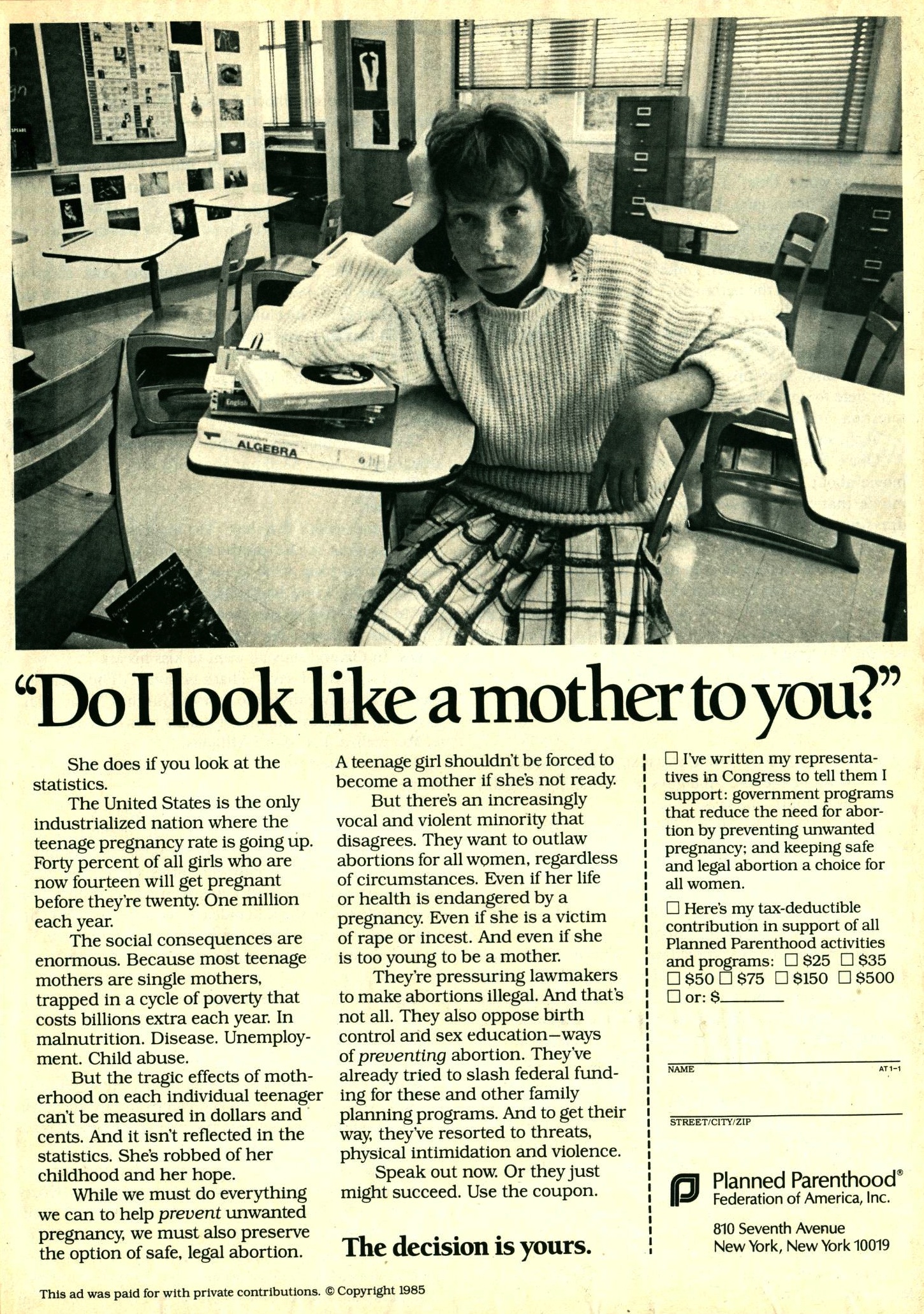
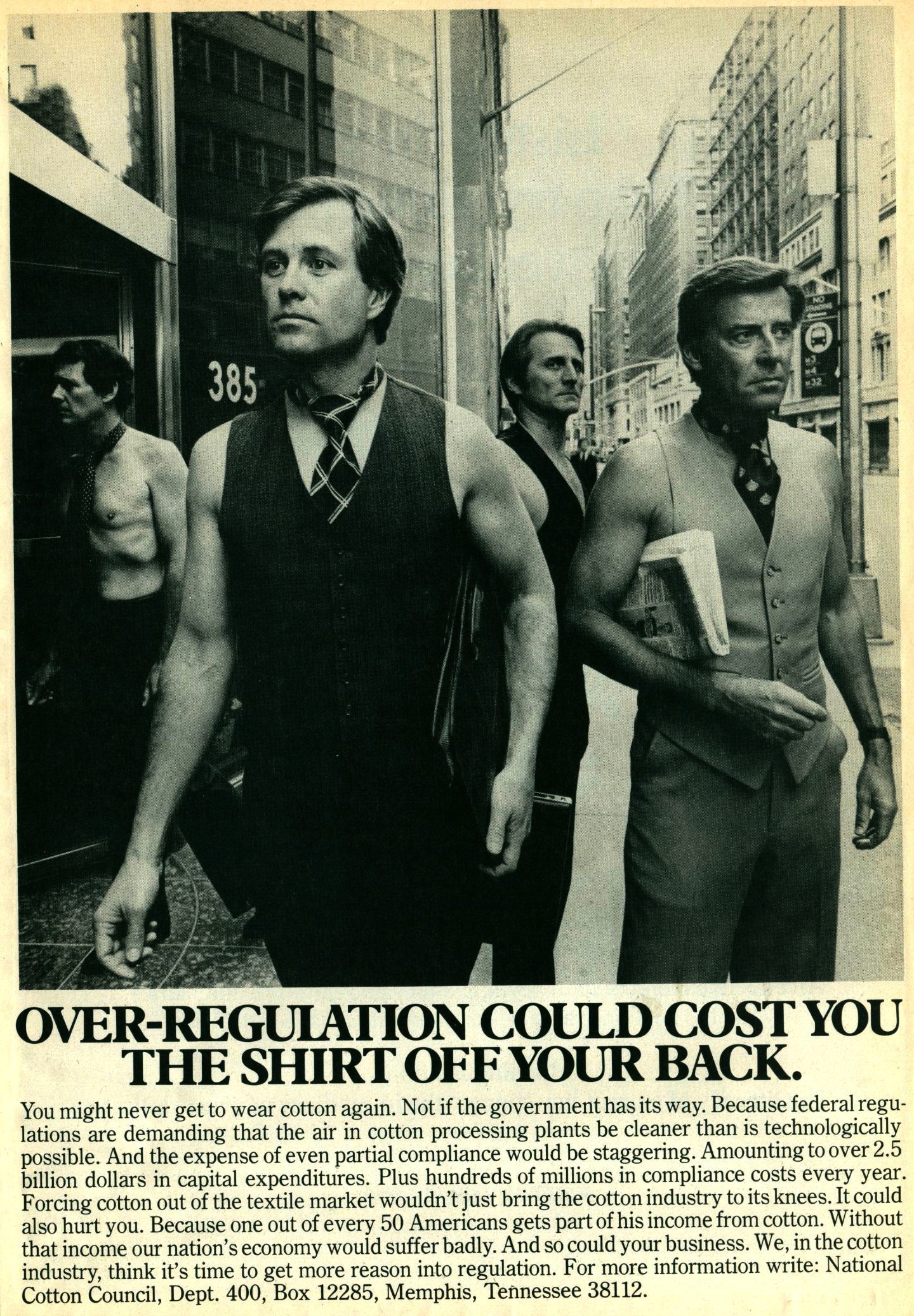
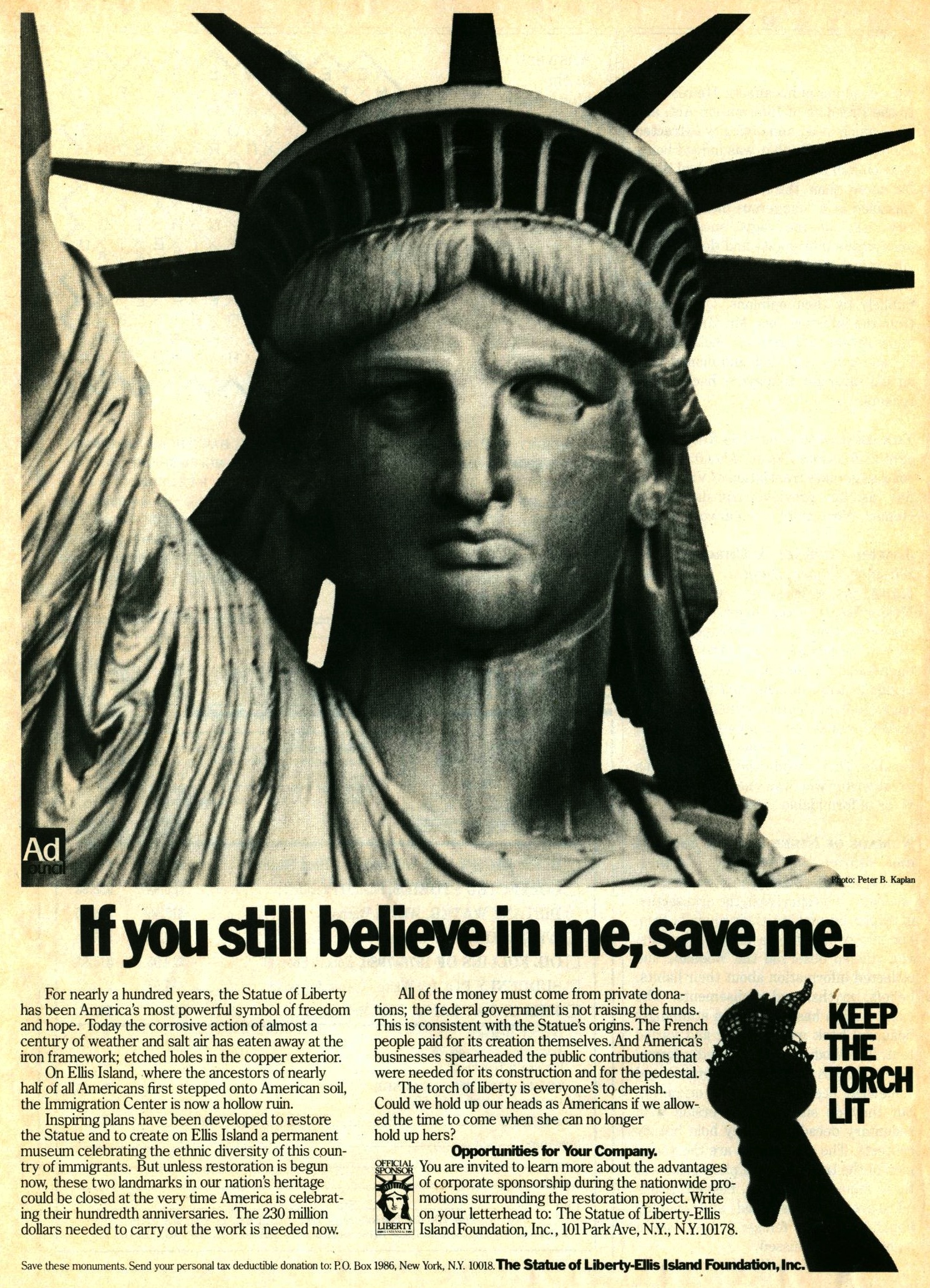
Not created to sell products, but rather to sway opinion and, of course, initiate and raise awareness, public awareness ads (PSA’s) recall the issues; the fears, deficiencies, and perceived instances of collective ignorance of a given time. Related to Advertising – Corporate Identity in their shared use of propaganda like techniques, these print manifestations of agenda can be very impactful. We divide Advertising – Awareness chronologically: Advertising – Public Awareness – Pre-1980 Advertising – Public Awareness – 1980-1989 Advertising – Public Awareness – 1990-1999 Advertising – Public Awareness – 2000-2010 Advertising – Public Awareness – 2010-2019

Communication Arts Magazine, Vol 13, No 1. 1971.

Teen. November 1964.

Utne. January-February 2003.

1992
1985
![1985[?]](https://svapicsandmags.com/wp-content/uploads/2014/03/bookscancenter_6.jpg)
1985[?]
![1988[?]](https://svapicsandmags.com/wp-content/uploads/2014/03/bookscancenter_7-copy.jpg)
1988[?]

The Advocate, 2000.

The Advocate. 2004.

The Advocate. 2001.

The Advocate. 1996.

1990’s

Time. December 2006.
1980’s
1986
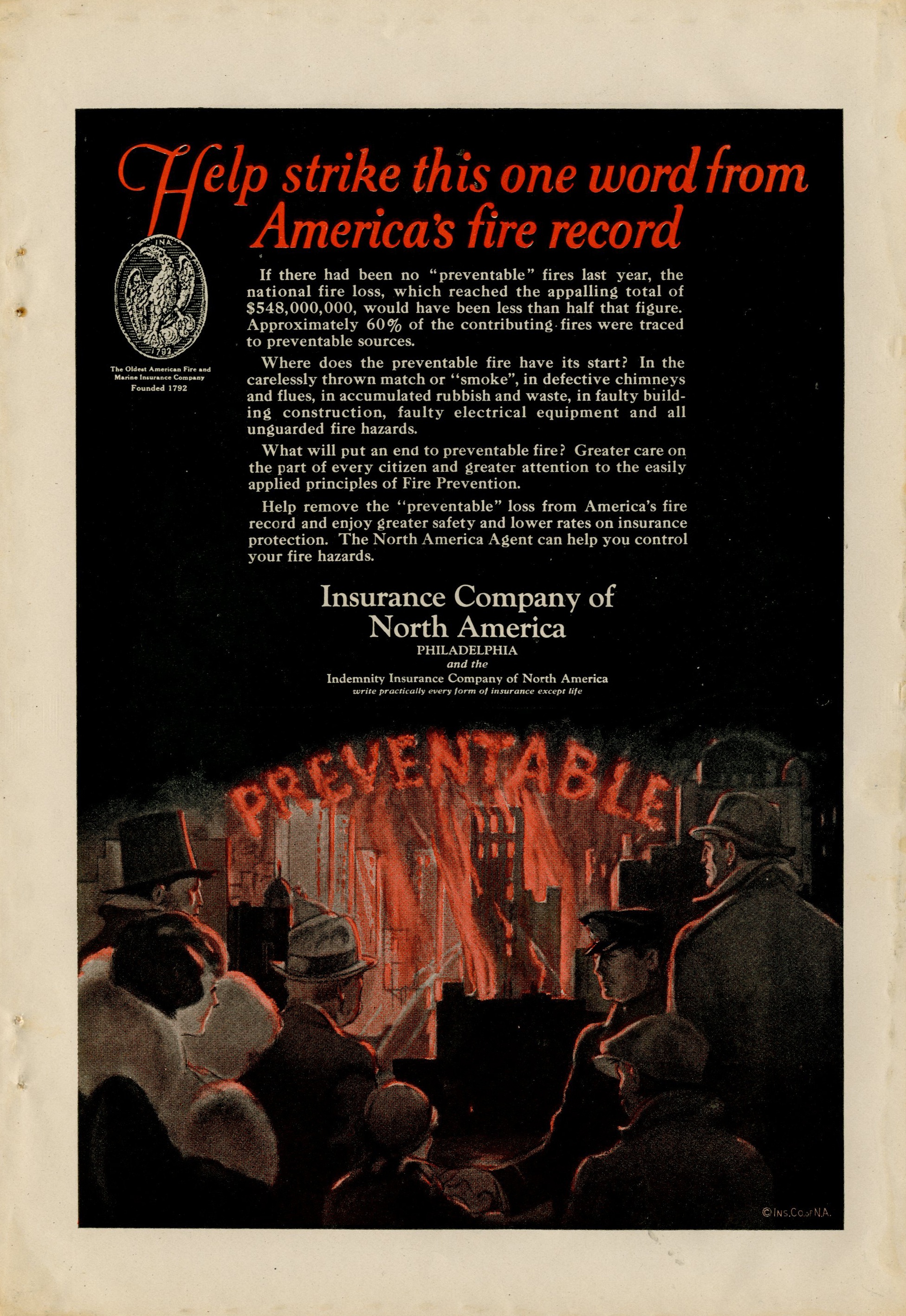

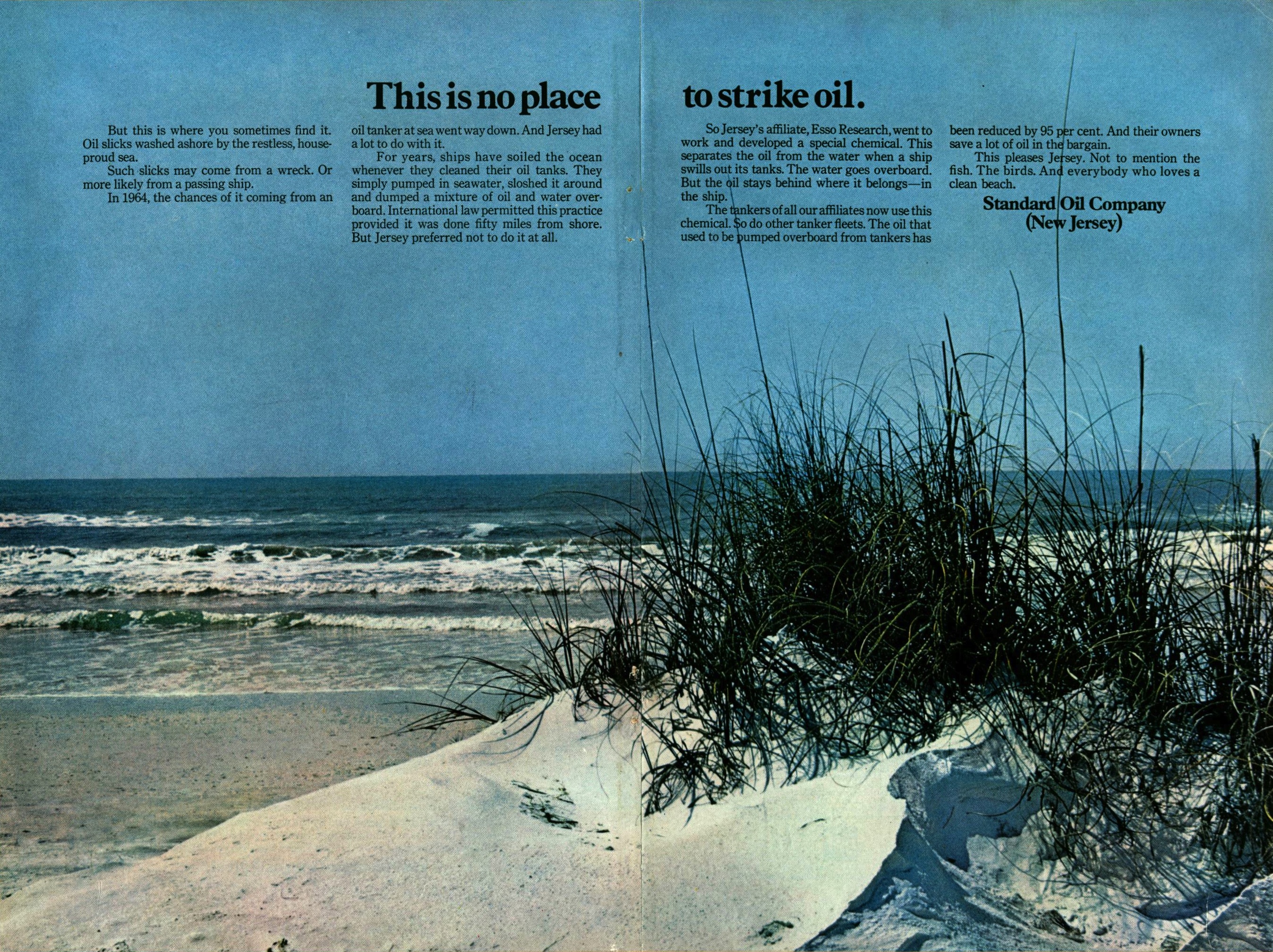
National Geographic. June 1968.

1983.

Geo, Vol 2. July 1980.
FiberArts
FiberArts features contemporary artists who work with fabric, weaving, sewing, dyes, textiles, embroidery, crochet, knitting, needlework and soft sculpture in order to produce works that boast both fine craftsmanship and fine art. Although expression and decoration with textiles is ancient, it was only fairly recently accepted in the fine arts world. The fibers revolution of the 1960’s led to a huge number of artists, both men and women, exploring and experimenting in a medium which was once labeled “women’s work” or pushed aside from the arts scene as mere craft.

In the library you will find 122 Issues of FiberArts from 1979 to the Summer 2011 issue, which was sadly the last.
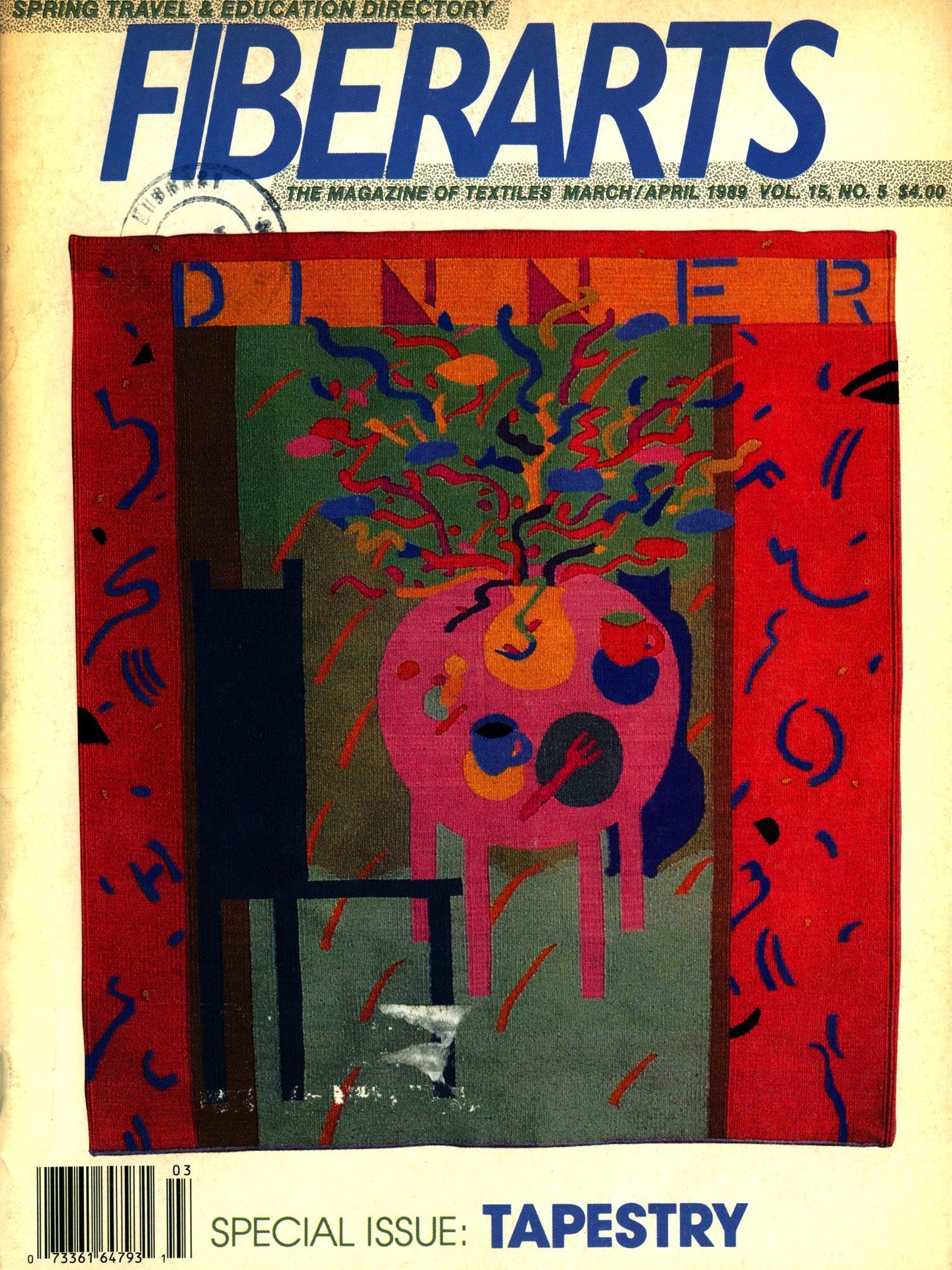
FiberArts. March/April 1989.
“Dinner” by Joan Ward Summer. 1985. Wool, tapestry.
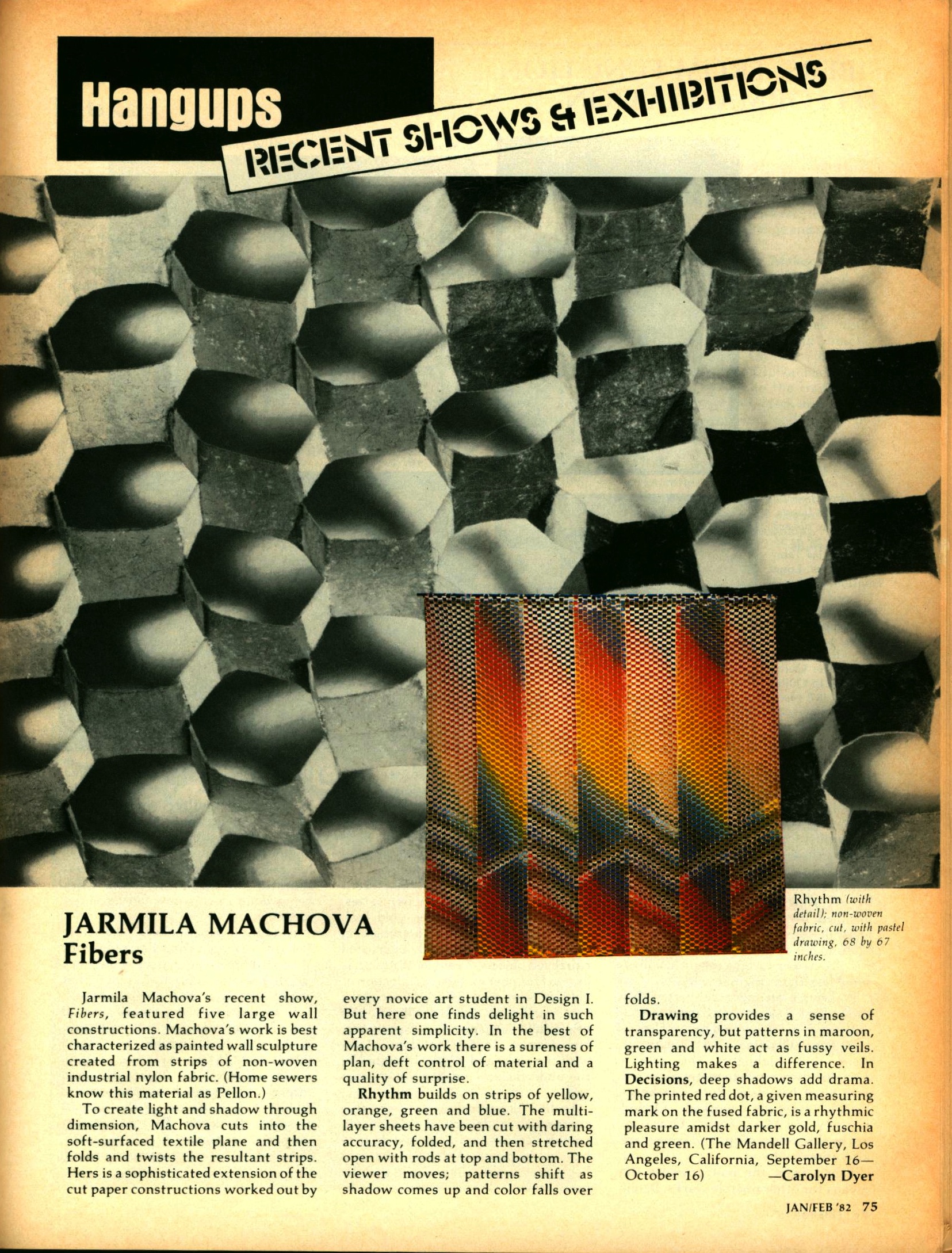
FiberArts. January/February 1982.
“Rhythm” by Jarmila Machova.

FiberArts. Summer 1990.
“The Street Story Quilt Part 1: The Accident” by Faith Ringgold. 1985.

FiberArts. March/April 1989.
Masking Costume of the Igbo People, Nigeria.

FiberArts. Summer 1990.
“Animated Power” (1987) and “The Harvest” (1989) by Tina Brewer.
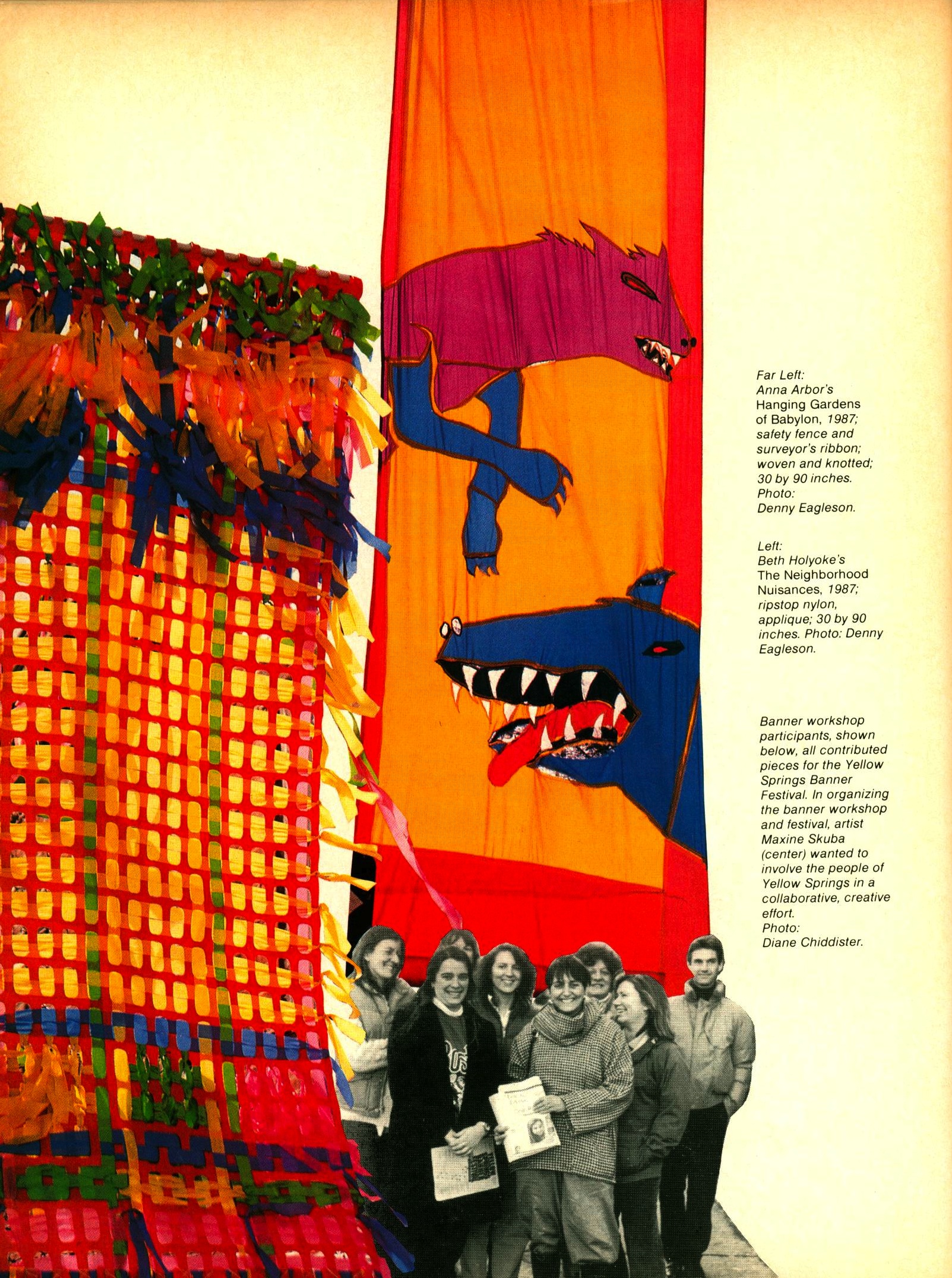
FiberArts. November/December 1988.
Left: “Hanging Gardens of Babylon” by Anna Arbor. 1987. Saftey fence & Surveyor’s ribbon, woven and knotted.
Right: “The Neighborhood Nuisances” by Beth Holyoke. 1987. Ripstop Nylon & Applique.

FiberArts. November/December 1989.
Lillian Elliot
FiberArts. November/December 1989.
(An advertisement.)
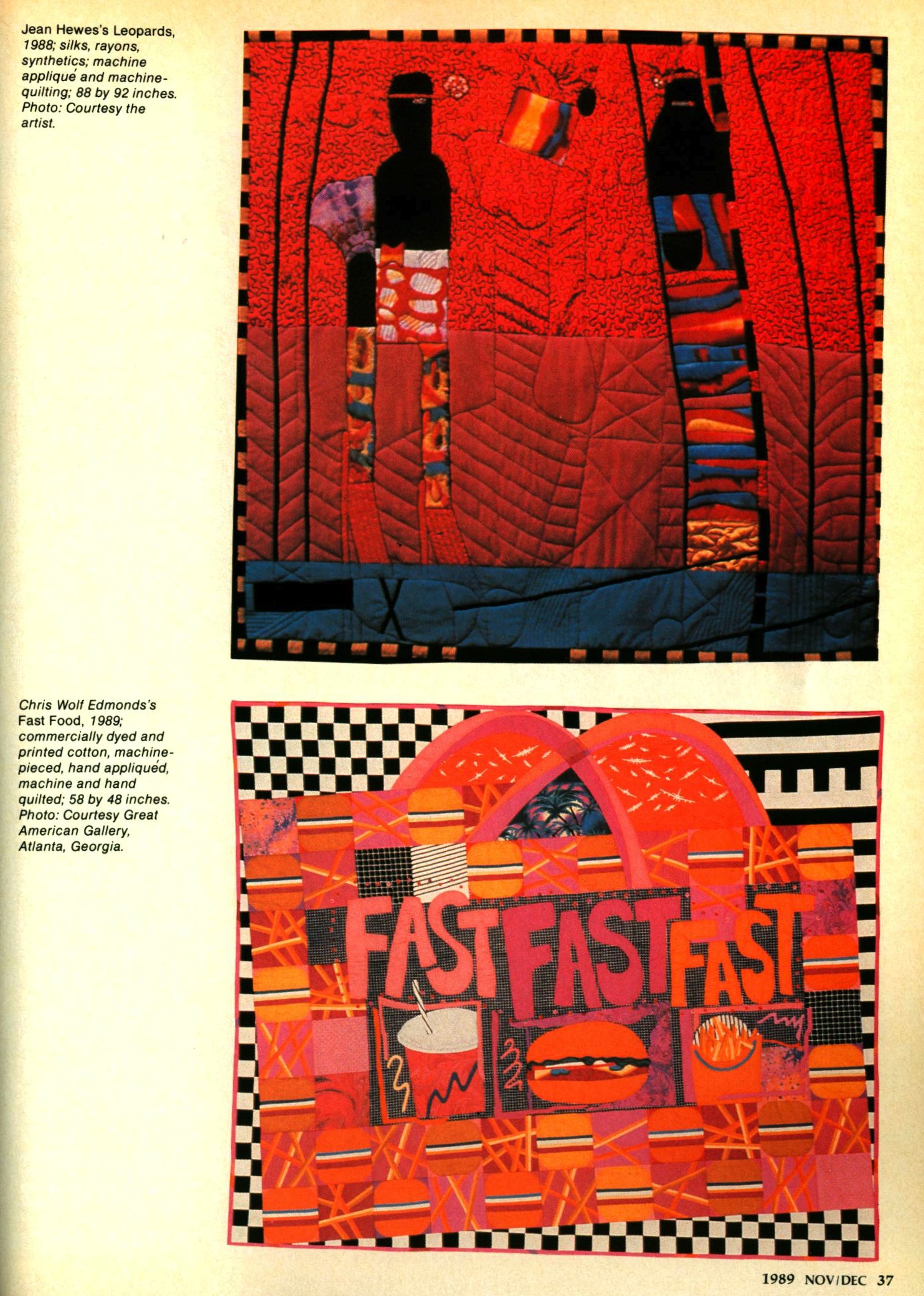
FiberArts. November/December 1989.
Top: “Leopards” by Jean Hewes. 1988.
Bottom: “Edmond’s Fast Food” by Chris Wolf. 1989.
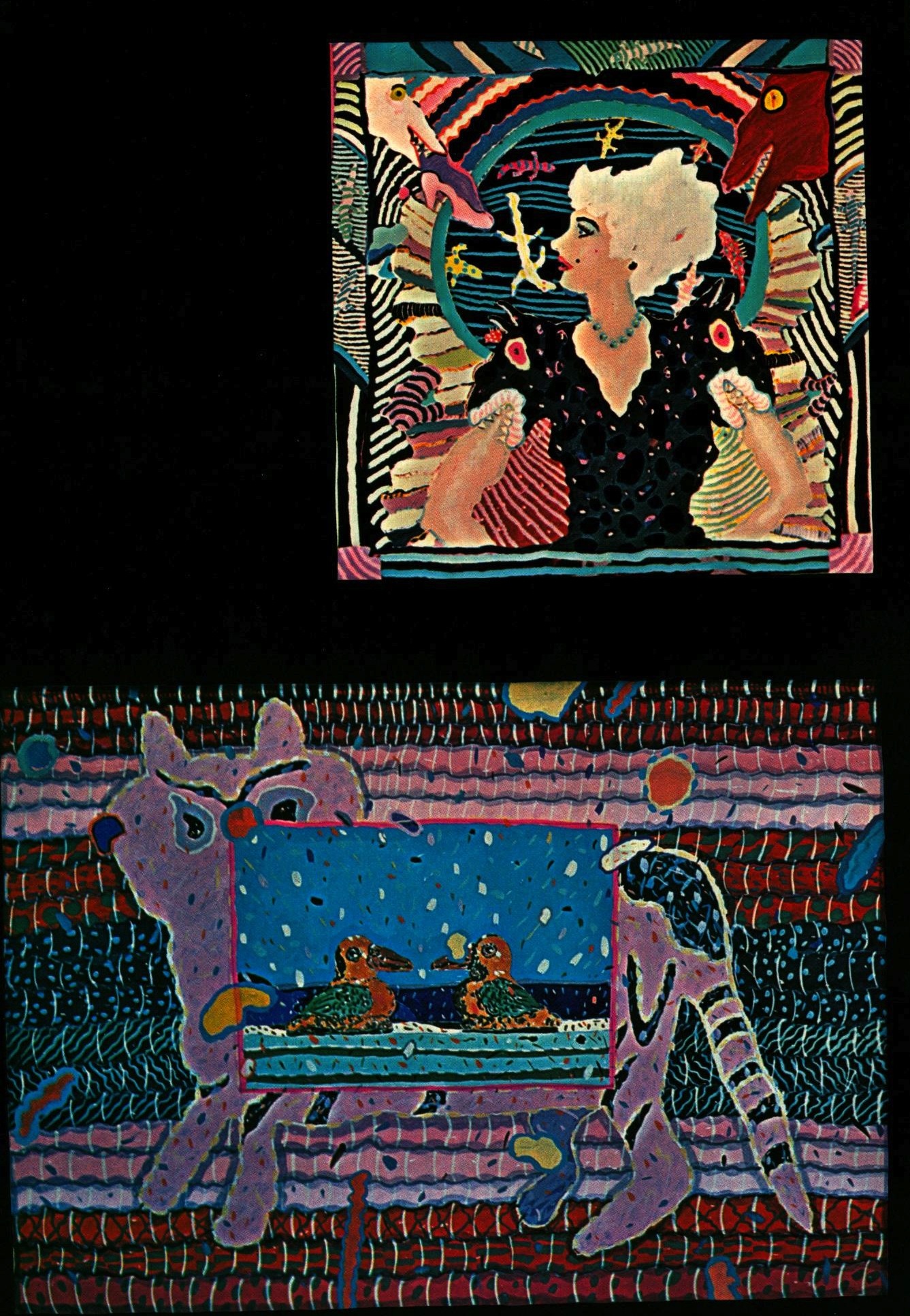
FiberArts. January/February 1982.
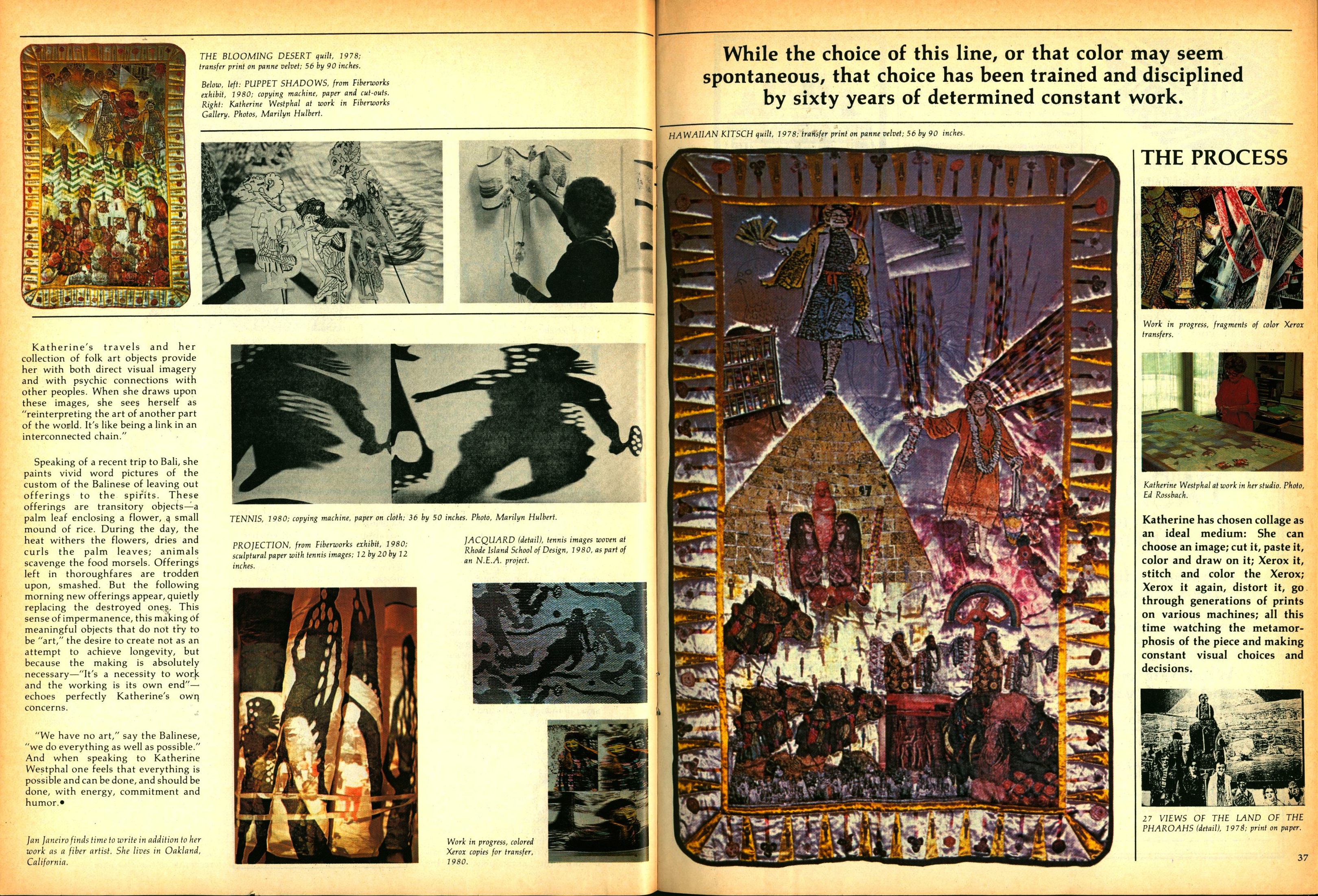
FiberArts. 1980, No 6.
Katherine Westphal.

Left Page: “Rose of Fire” and “Movement of Red” by Akiko Kotani.
Right Page: Carol Mecagni

FiberArts. 1979.
Pam Patrie.

FiberArts. 1980, No 6.
Judith Poxson Fawkes.
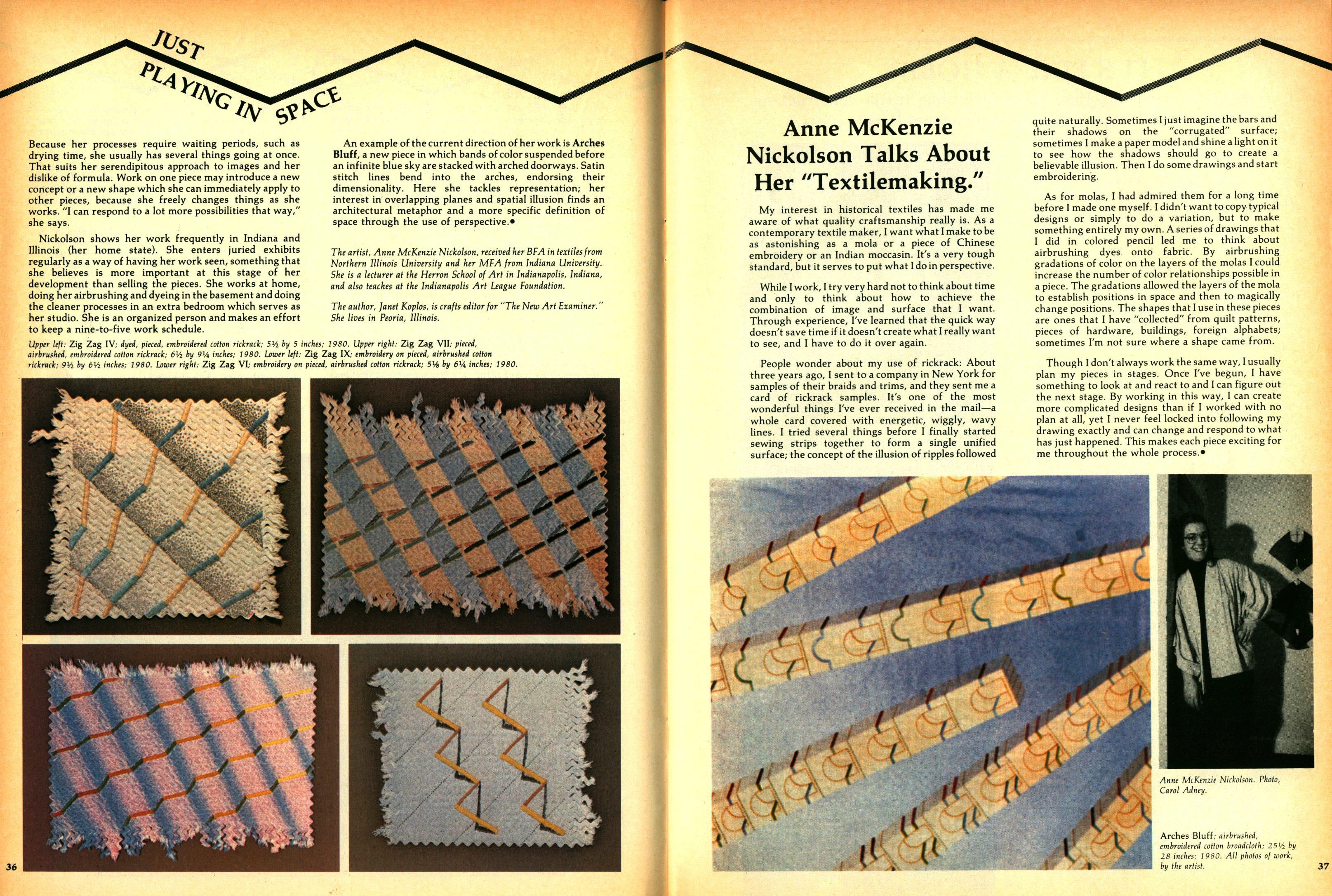
FiberArts. 1981, No 2.
Anne McKenzie Nicholson.

FiberArts. March/April 1982.
Machine-Knit garments by Betsy Lahaussios, Mickey Nushawg, Susanna Lewis, Jean Williams Cacicedo.
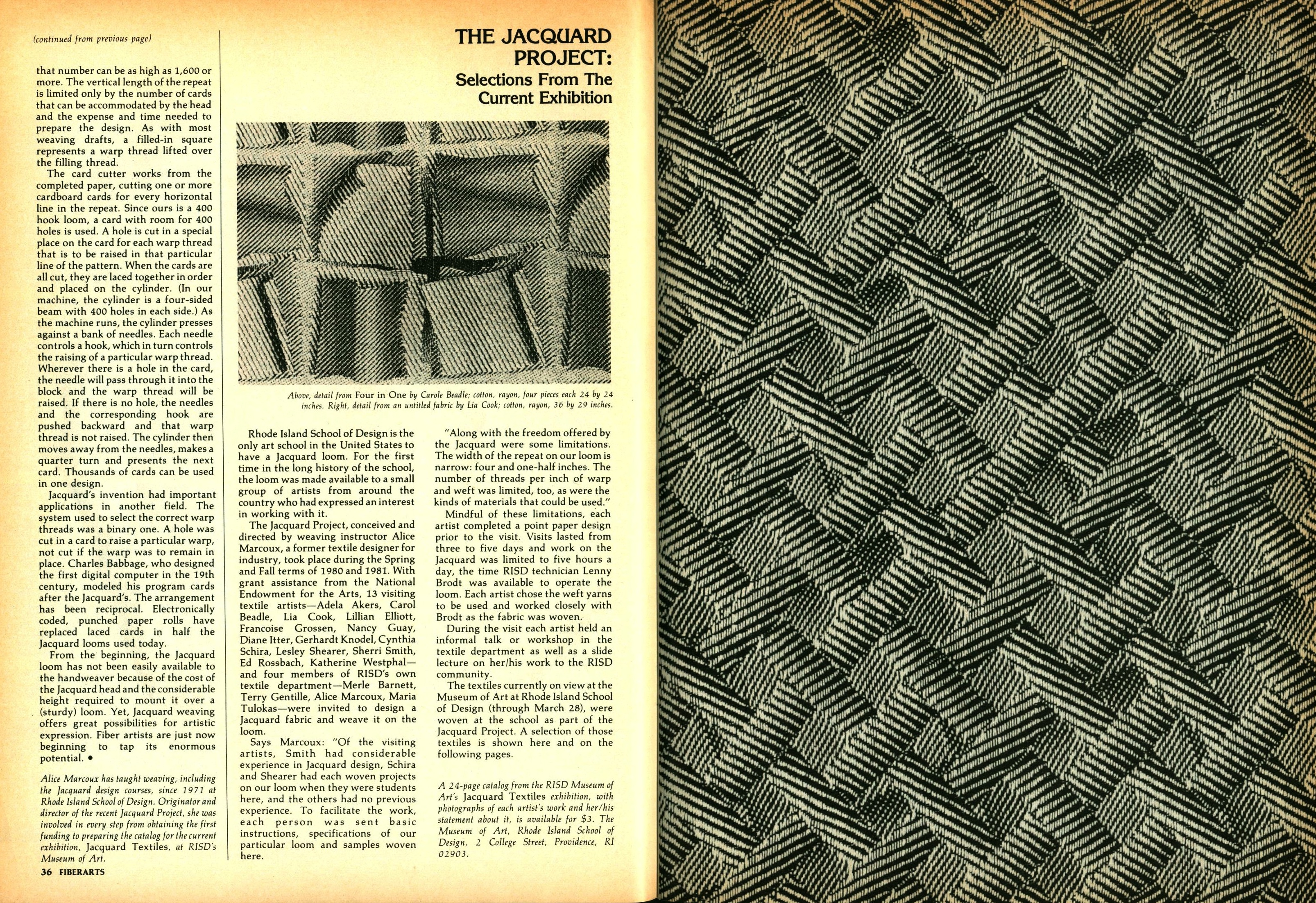
FiberArts. March/April 1982.
Left: detail of “Four in One” by Carole Beadle.
Right: detail of work by Lia Cook.
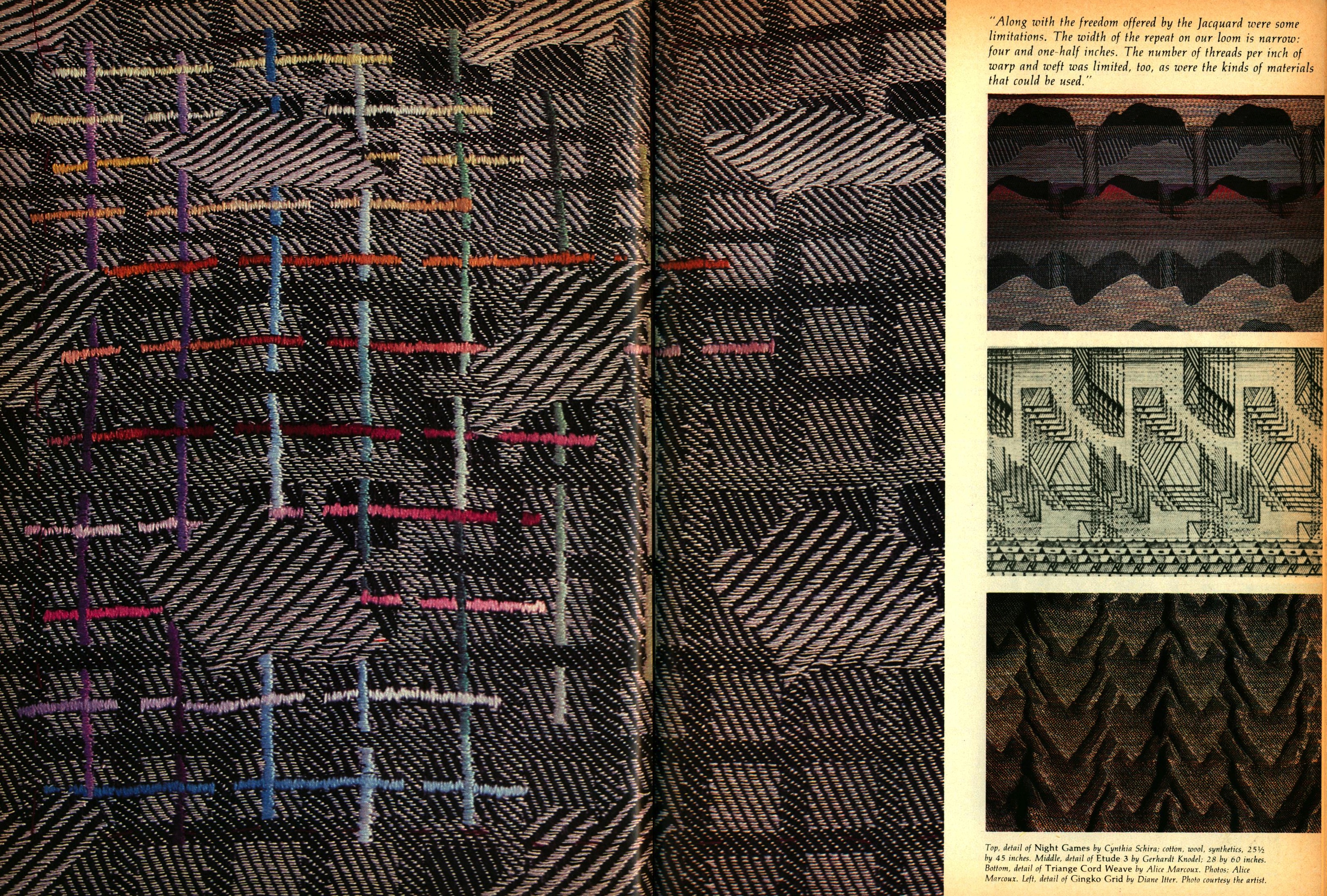
FiberArts. March/April 1982.
Large picture: “Gingko Grid” by Diane Itter.
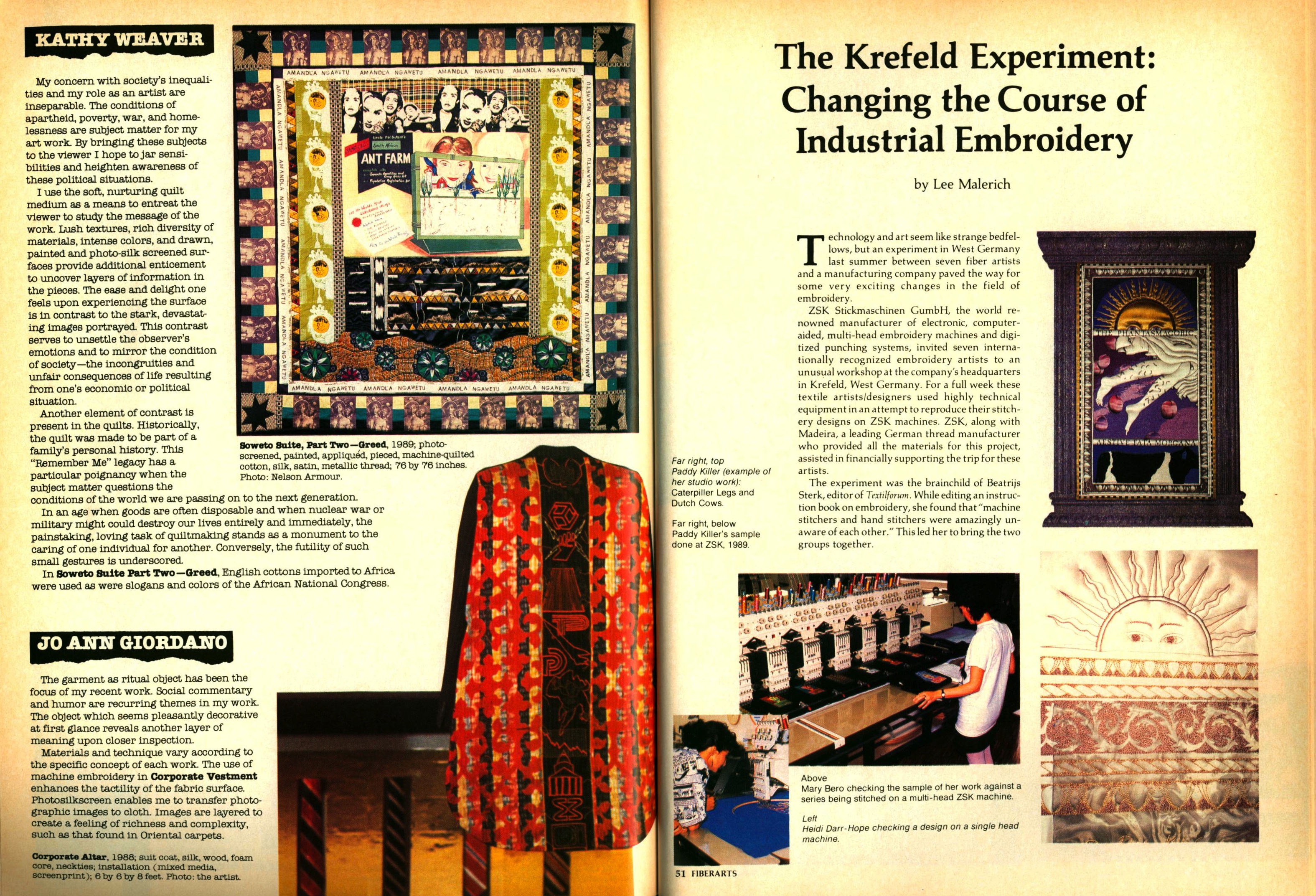
FiberArts. Summer 1990.

FiberArts. Summer 1990.

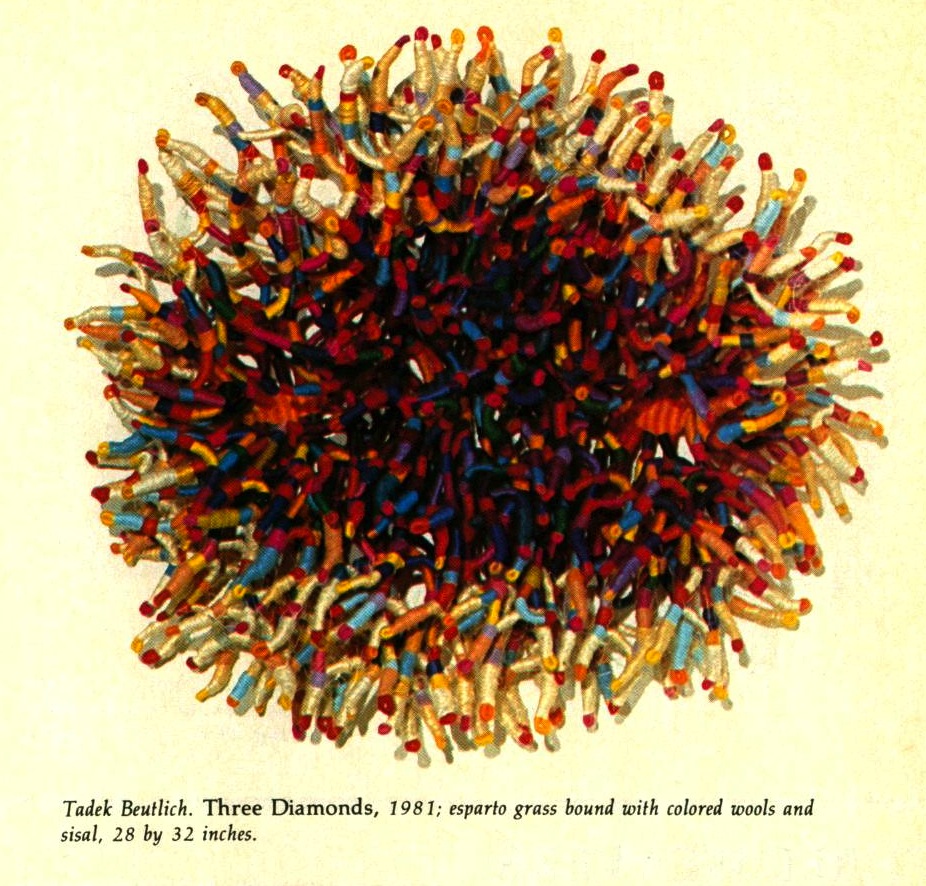
FiberArts. November/December 1982.
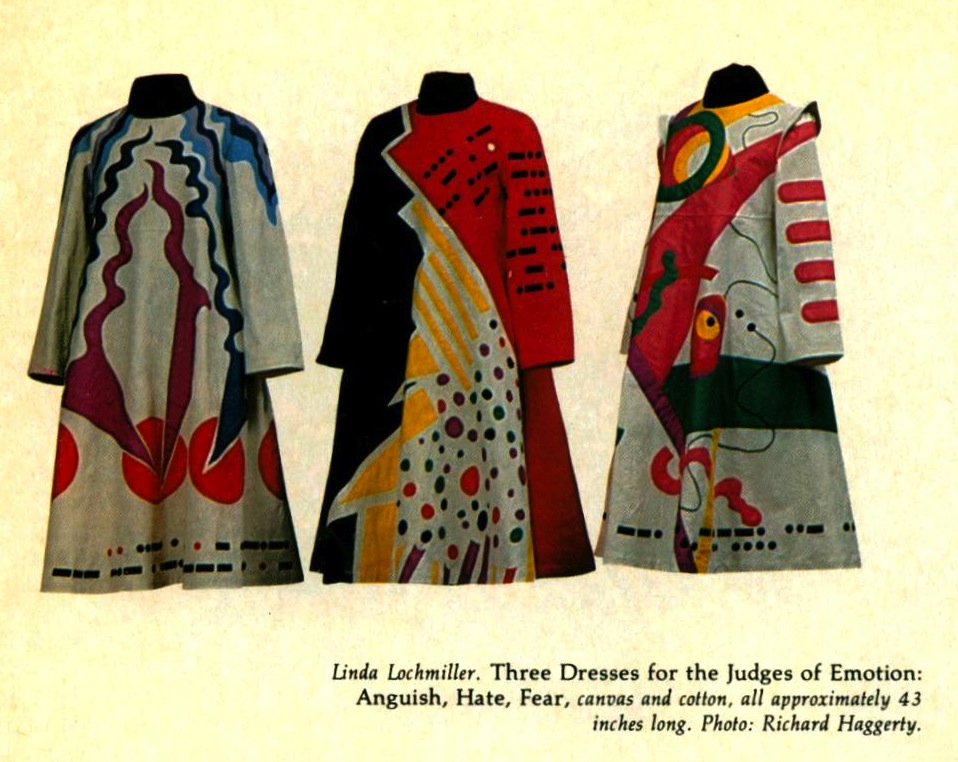
FiberArts. November/December 1982.

FiberArts. January/February 1983.
Top Left: Man’s Robe. Turkestan.
Top Right: “Charles Patless” by Pat Oleszko.
Bottom: “Stop and Go Dress” by Cynthia Pannucci.
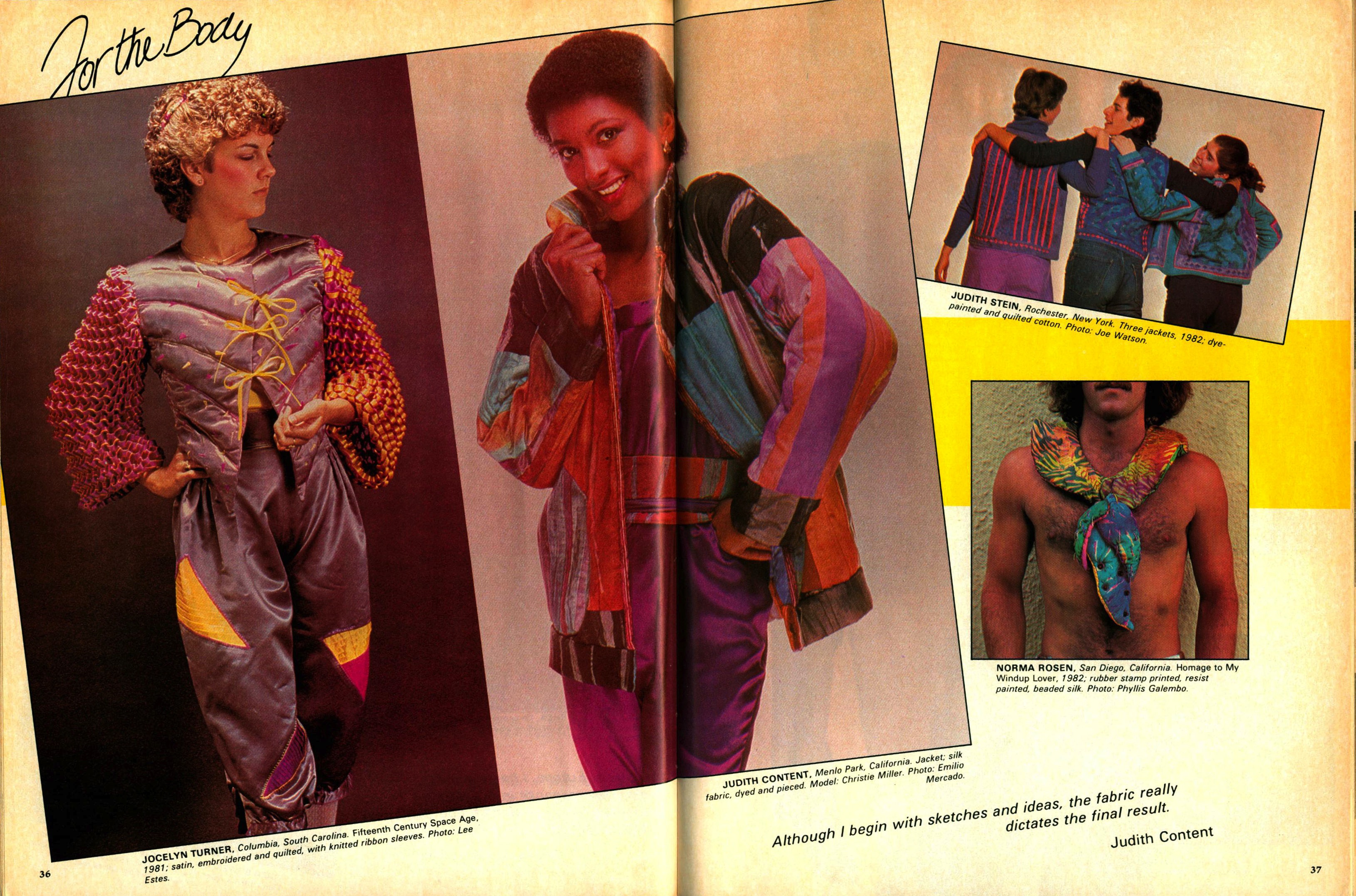
FiberArts. January/February 1983.
Left to Right, Clockwise (Artists, not pictured): Jocelyn Turner, Judith Content, Judith Stein, Norma Rosen.

FiberArts. January/February 1983.
Clockwise from bottom left (artists, not pictured): Cate Fitt, Fraas/Slade, Yvonne Porcella, Ellen Haputli, Dina Knapp.

Nance O’Banion
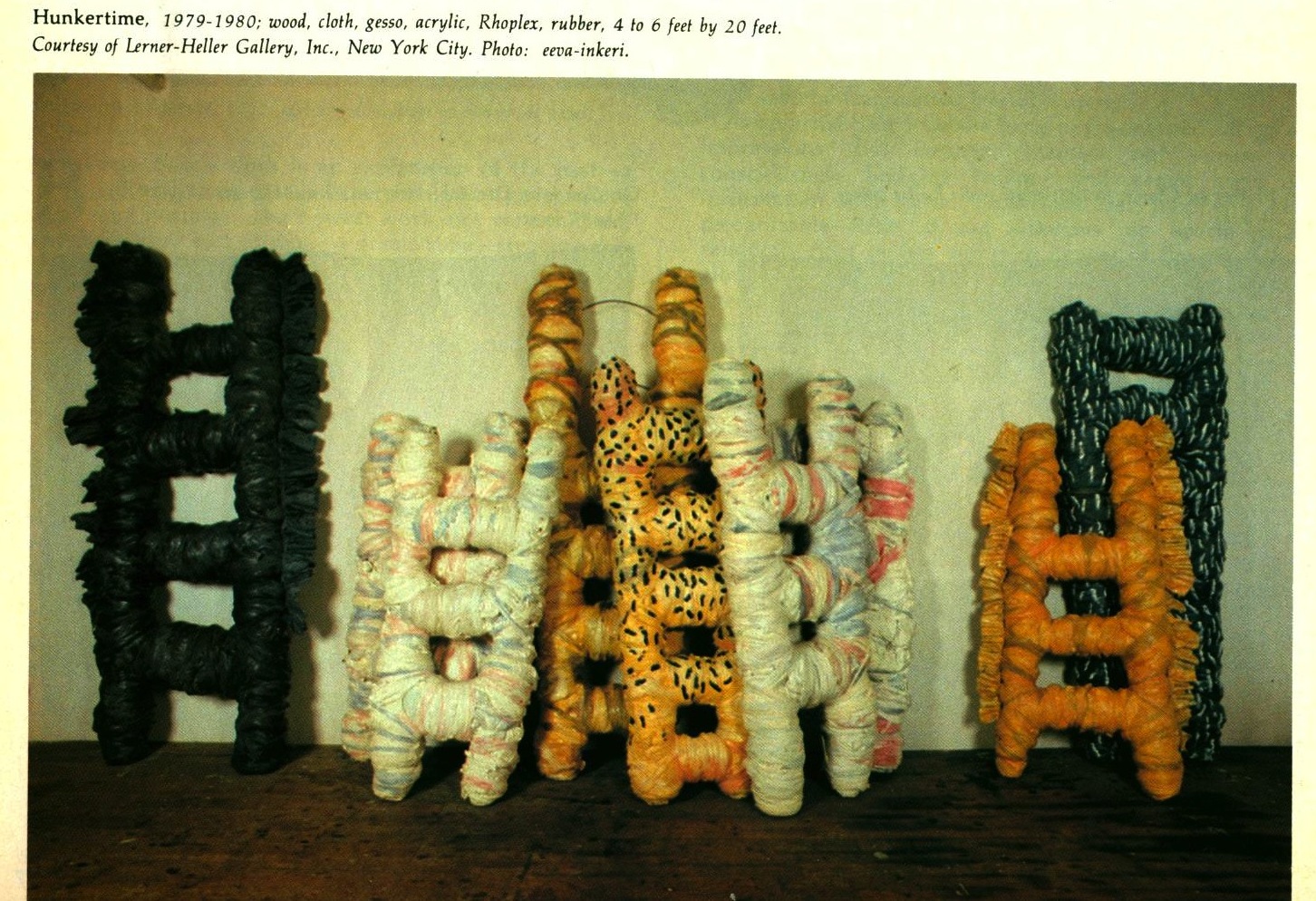
Harmony Hammond

FiberArts. 1980, No 6.
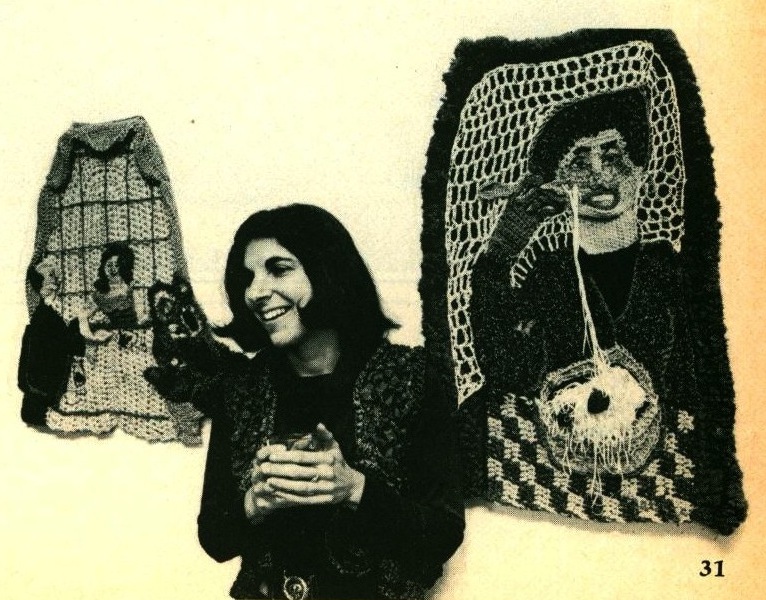
Bonnie Meltzer with two of her crocheted yarn hangings, “Middle Aged Date” and “Man Eating Spaghetti”

Betye Saar
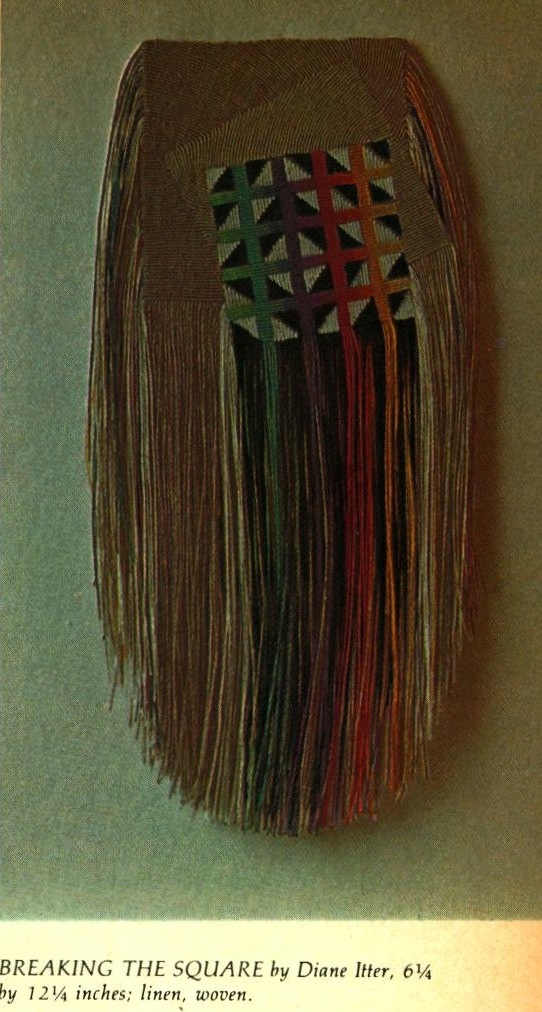
FiberArts, Volume 1. 1980.

FiberArts. 1981, No 2.
“Moma and Nana” by Faith Ringgold.

FiberArts, Volume 1. 1980.
Plaid Shirt by Deborah Kaufman, Felted Wool, 26 x 36 “
Masks – Mexican +++
Masks – Mexican has 93 items and joins Masks – African as the only subdivisions to the general Masks folder in the Picture collection. Please enjoy the following sample.
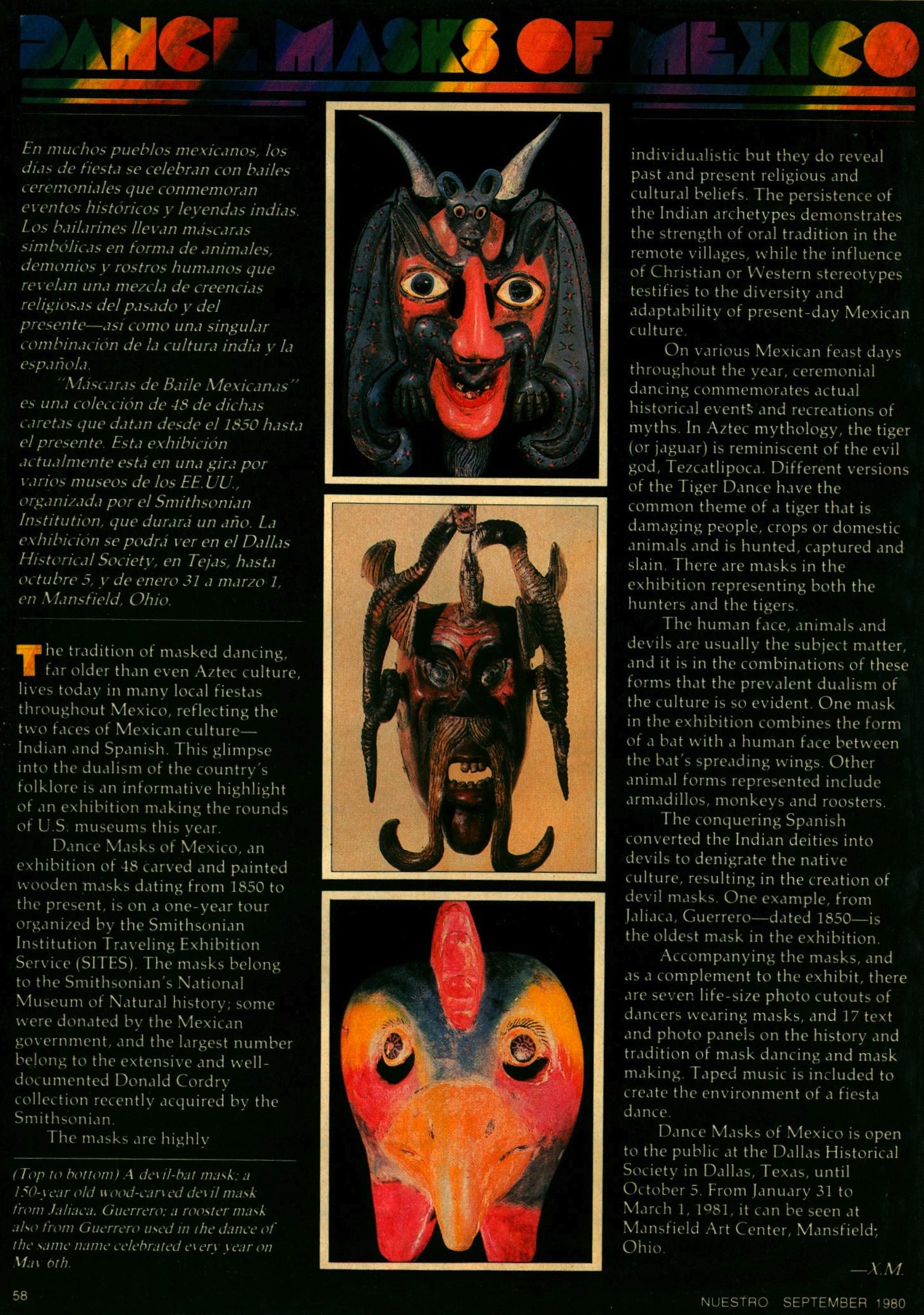
Nuestro, September 1980.
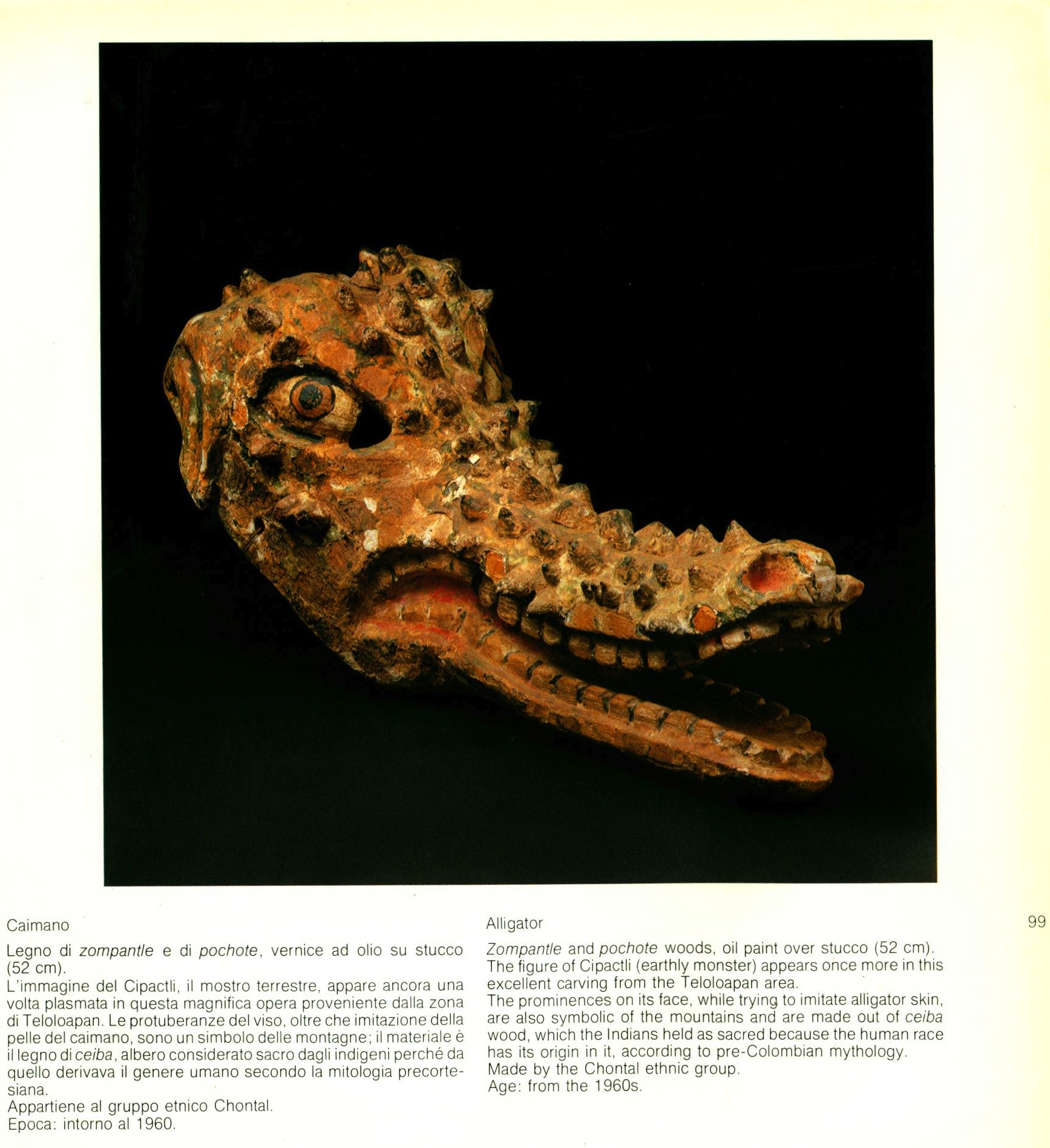
“Maschere de Messico” (Masks of Mexico), 1981.
Alligator

“Maschere de Messico” (Masks of Mexico), 1981.
Devil
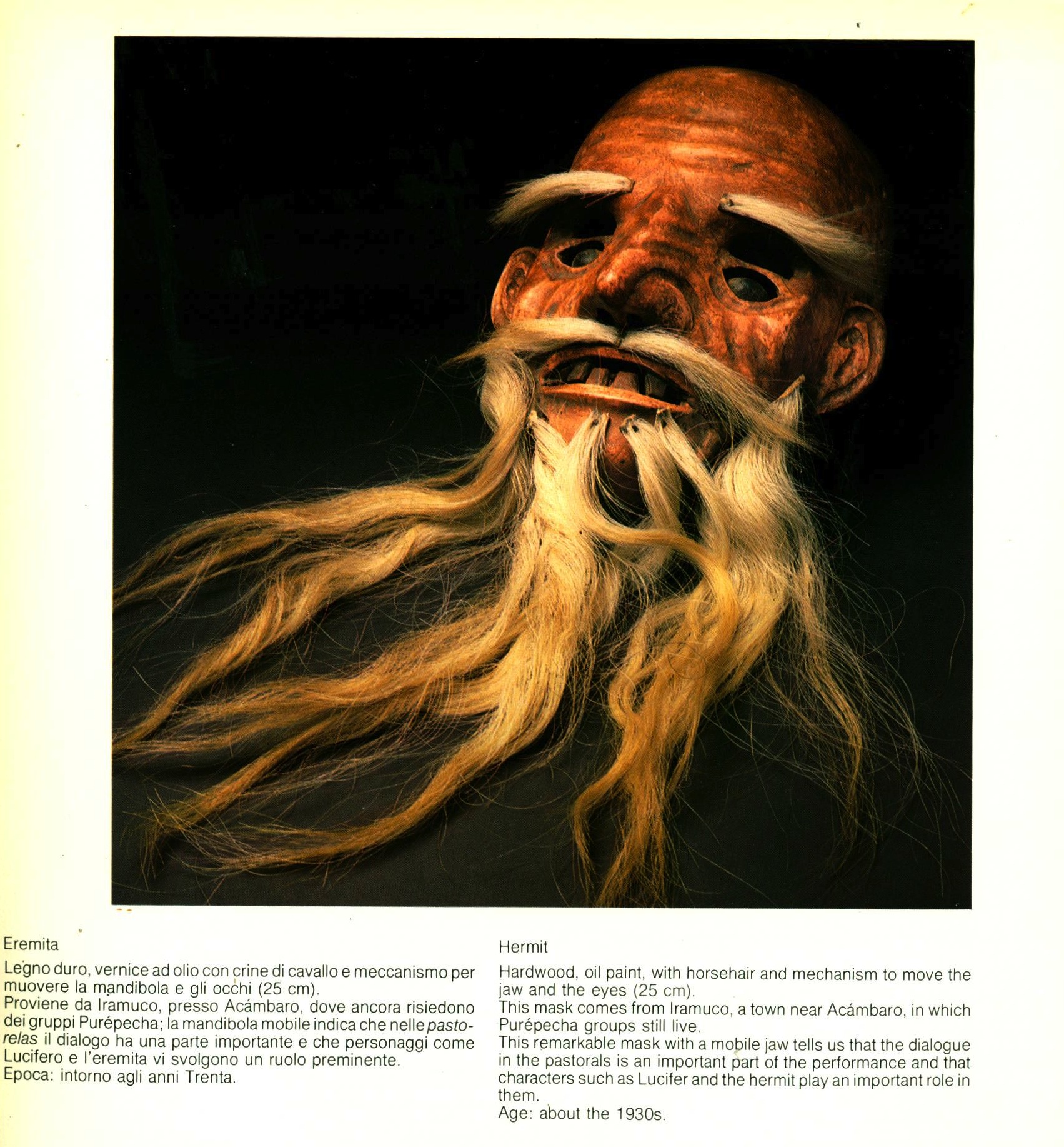
“Maschere de Messico” (Masks of Mexico), 1981.
Hermit
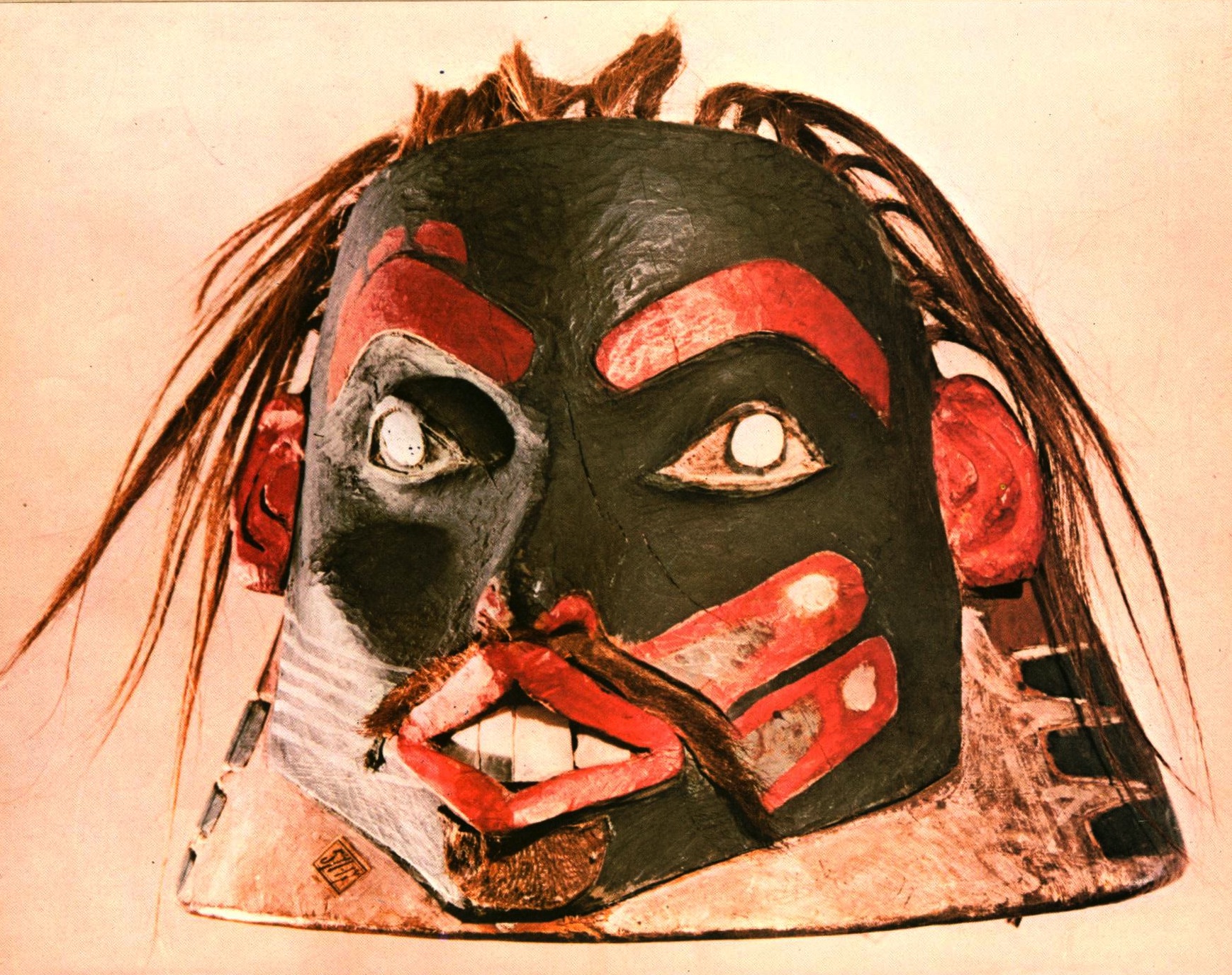

“Maschere de Messico” (Masks of Mexico), 1981.
Monkey

“Maschere de Messico” (Masks of Mexico), 1981.
Parachico

Accordion pamphlet from the Dayton Museum of Natural History exhibit “The Many Faces of Mexico: a Celebration of Masks”.

Accordion pamphlet from the Dayton Museum of Natural History exhibit “The Many Faces of Mexico: a Celebration of Masks”.
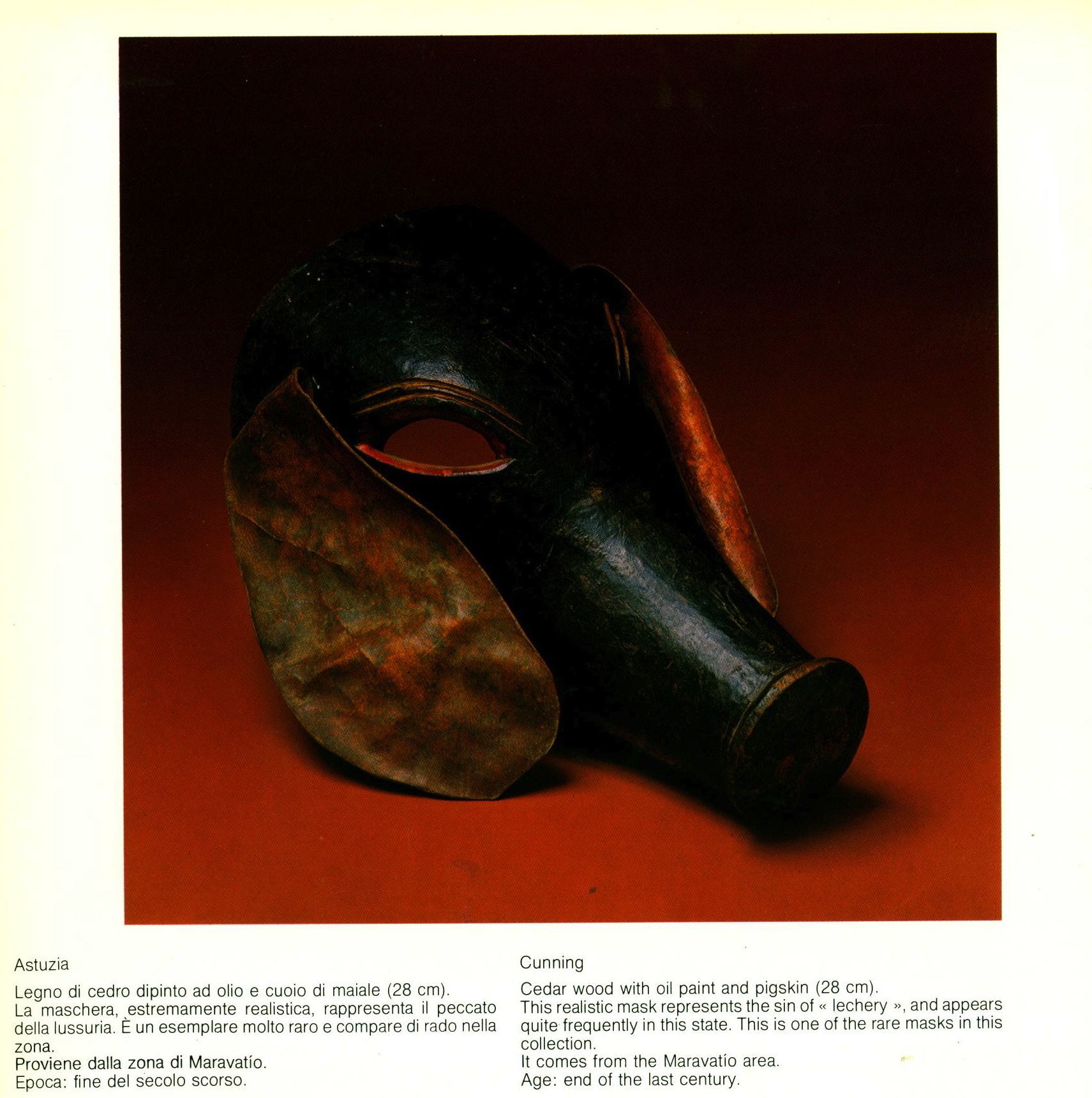
“Maschere de Messico” (Masks of Mexico), 1981.
Cunning

“Maschere de Messico” (Masks of Mexico), 1981.
Bat

British Journal of Photography, 2006.

“Maschere de Messico” (Masks of Mexico), 1981.
Sin
Shonen Jump
Shonen Jump, “The World’s Most Popular Manga”, was a monthly Americanized version of the original weekly Japanese Shonen Jump. The first American Issue (no. 0) came out in November 2002. The magazine featured around 6 different comics, each by a different artist with ongoing stories that continued from one issue to the next. Featured manga titles include Naruto, Yu-Gi-Oh!, Bleach, One Piece, Dragon Ball Z, Slam Dunk, and Yu Yu Hakusho.

Shonen Jump
The library has a total of 98 Shonen Jump‘s (all but 2) from the first to the final issue.
Remember: manga reads from right to left!

Shonen Jump, Vol. 1, no. 0.
Cover

Naruto by Masashi Kishimoto.
Shonen Jump, Vol. 1, No. 2. February 2003.
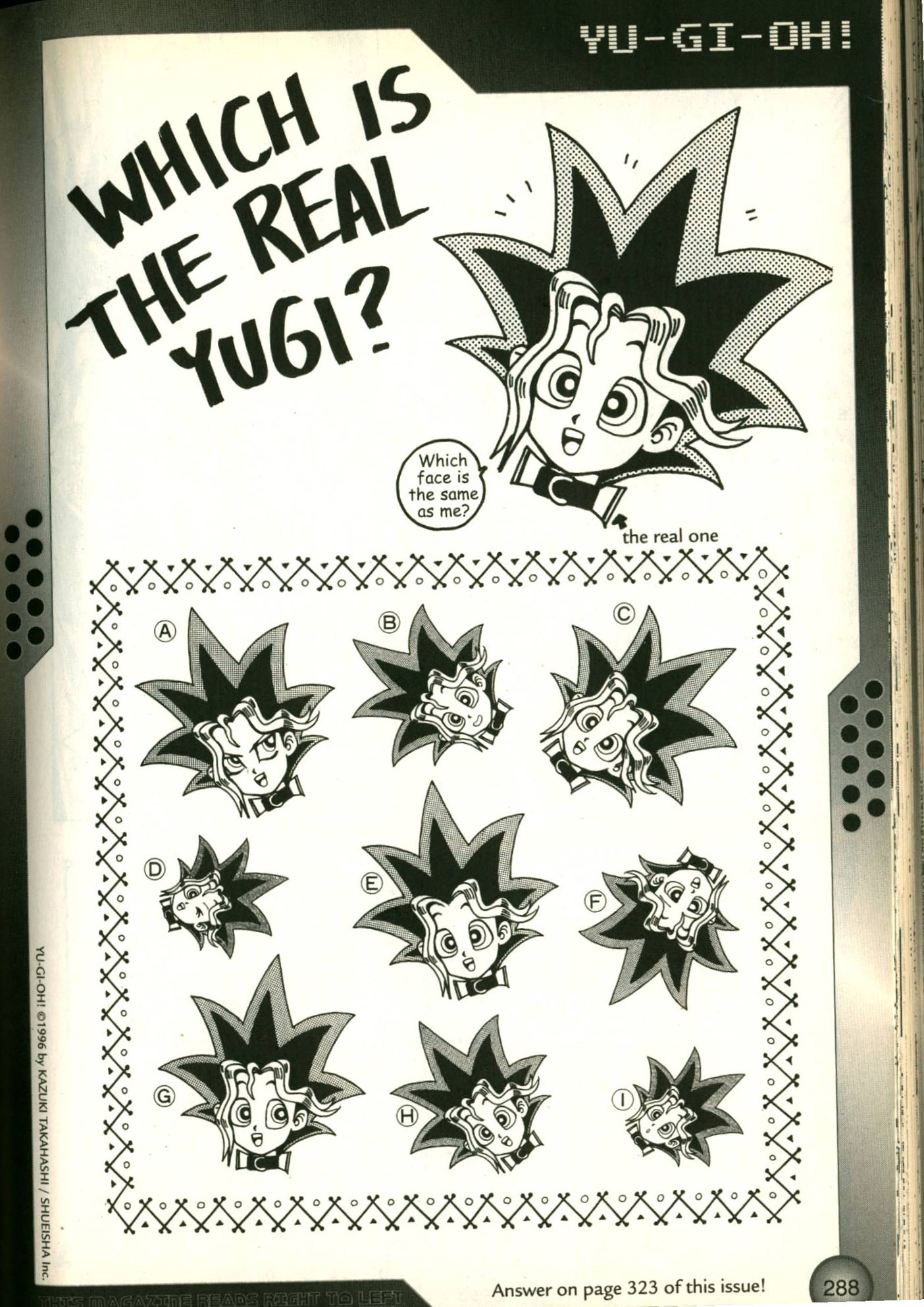
Yu-Gi-Oh Activity
Shonen Jump, Vol. 1, No. 2. February 2003.
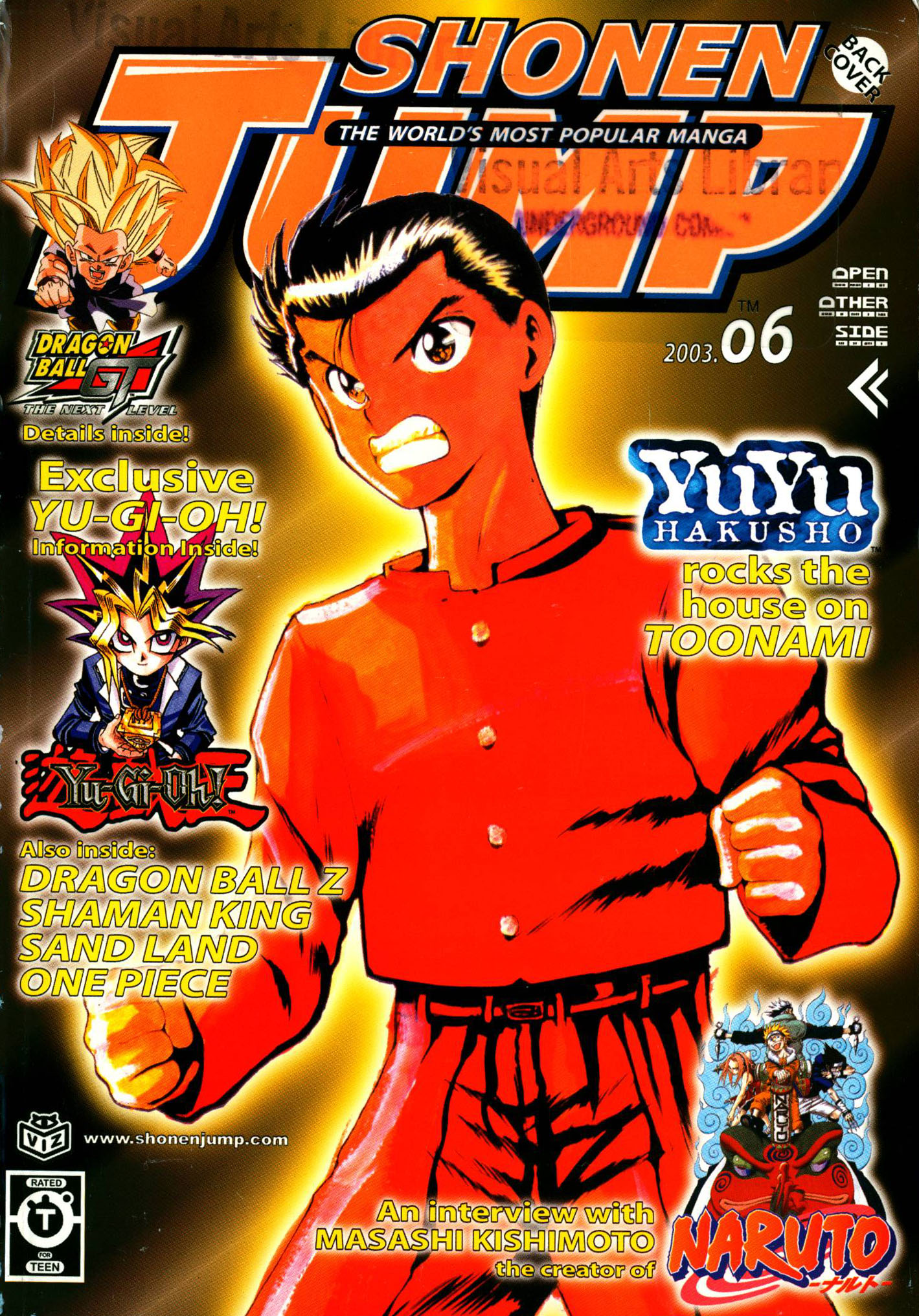
Shonen Jump, Vol. 1, No. 6. June 2003.
Cover
The images that follow are all from the comic YuYu Hakusho by Yoshihiro Togashi, which centers around teenage rebel/gang member/punk Yusuke Urameshi.
The compositions, in fight scenes especially, are extremely dynamic, with onomatopoeia sprinkled all over the place (WHAM!):

YuYu Hakusho by Yoshihiro Togashi.
Shonen Jump, Vol. 1, No. 6. June 2003.

YuYu Hakusho by Yoshihiro Togashi.
Shonen Jump, Vol. 1, No. 5. May 2003.

YuYu Hakusho by Yoshihiro Togashi.
Shonen Jump, Vol. 1, No. 4. April 2003.
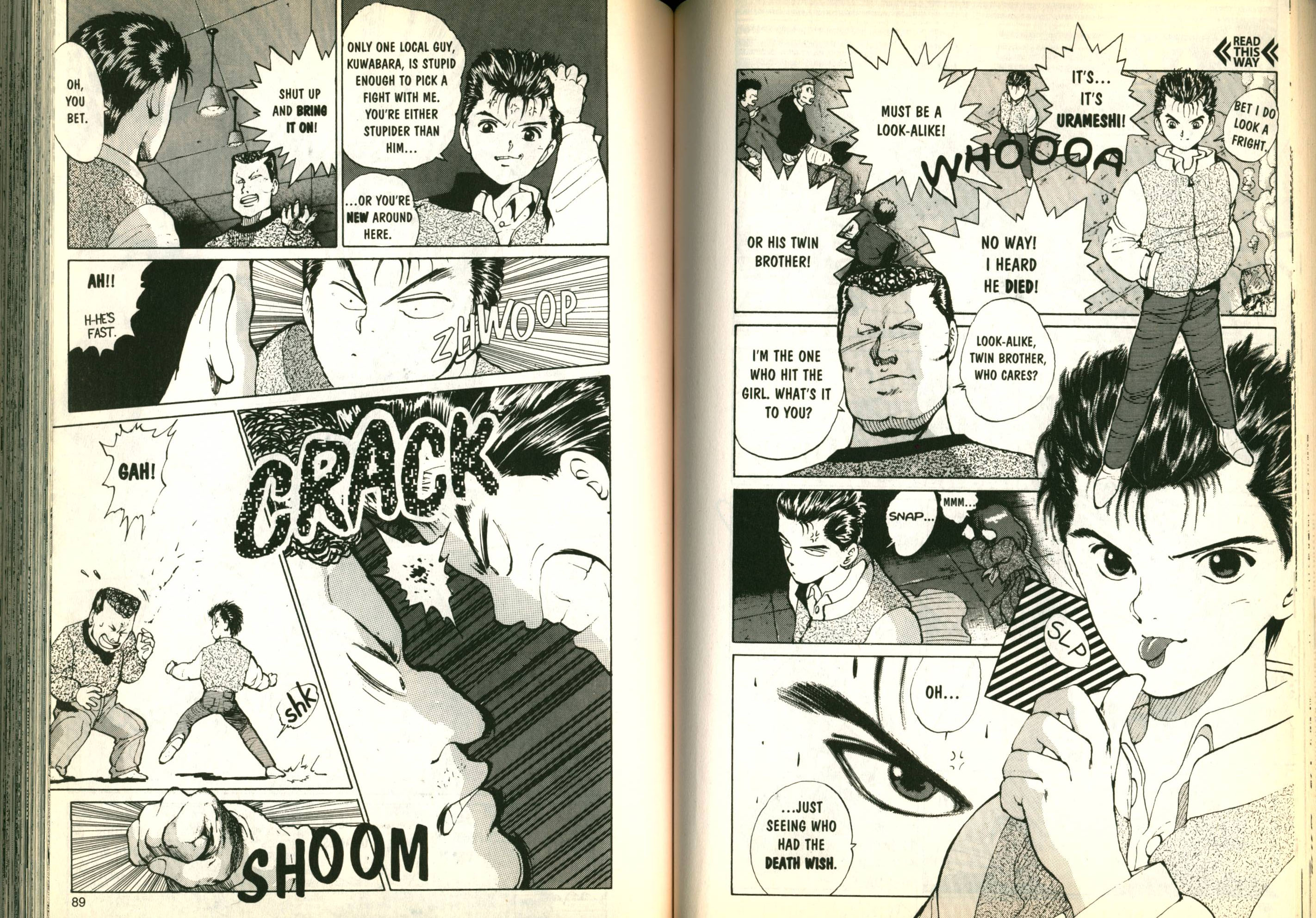
YuYu Hakusho by Yoshihiro Togashi.
Shonen Jump, Vol. 1, No. 5. May 2003.

YuYu Hakusho by Yoshihiro Togashi.
Shonen Jump, Vol. 1, No. 3. March 2003.

The comic is graphically playful — many different textures (halftones, gradients, speckles, marble, probably achieved through Letratone) are juxtaposed side-by-side and flatten the image.

YuYu Hakusho by Yoshihiro Togashi (close-up).
Shonen Jump, Vol. 1, No. 4. April 2003.

YuYu Hakusho by Yoshihiro Togashi.
Shonen Jump, Vol. 1, No. 5. May 2003.
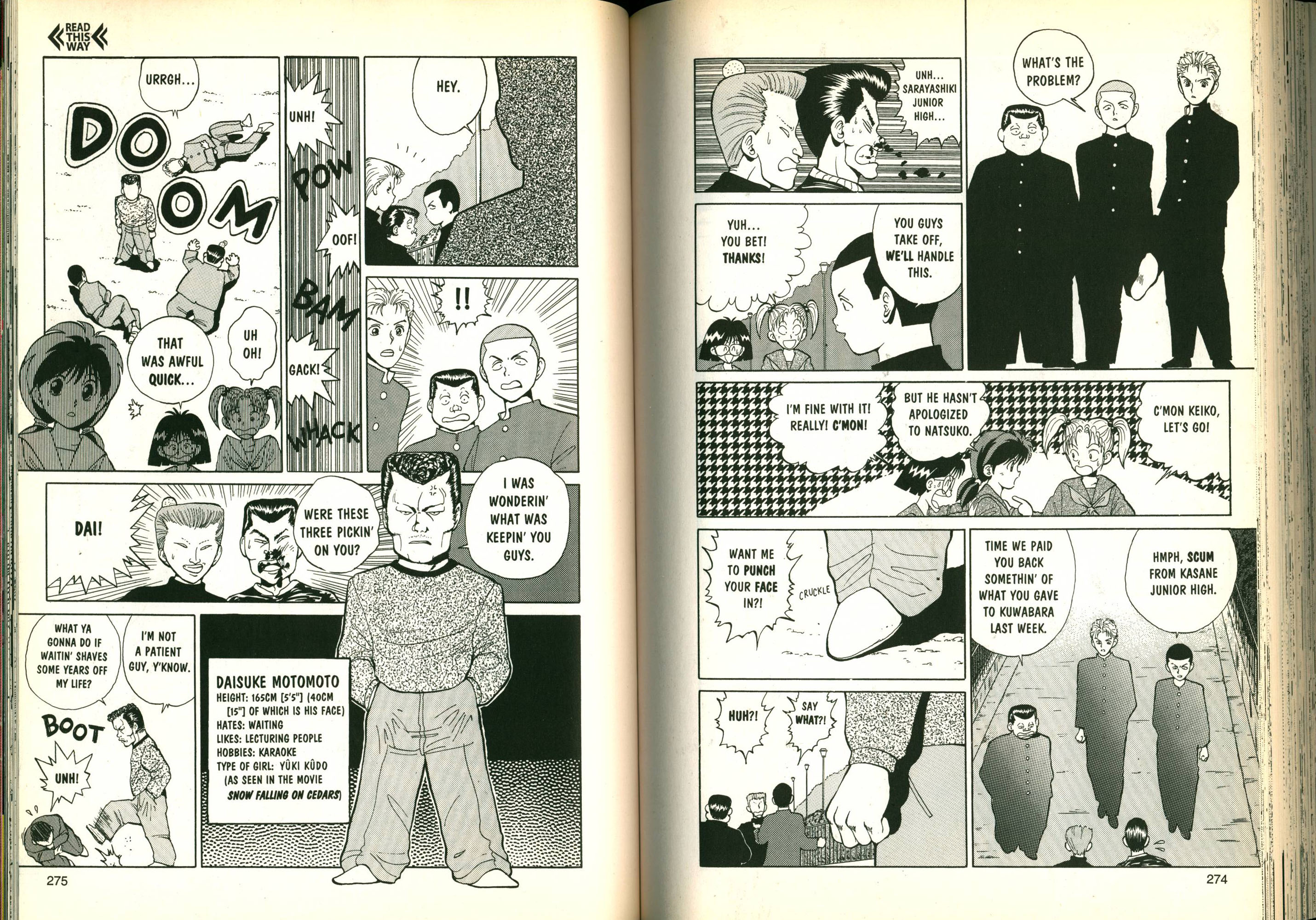
YuYu Hakusho by Yoshihiro Togashi.
Shonen Jump, Vol. 1, No. 4. April 2003.
Togashi sometimes entirely changes his drawing style for a single panel and draws a character off-model for comedic or dramatic effect.

YuYu Hakusho by Yoshihiro Togashi.
Shonen Jump, Vol. 1, No. 5. May 2003.
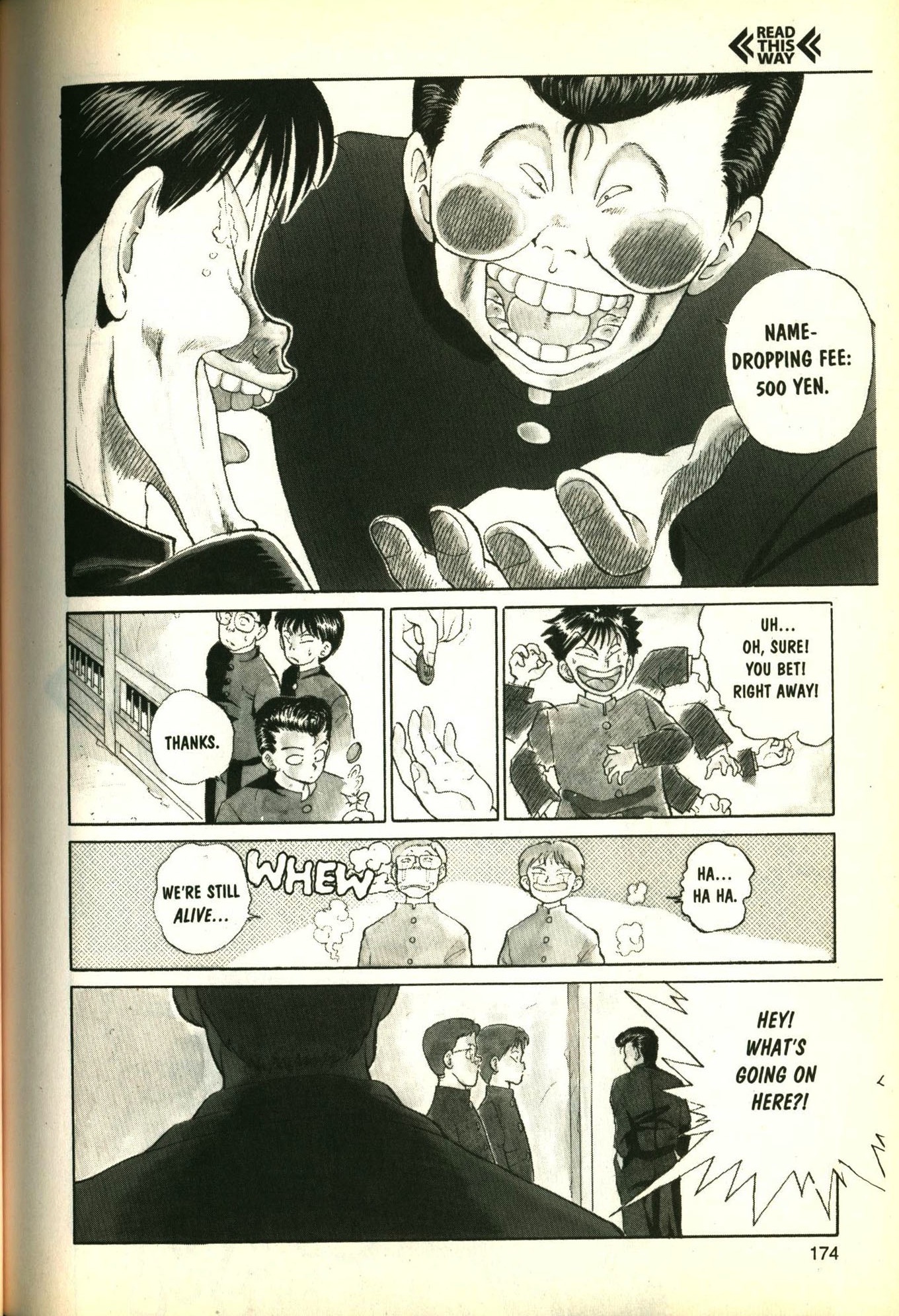
YuYu Hakusho by Yoshihiro Togashi.
Shonen Jump, Vol. 1, No. 1. January 2003.
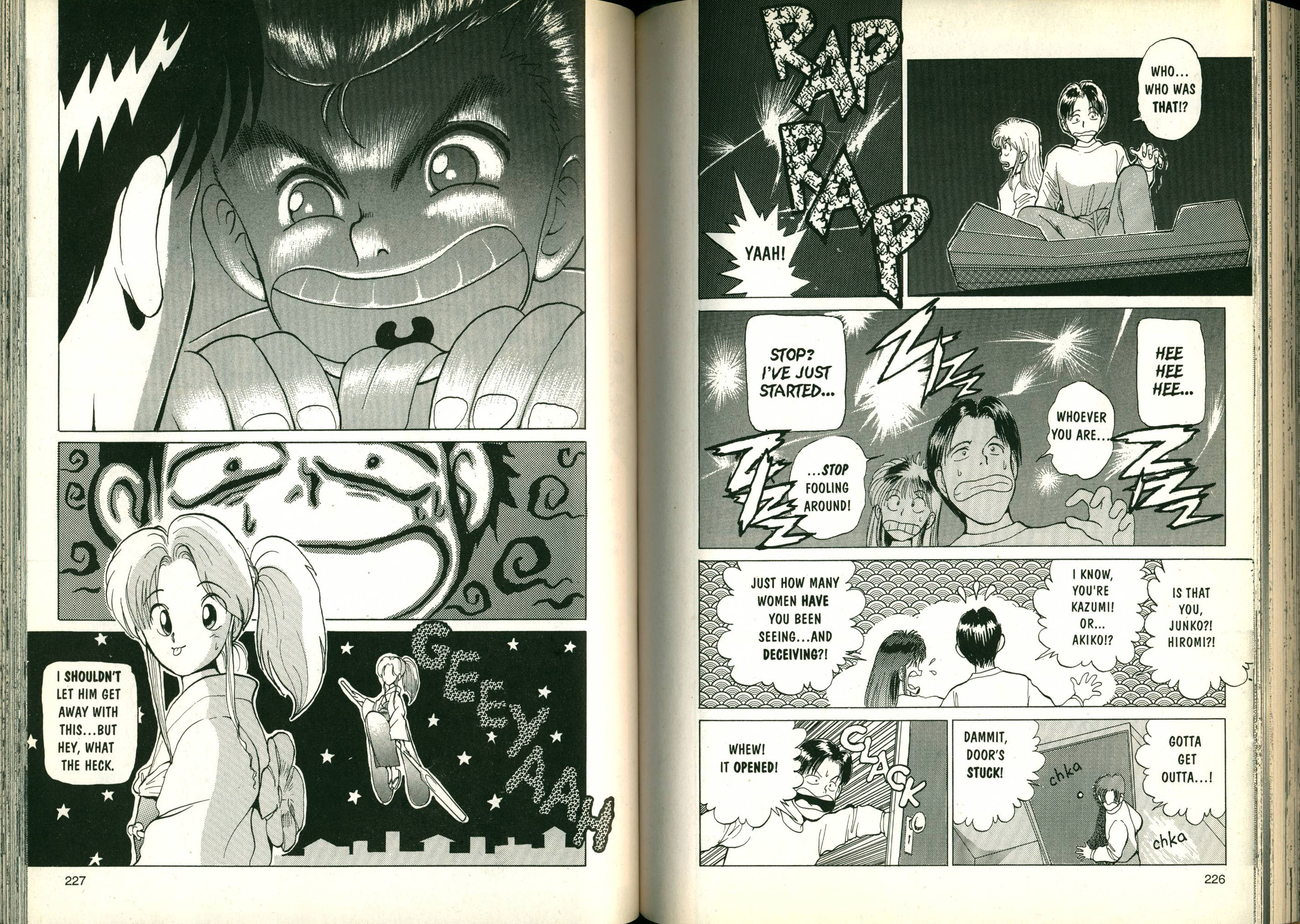
YuYu Hakusho by Yoshihiro Togashi.
Shonen Jump, Vol. 1, No. 3. March 2003.

YuYu Hakusho by Yoshihiro Togashi.
Shonen Jump, Vol. 1, No. 2. February 2003.
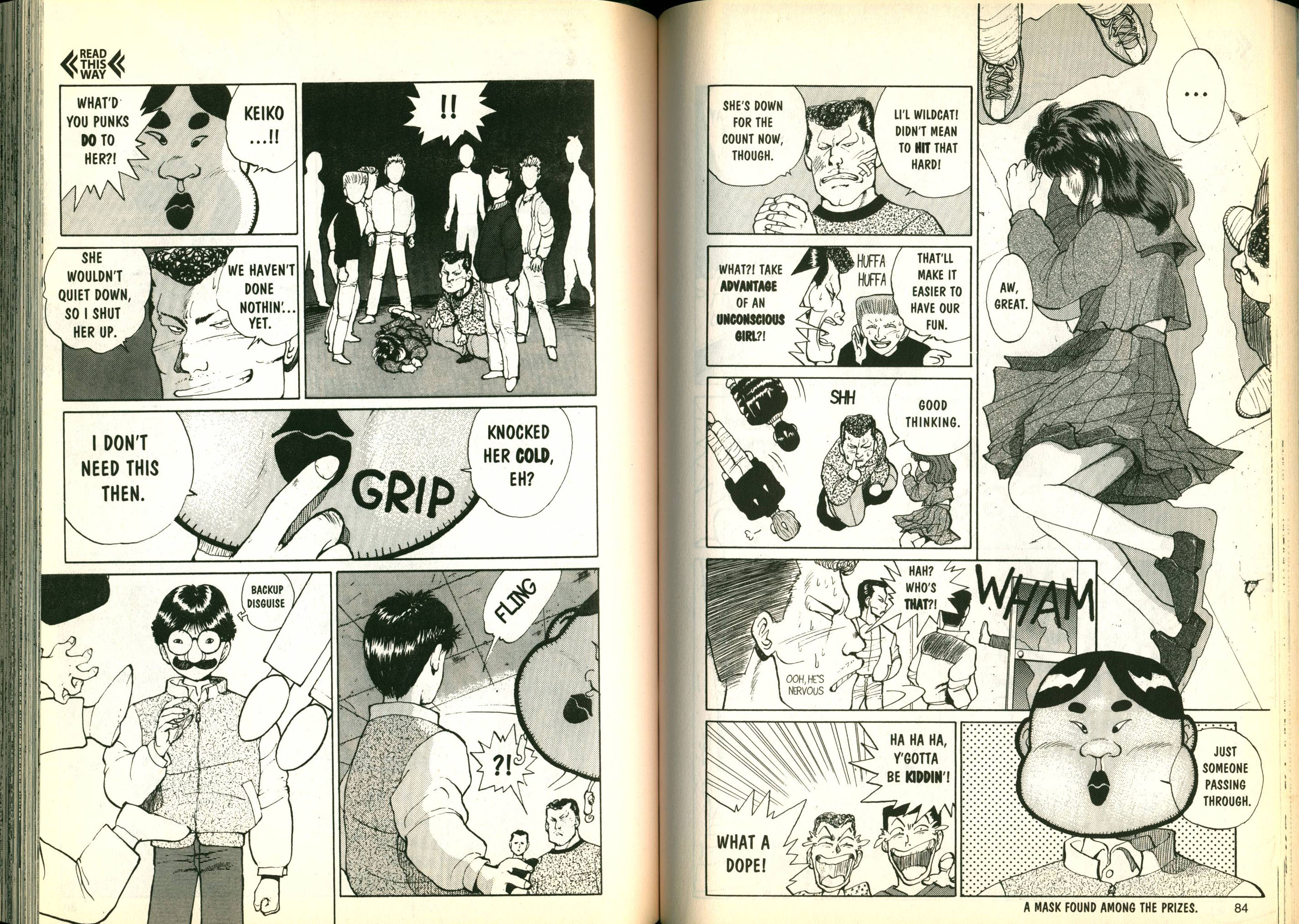
YuYu Hakusho by Yoshihiro Togashi.
Shonen Jump, Vol. 1, No. 5. May 2003.
American Fabrics and Fashion
American Fabrics and Fashion (also called American Fabrics) was a commercial textile magazine created as a guide for manufacturers in the fabrics industry. In every issue there are dozens of physical fabric samples glued in, so in case you were wondering, “What did the 50’s feel like?”, here is the most literal answer to your question. Accompanying the samples are textile advertisements and sometimes the samples are even incorporated into the ads themselves. For anyone interested in fashion, textiles or all that is tactile, American Fabrics is a publication of great cultural and historical value.

We have 105 Issues of American Fabrics, 1946-1975.

American Fabrics, Number 72. 1966.

American Fabrics, Number 69. Fall 1965.
Cover Art by W Lully.

American Fabrics, Number 71. Spring/Summer 1966.
Cover Art by W Lully.

American Fabrics, Number 85. Winter 1969.
Cover Art by W Lully.
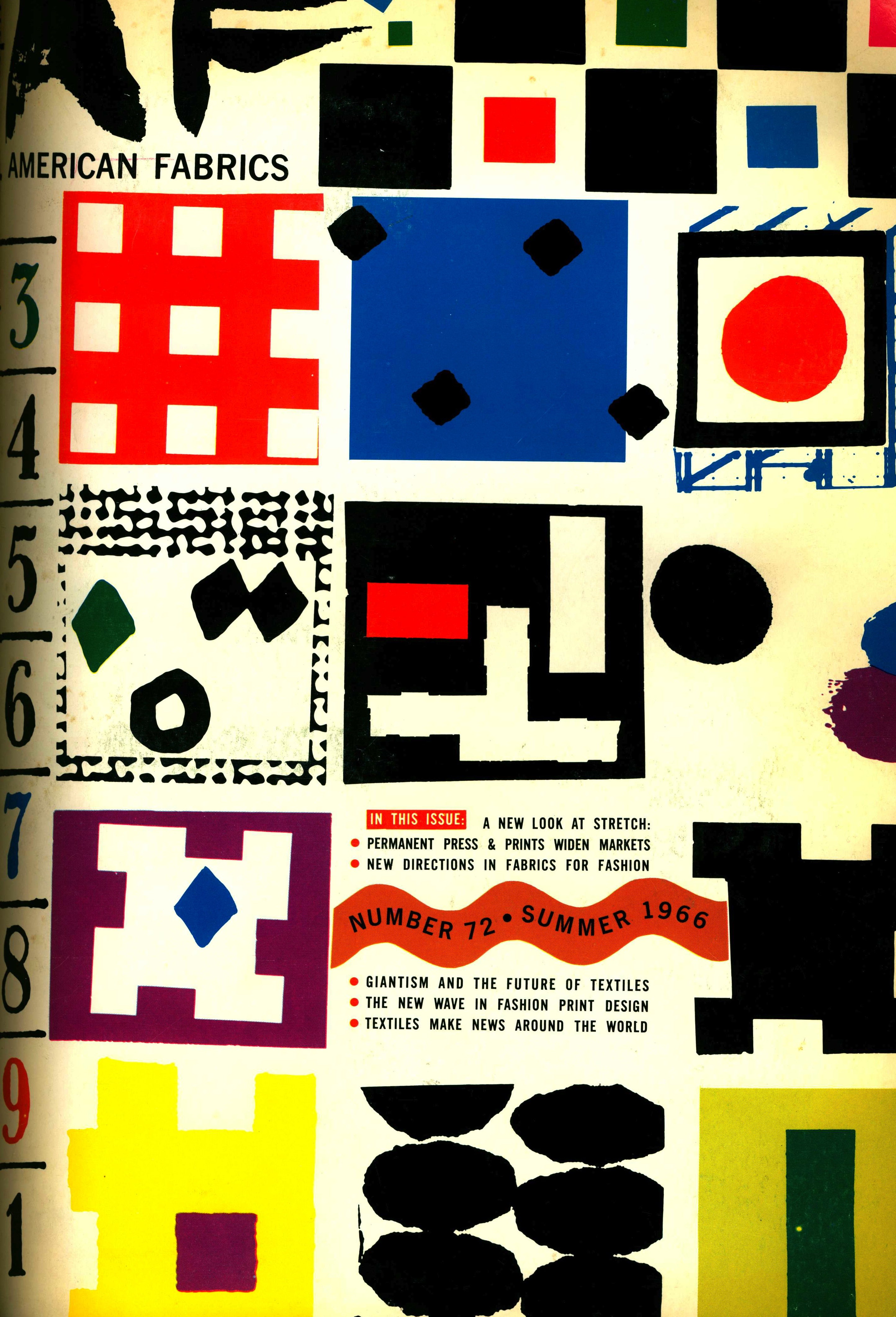
American Fabrics, Number 72. Summer 1966.
Cover Art by W Lully.
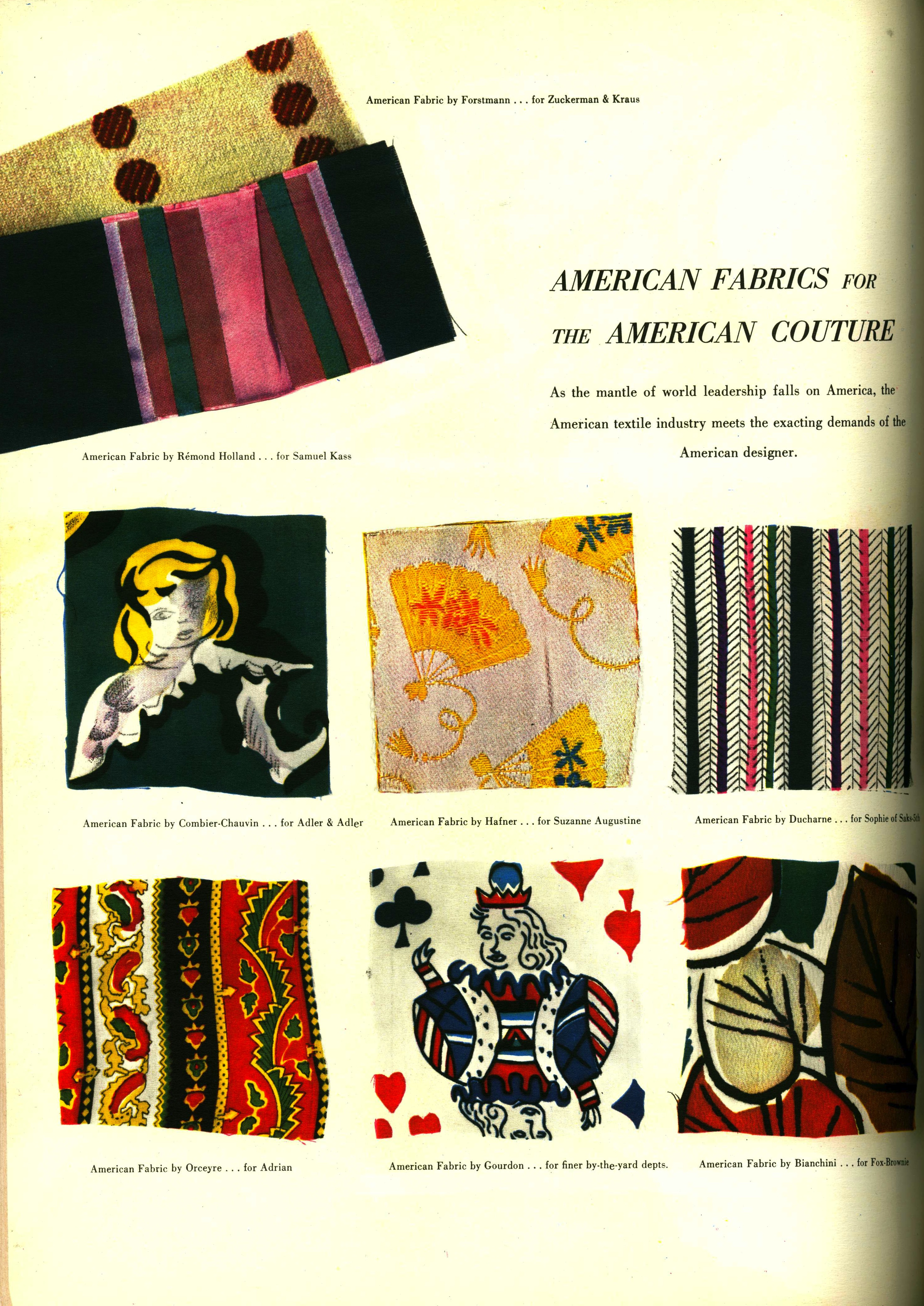
American Fabrics, Number 2. 1947.

American Fabrics, Number 88. Fall 1970.
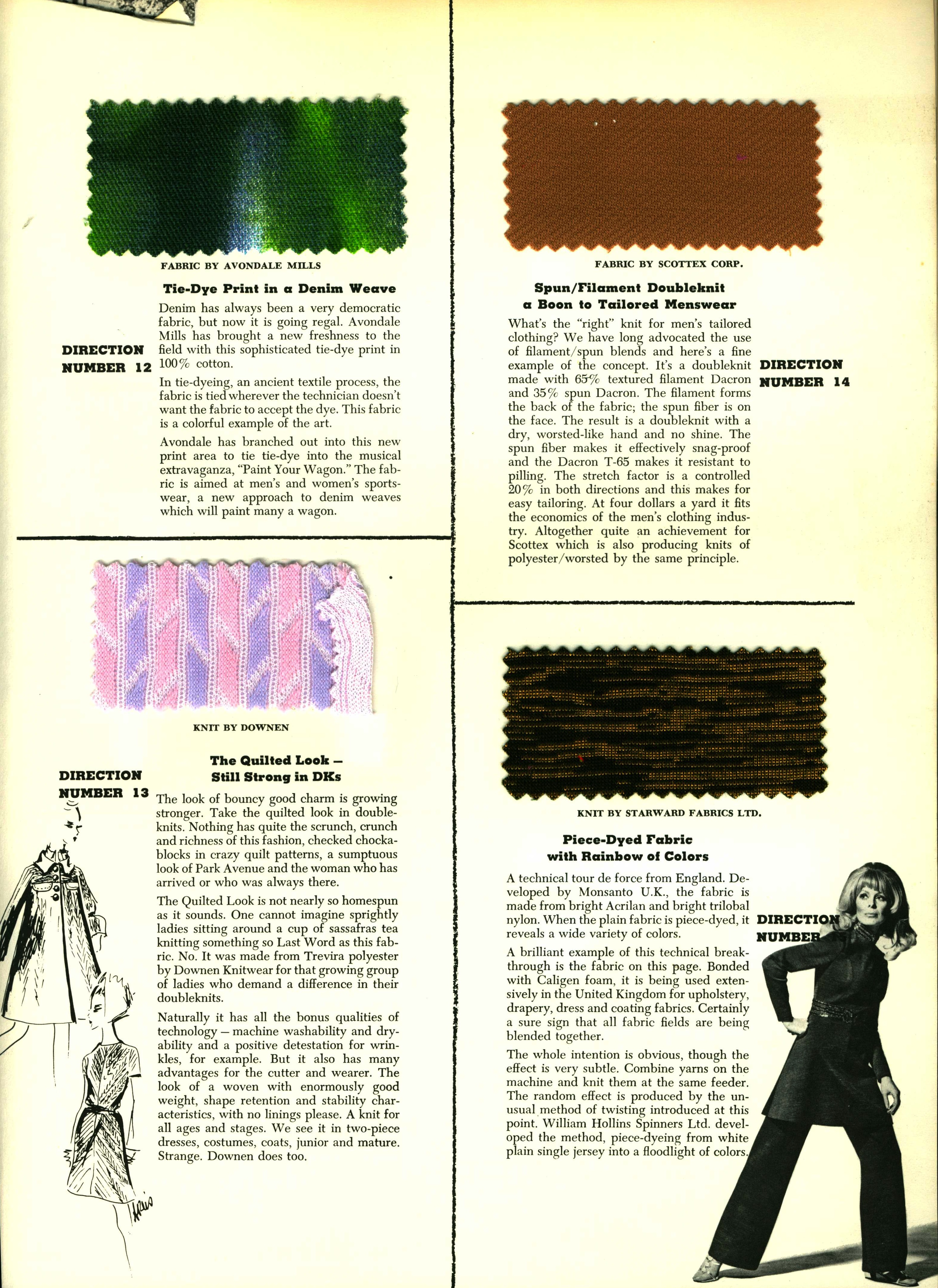
American Fabrics, Number 85. Winter 1969.

American Fabrics, Number 85. Winter 1969.

American Fabrics, Number 103. Spring 1975.
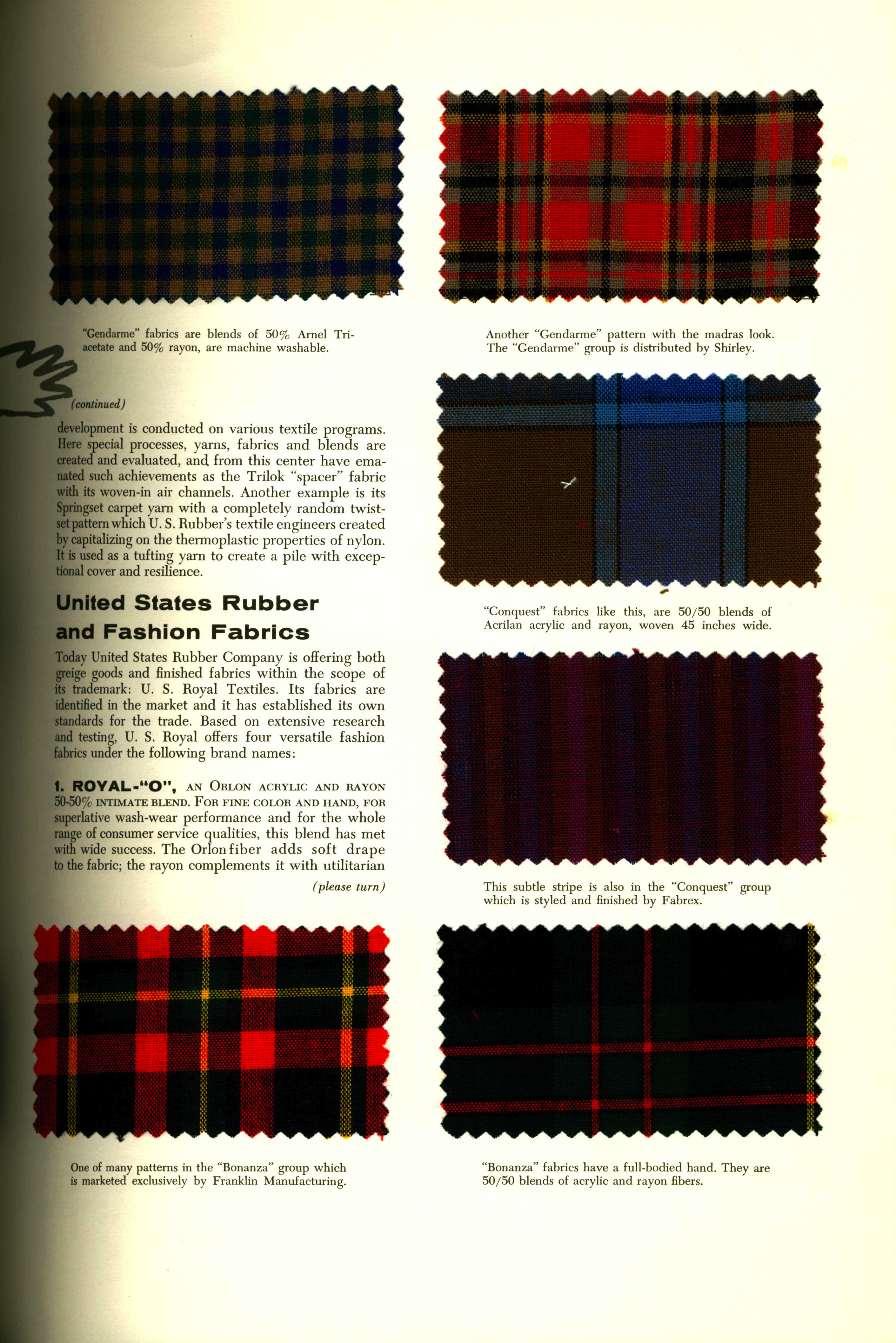
American Fabrics, Number 50. Summer 1960.

American Fabrics, Number 49. Spring 1960.

American Fabrics, Number 30. Fall 1954.

American Fabrics, Number 52. Spring 1961.
(Not a picture of Supima seeds but a real packet of seeds!)
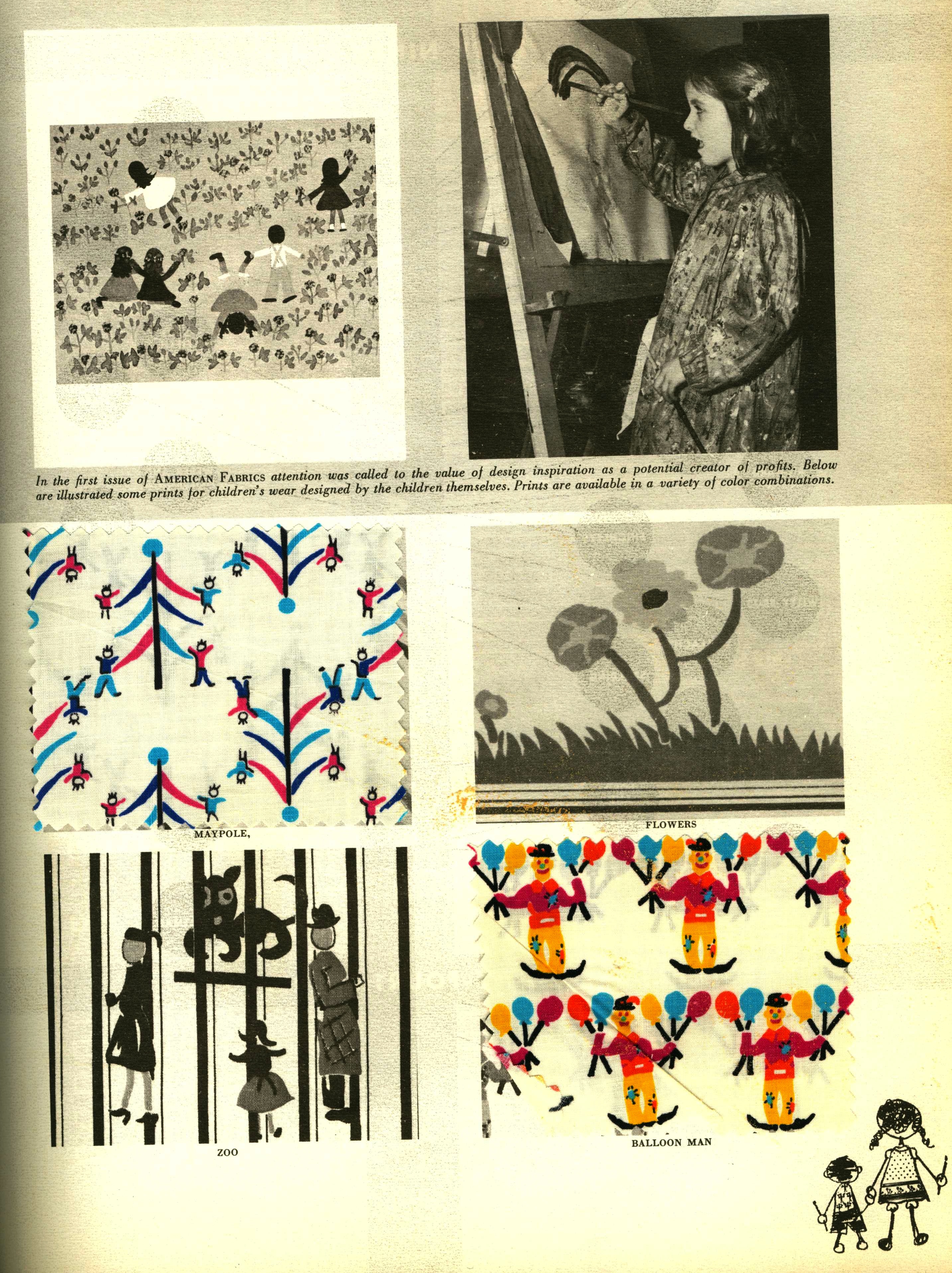
American Fabrics, Number 31. Winter 1954.
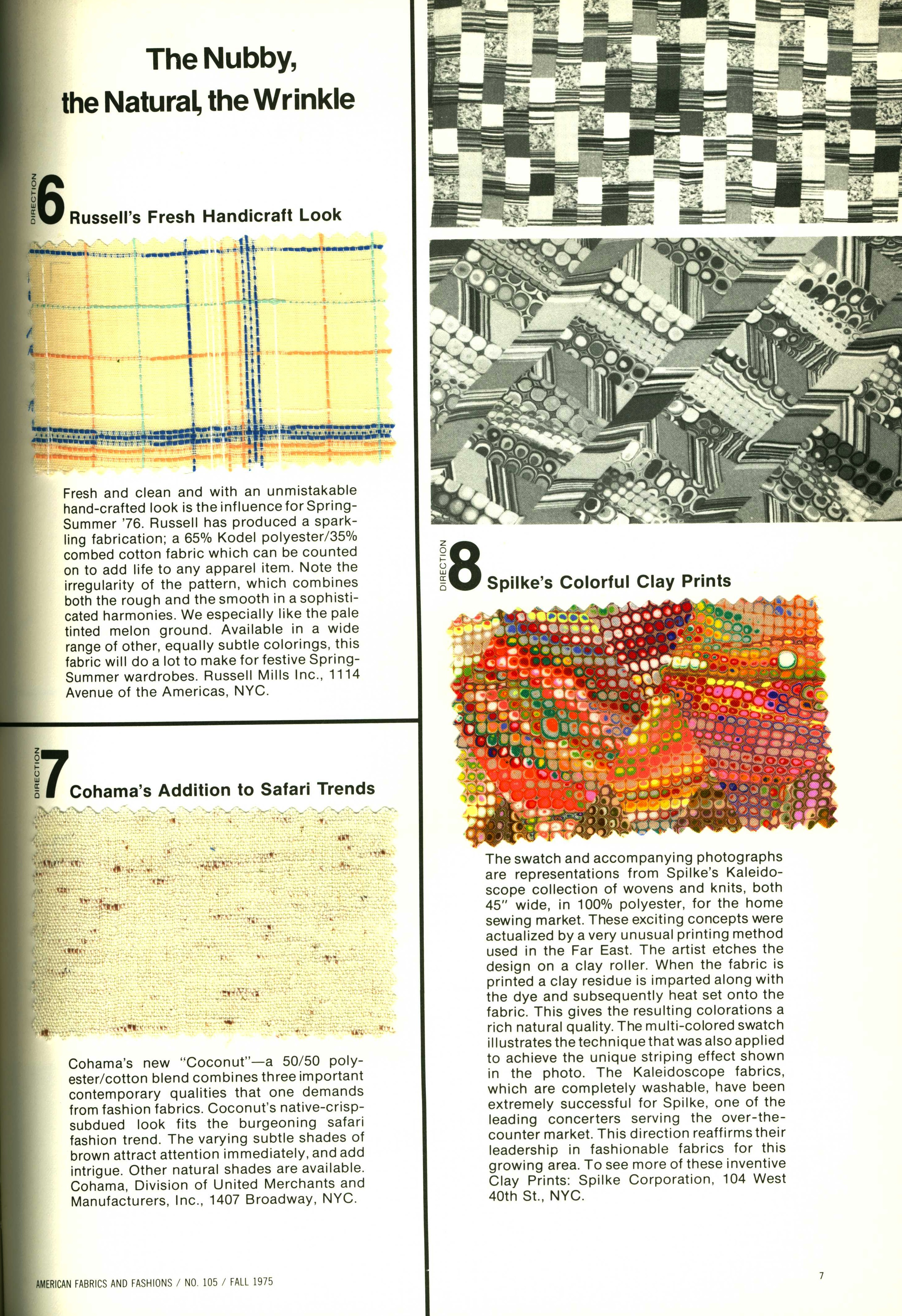
American Fabrics, Number 105. Fall 1975.

American Fabrics, Number 88. Fall 1970.

American Fabrics, Number 01.1946.
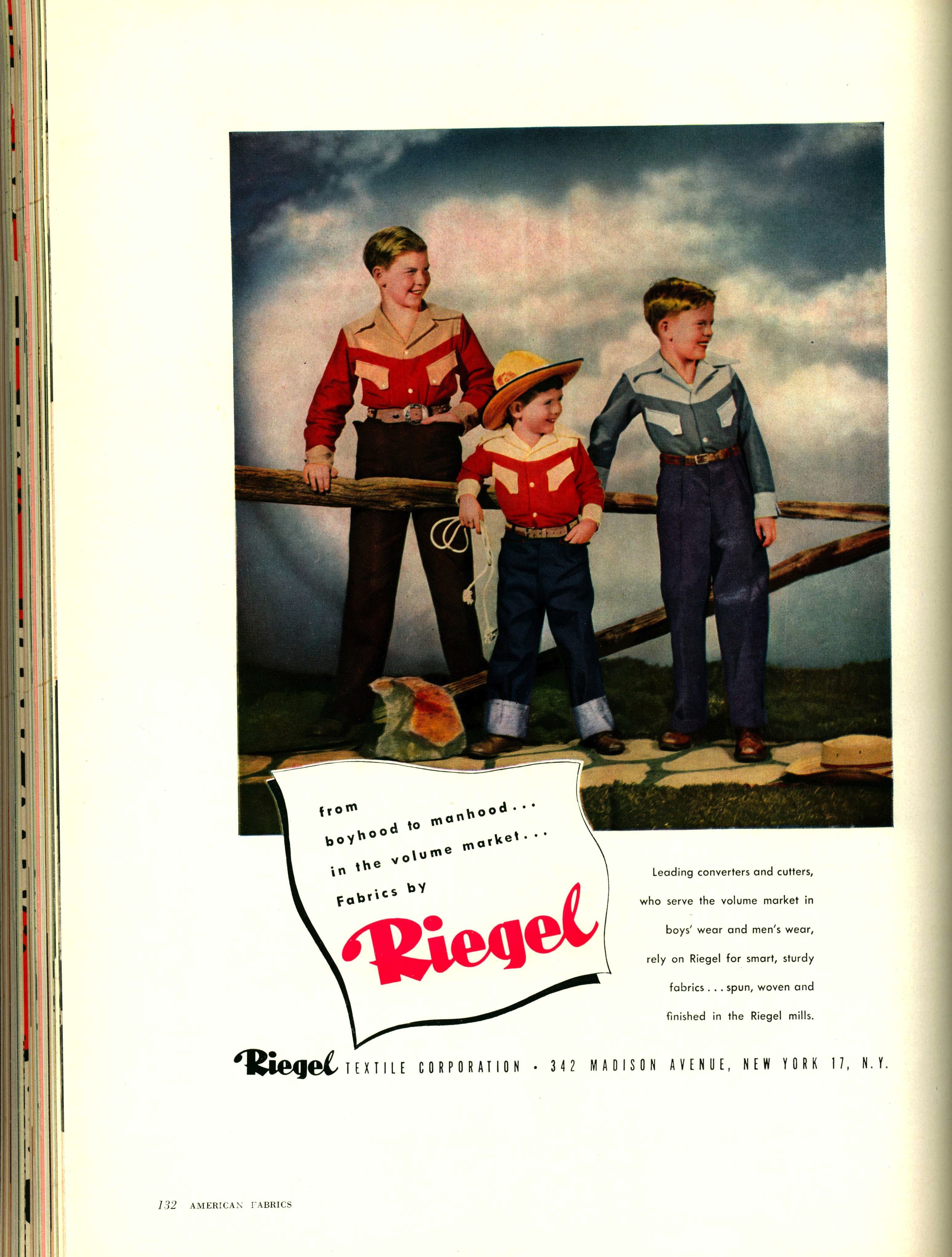
American Fabrics, Number 01.1946.
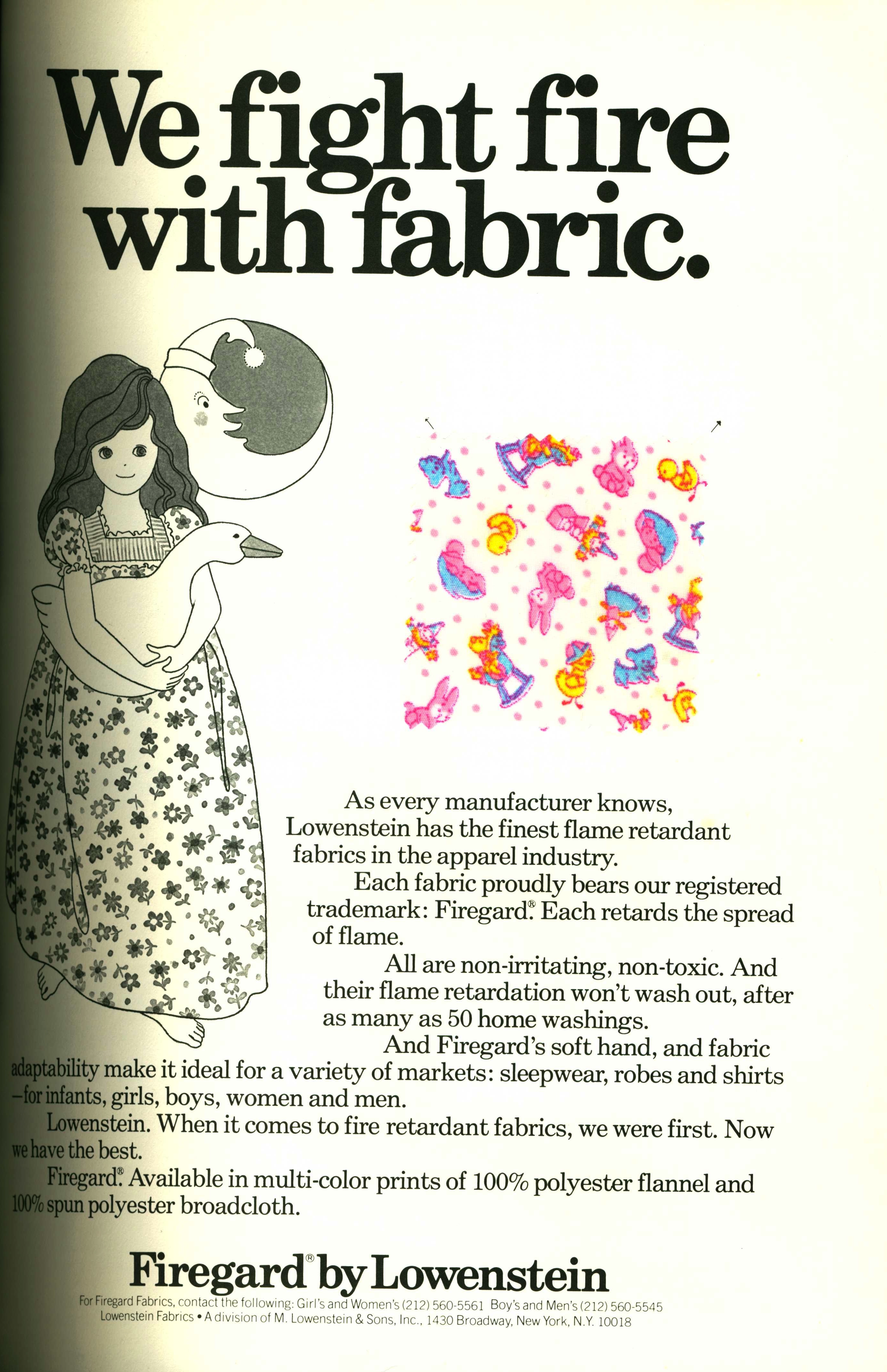
American Fabrics, Number 102.1974.

American Fabrics, Number 69. 1965.

American Fabrics, Number 30. Fall 1954.

American Fabrics, Number 86. Spring 1970.

American Fabrics, Number 87. Summer 1970.

American Fabrics, Number 104. Winter 1975.
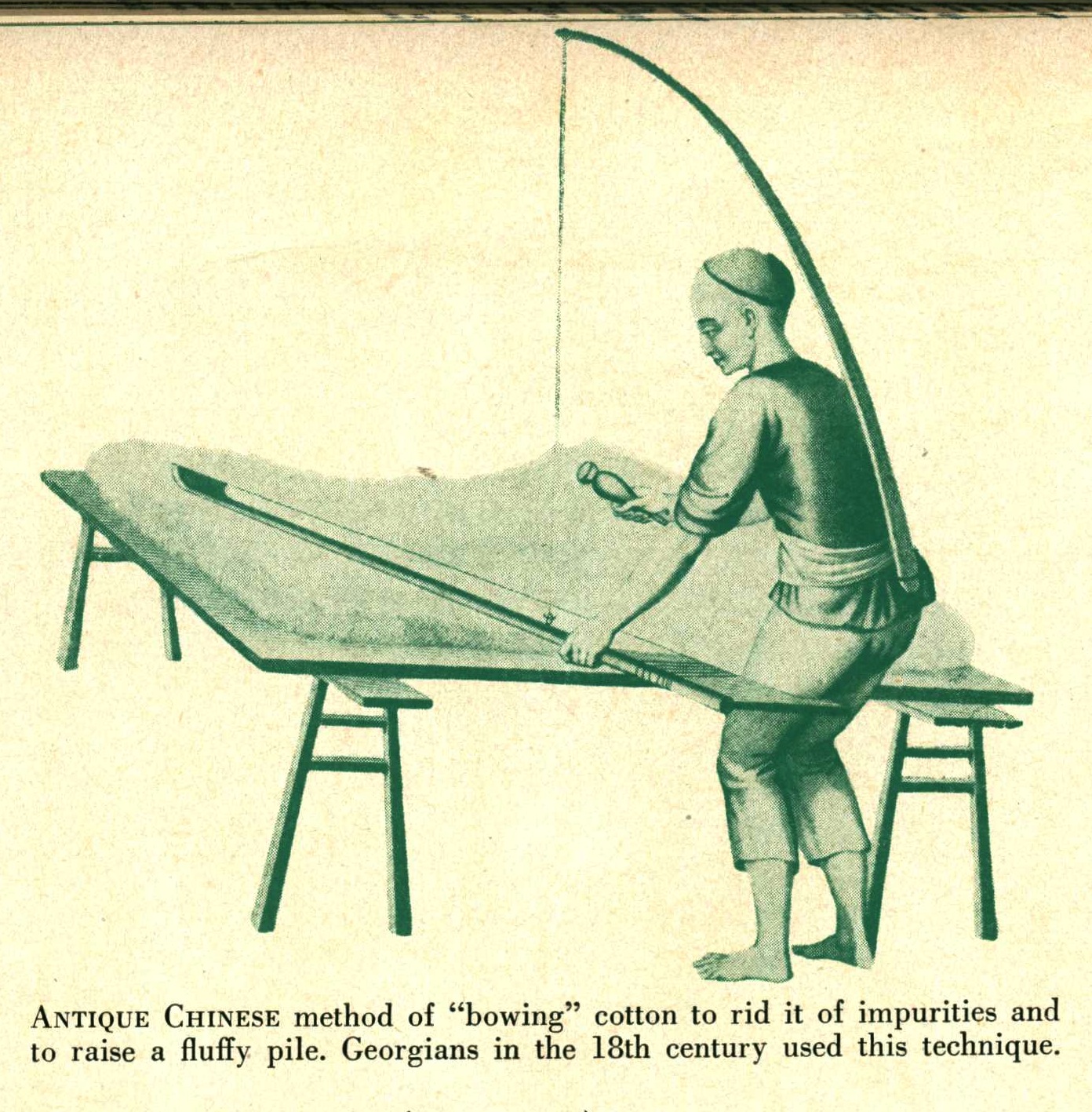
American Fabrics, Number 02. 1947.

American Fabrics, Number 71. Spring/Summer 1966.

American Fabrics, 1980.





 SVA Library Picture & Periodicals Collections