Author Archives: Periodicals/Reference Librarian
SK-SK-SK-SKELETONS!
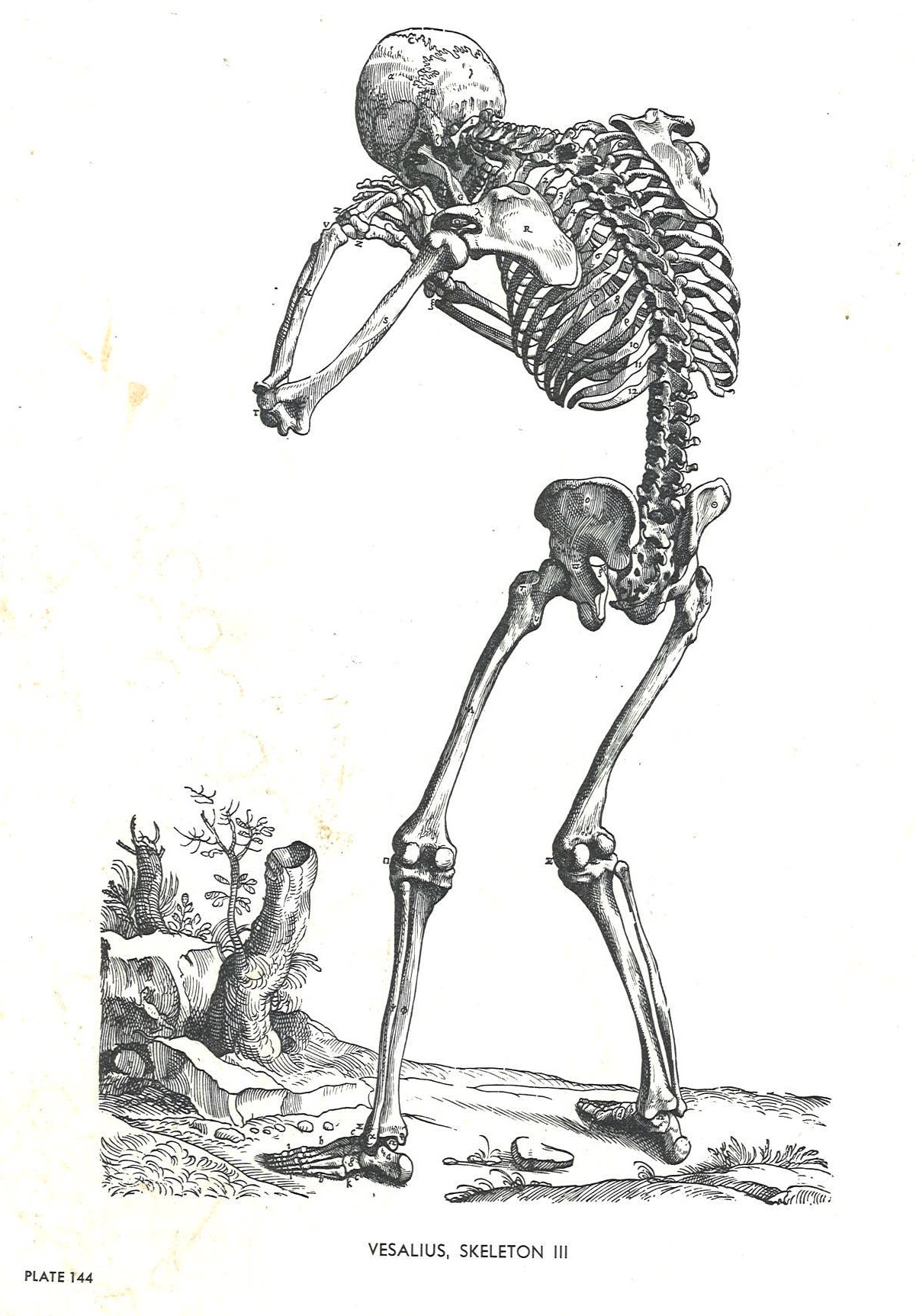
Nestled gently between SIGNS & BILLBOARDS and SMALL TOWN AMERICA in our Picture Collection, SKELETONS boast about 100 items and is a good place to stop by for skeletal anatomy references, to contemplate your own mortality, or to find inspiration for the Scandinavian Black Metal album cover you’ve been hired to create.
See: True Norwegian black metal : we turn in the night consumed by fire in our book stacks.
A small sampling of our calcium-loving, rigid organs:

I have neither credits nor a context for this.

National Geographic, Vol. 202, no. 2 (August 2002). This skull was found in the republic of Georgia and is 1.75 million years old.

Three Skulls by Candace Dicarlo. From Black & White Magazine, no. 52 (August 2007).

This is either a diagram of an "I can't believe I'm alive" story, or a diagram of how this guy got to be real dead.

Military Histroy Quarterly, vol. 2, no. 1. Disorderly mass grave.

Gracilization. I love this word.

The Three Skulls by Paul Cezanne. Canvas. 34.9 cm x 61 cm. This is a black and white Photo of a color version.
You can find a nice high resolution version of it on ARTstor.




A black and white detail of Hans Holbein's The Ambassadors. This anamorphic perspective skull is prominently hidden in the painting.
| Date | 1533 |
| Medium | Oil on oak |
| Dimensions | Length: 209.5 cm (82.5 in). Height: 207 cm (81.5 in). |
Library Instruction: The Anatomy of a Call Number
The call number is the arcane, horizontally stacked series of number and letters on the bottom of a spine of a book:

Each row in the series indicates what the books is about, from the general at the top and growing more specific as you go down. The top row is always a letter and specifies one of the twenty-one library of congress major divisions. In this instance, N refers to Fine arts, and ND refers to painting.
The second row is always a number and is used to further define the subject. In this instance 1839 refers to water color painting (which falls in a range between 1700-2495).
The last rows are called the cutter numbers and they often indicate the author or subject (this one has one for each). The book is a monograph about Robert Vickery, which explains the V. The author of this book is Philip Eliasoph, which explains the E. 2008 is the year of publication.
There is little need to remember any of this. What you should you remember is that you find books on the shelf in the same way that they are cataloged: from general to specific. So, first you would find the ND section, then 1839 (in numerical order) then V52 within the 1839’s, and so on down the spine.

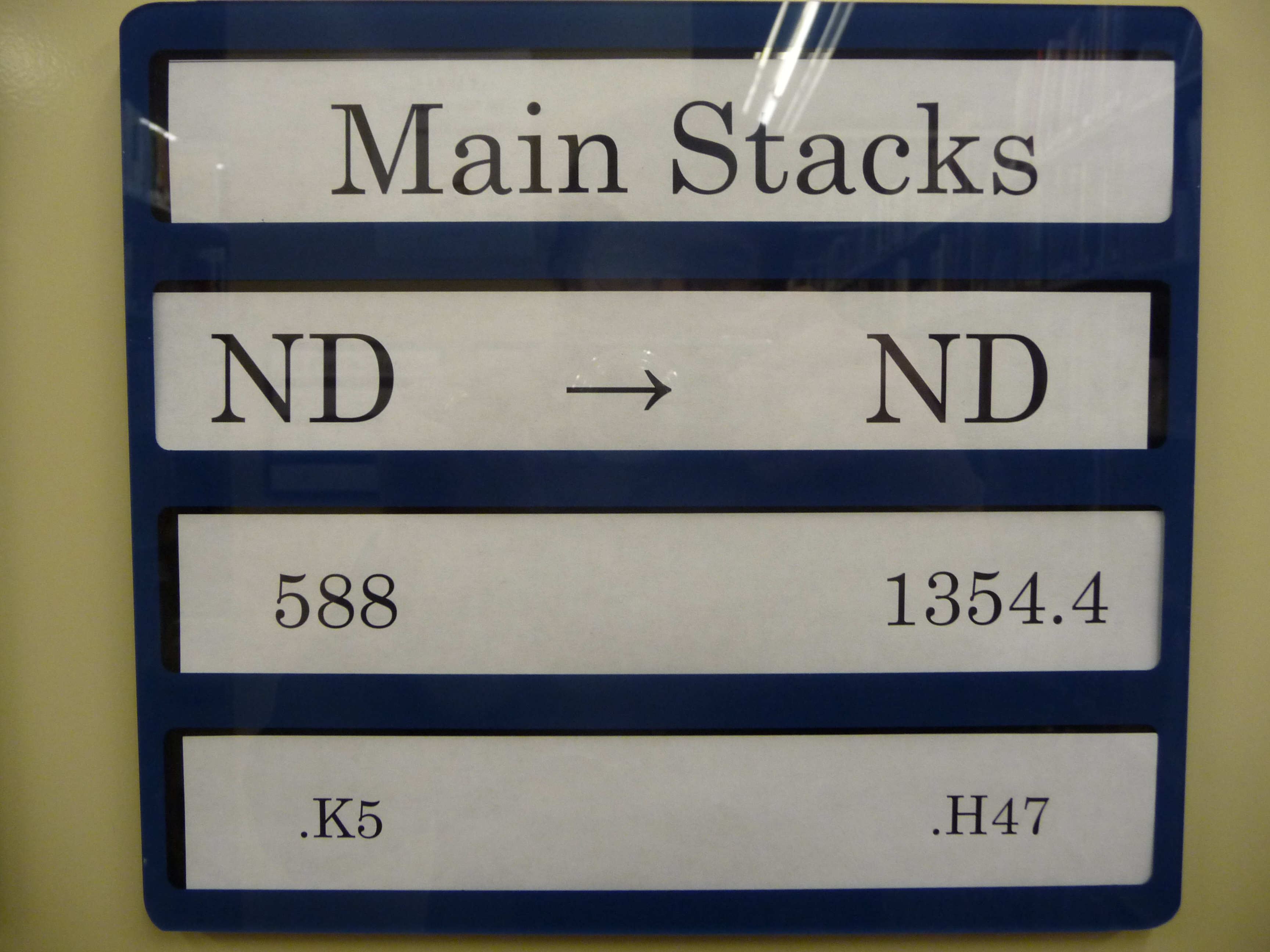
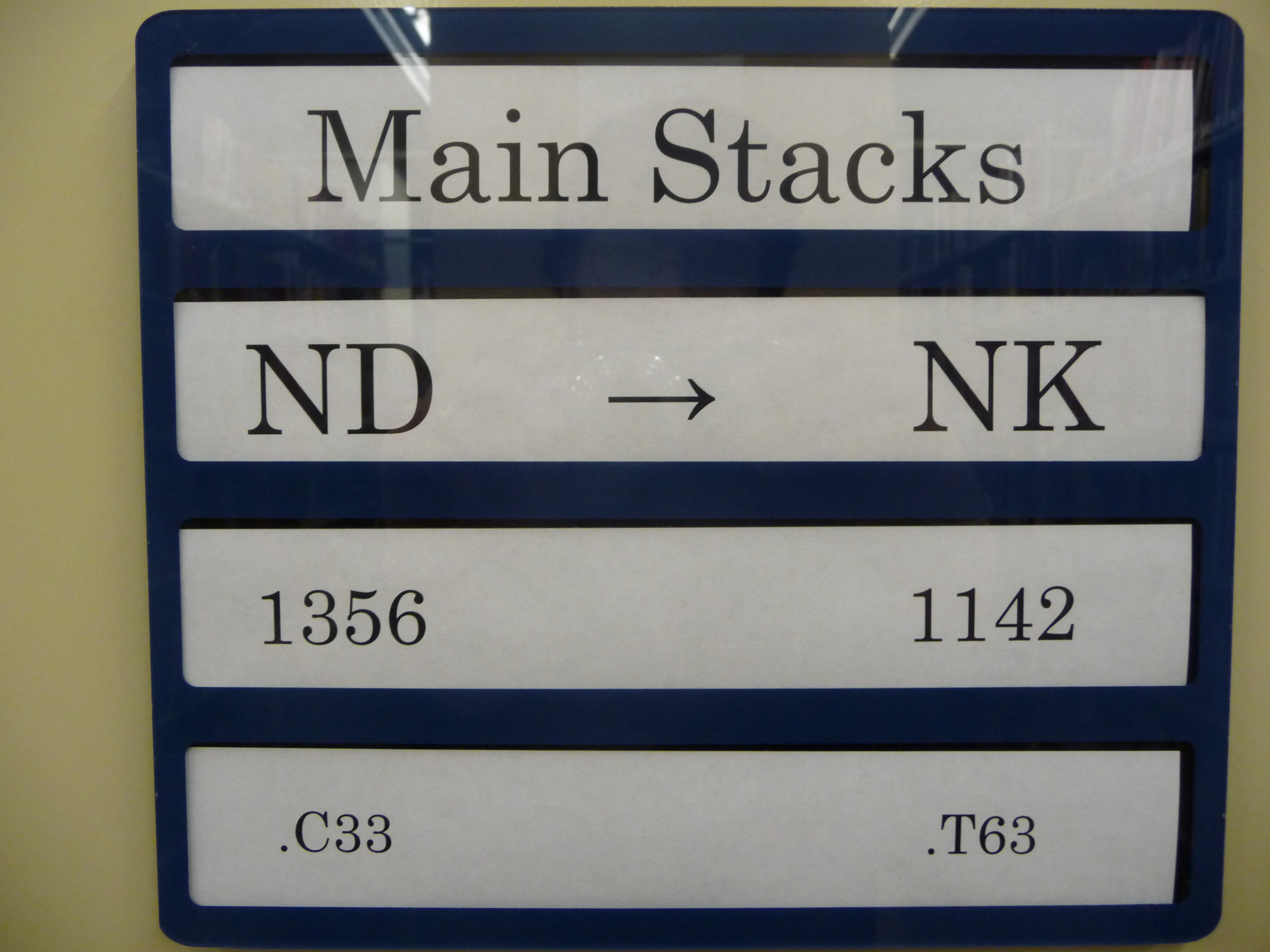
At the end of each row in the library book stacks is an end panel that shows you the range of books for each row. Do you know which one of these rows our Robert Vickery book is in?
Advertising – Corporate Identity, Industry, & Utility
After a hiatus for the summer, during which time the Picture Collection crew was very busy adding new content and new subjects, the blog returns to highlight one of the said new subjects: Advertising – Corporate Identity, Industry, & Utility. This subdivision of Advertising has the further chronological divisions of Pre-1950, 1950-1959, and Post-1950. These are advertisements that do not feature consumer products. Rather, like the descriptive subject heading tells you, they feature 1 of 3 things: 1) Corporate Identity advertisements, which mostly feature large corporations trying to cast themselves and their name in a positive, greater-good, type of light, 2) Industry advertisements, which are instances of one corporation or business trying to sell their techniques, expertise, equipment, buildings, and materials to other businesses and corporations, and 3) Utility advertisements, such as Water Works, The Electric Company, and the Pennsylvania, B&O, Reading, and Short Line Railroads. We have hundreds of these advertisements, most of which we added this summer, and most of which are from 1950 ear Fortune Magazines (hence our chronological subdivision featuring the 1950’s and everything else).
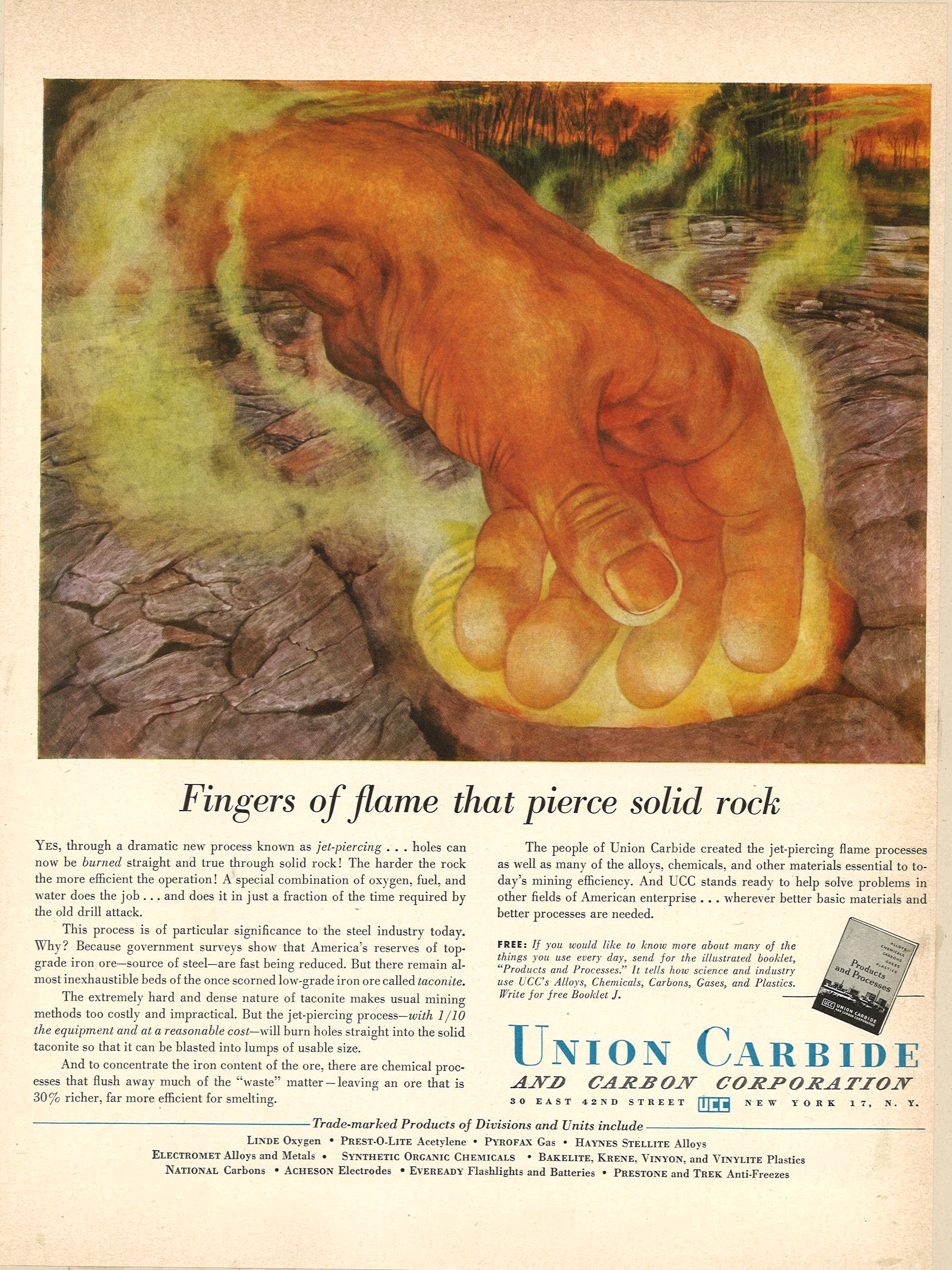
As I examined these advertisements, I noticed one, odd, and I must say, disturbing trend: Giant Hands. Giant Hands with jet airplanes escaping their grasp like an insect, giant hands lifting up buildings, giant hands revealing a factory under a giant basket. Modern man, whilst fashioning better living through chemistry and science, had also become literal Titans, moving factories and cities with their giant, vascular hands. Sometimes we get the whole body, but often it’s just the heavenly hands swooping in and arranging our reality. Following is a sampling.
“The People of Union Carbide created the jet-piercing flame processes” and their advertising agency created this monstrous, pork-sausage fingered, witch-green poisonous gas emitting hand violating the earth.
Delco Radio, “With productive manpower bigger and better than ever before…”

“Do you level mountains?” Well, you need Baldwin-Lima-Hamilton, and this guy (but for goodness sake, could you put on a shirt?). 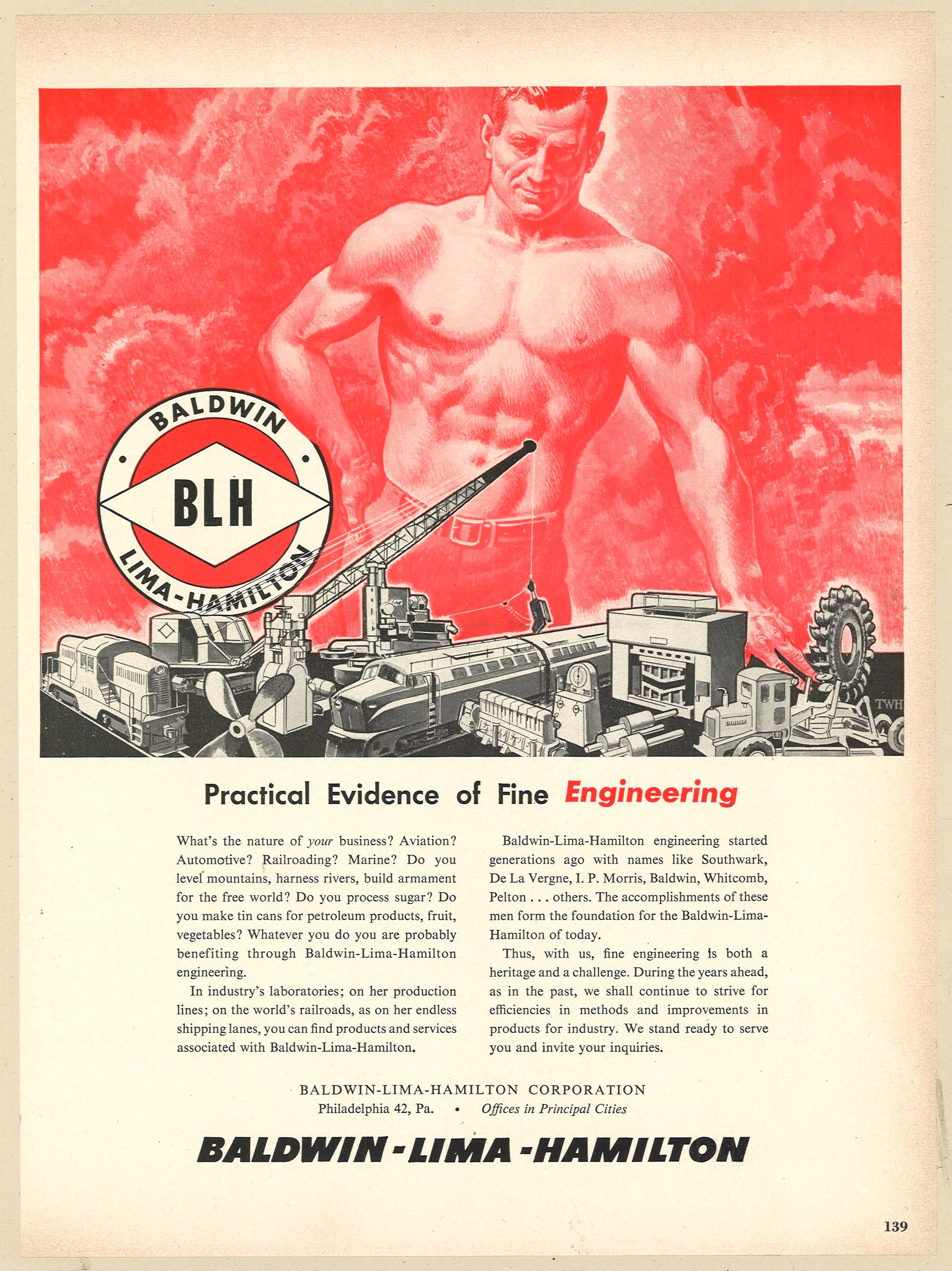
Scientific torture tests as surrealists’ wet dreams…
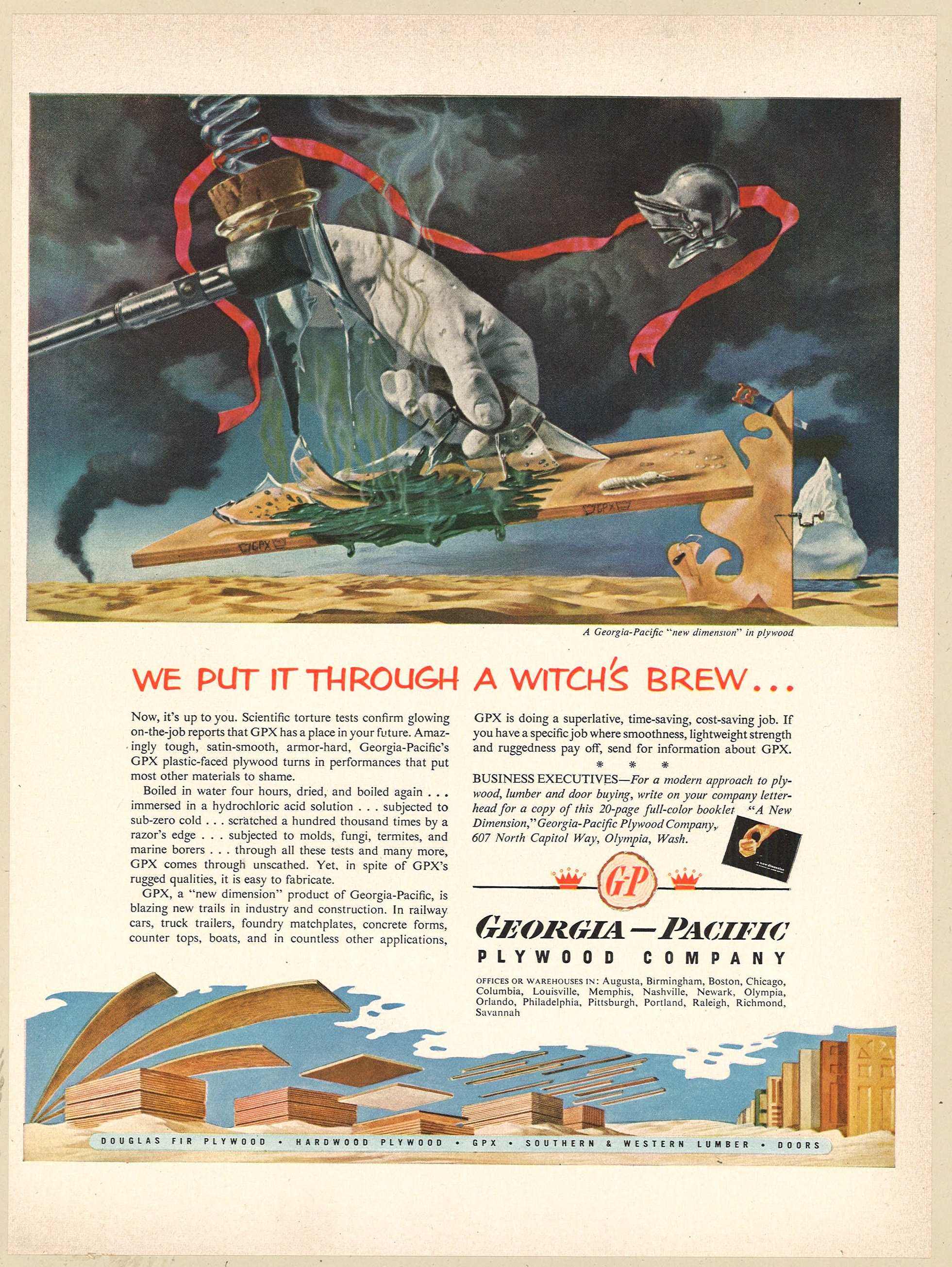

More dumb strength from BLH.


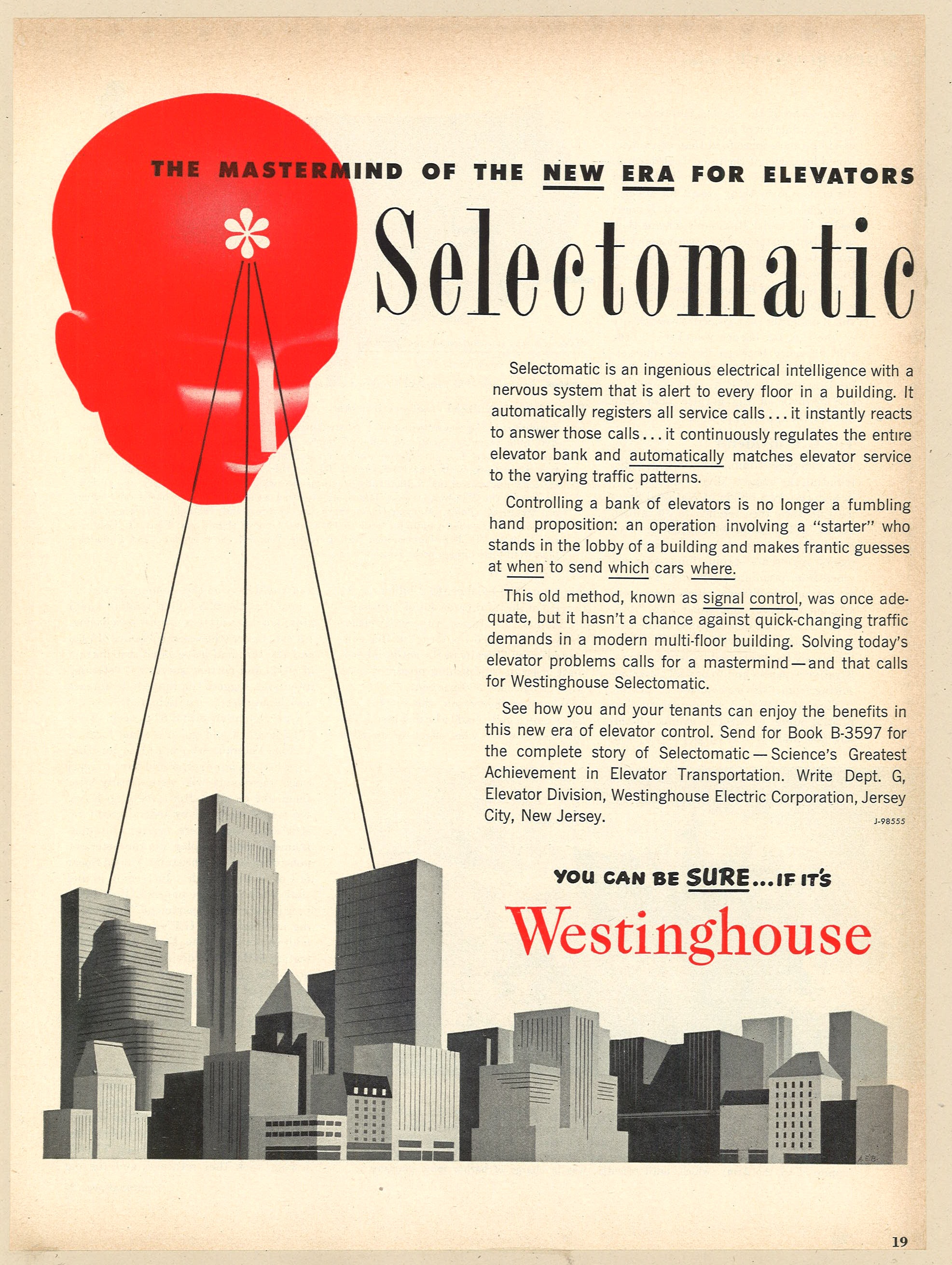
And finally, the mastermind behind it all, Dr. Manhattan’s red brother, Dr. Jersey City.
Magazine Covers — 1940-1949
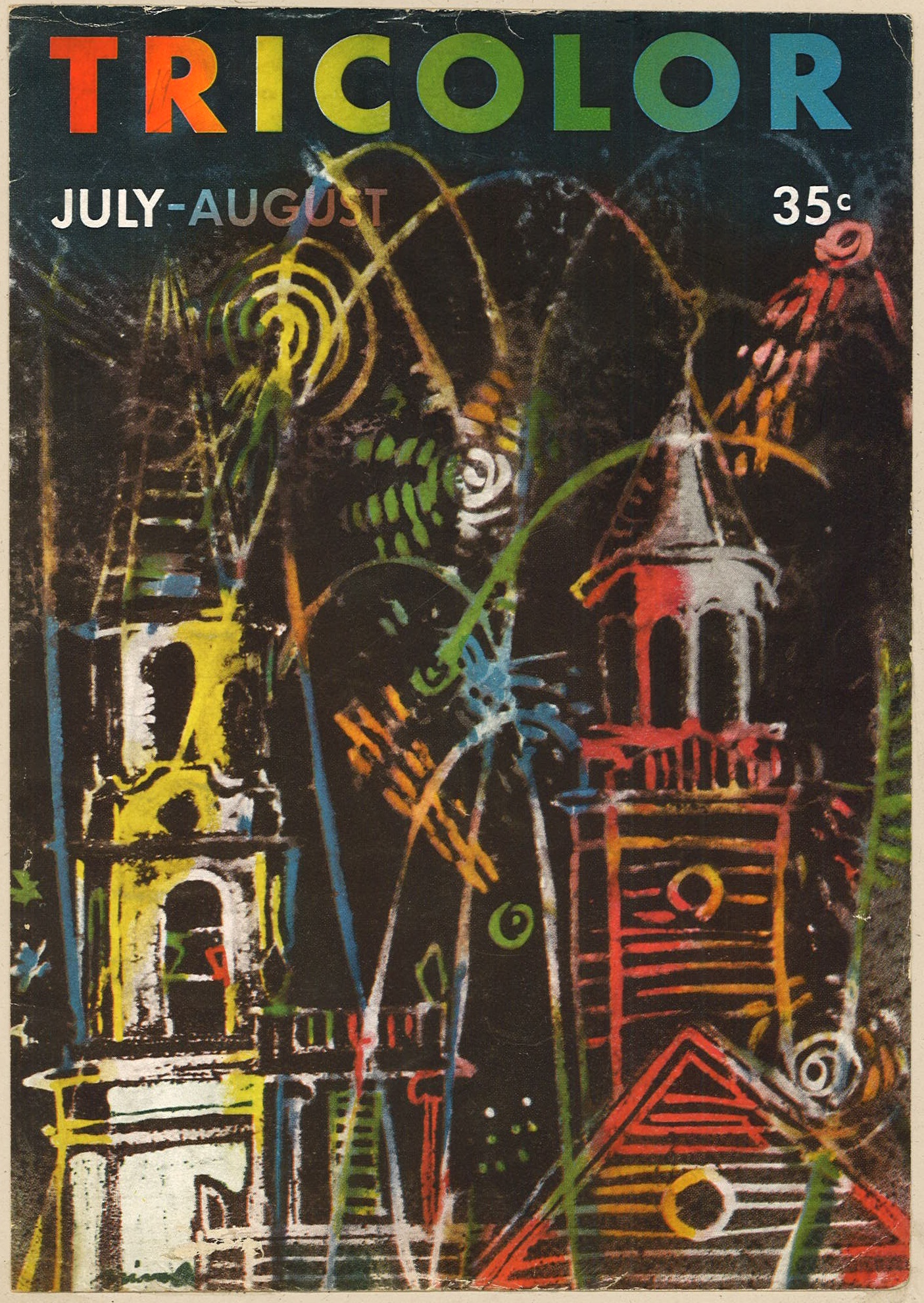
Tricolor is the English language edition of La France Libre, a French anti-Nazi publication that began in 1940. Here is the first page of an article about the magazine’s origins. Below we have the cover for the celebratory July-August 1945 edition.
Surgery assistance by glowing neon letters, RN from 1943.

Free World: A Non-Partisan Magazine Devoted to the United Nations and Democracy featuring both a 1940 dominant and 1945 submissive Hitler, illustrated by Luis Quintanilla.

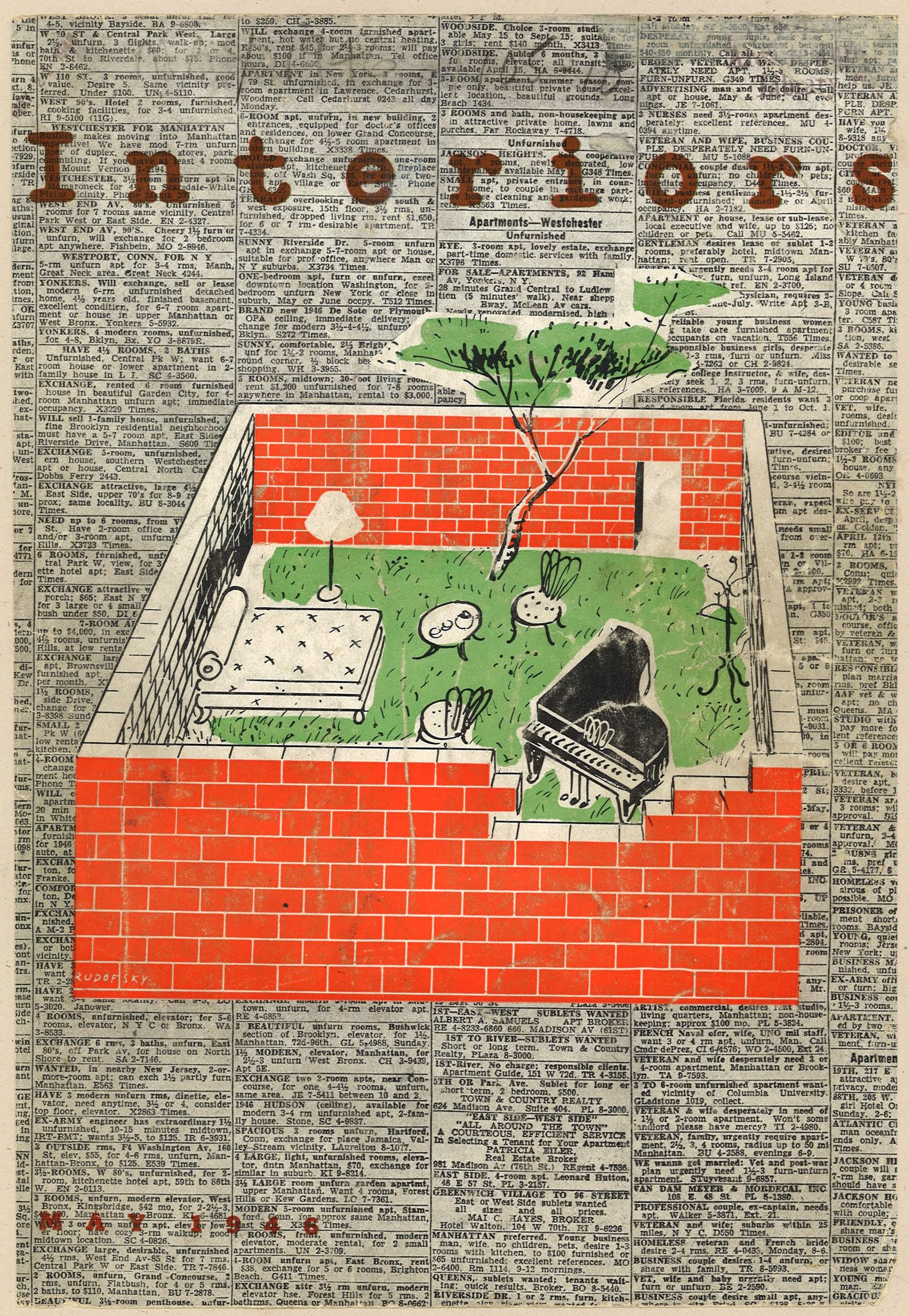
Here is an interesting cover from a May 1946 Interiors magazine by Bernard Rudofsky, who you can find out more about in our books stacks:
Architecture without architects, an introduction to nonpedigreed architecture.
NA2430.R8
Lessons from Bernard Rudofsky : life as a voyage
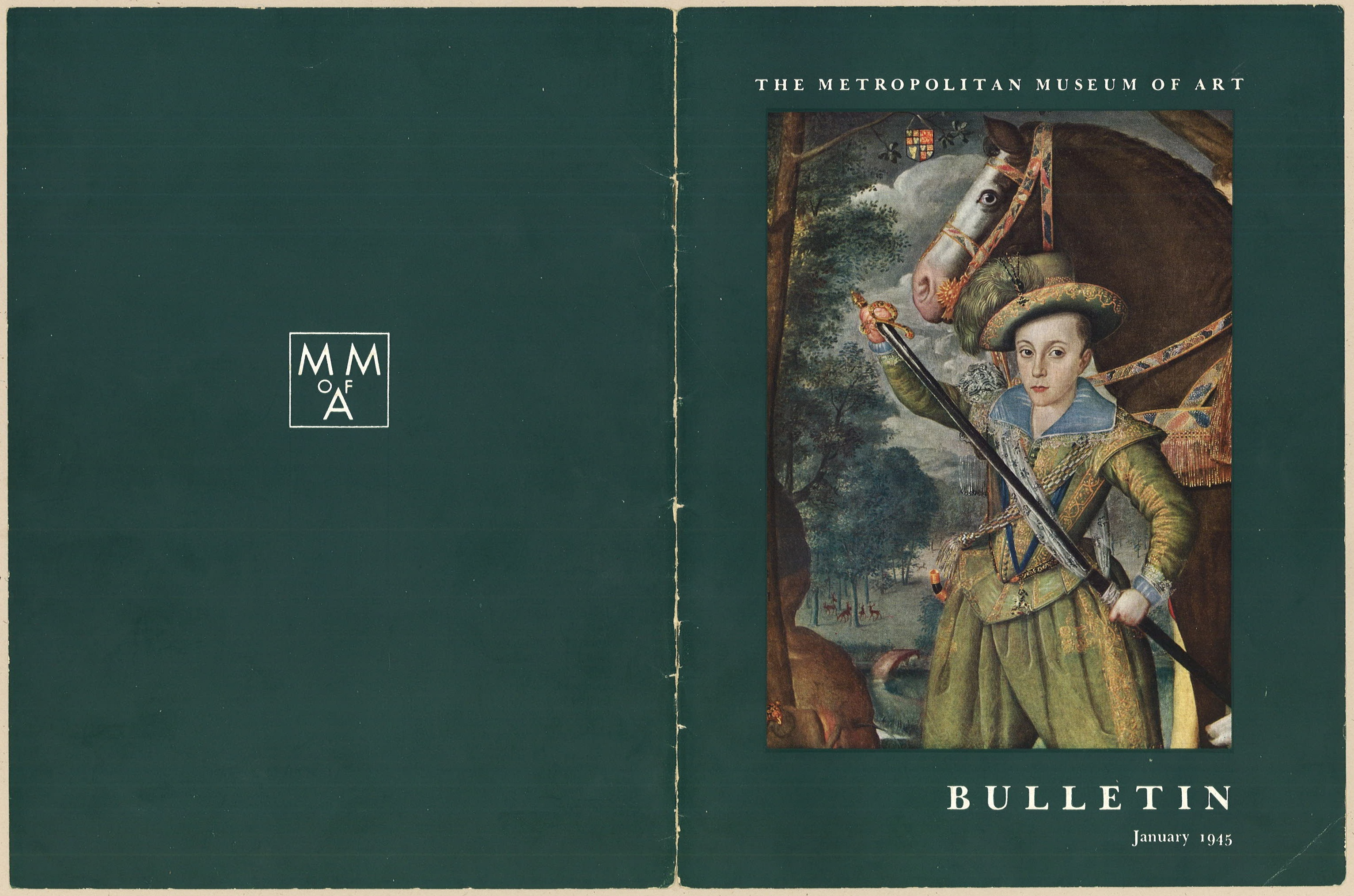
This Met bulletin cover from January 1945 features their smart little logo on the back cover, a deeply saturated blue-green background, and a detail of a painting of Henry Fredrick, Price of Wales, and Sir John Harington, by and unknown painter of the British school. Dated 1603.
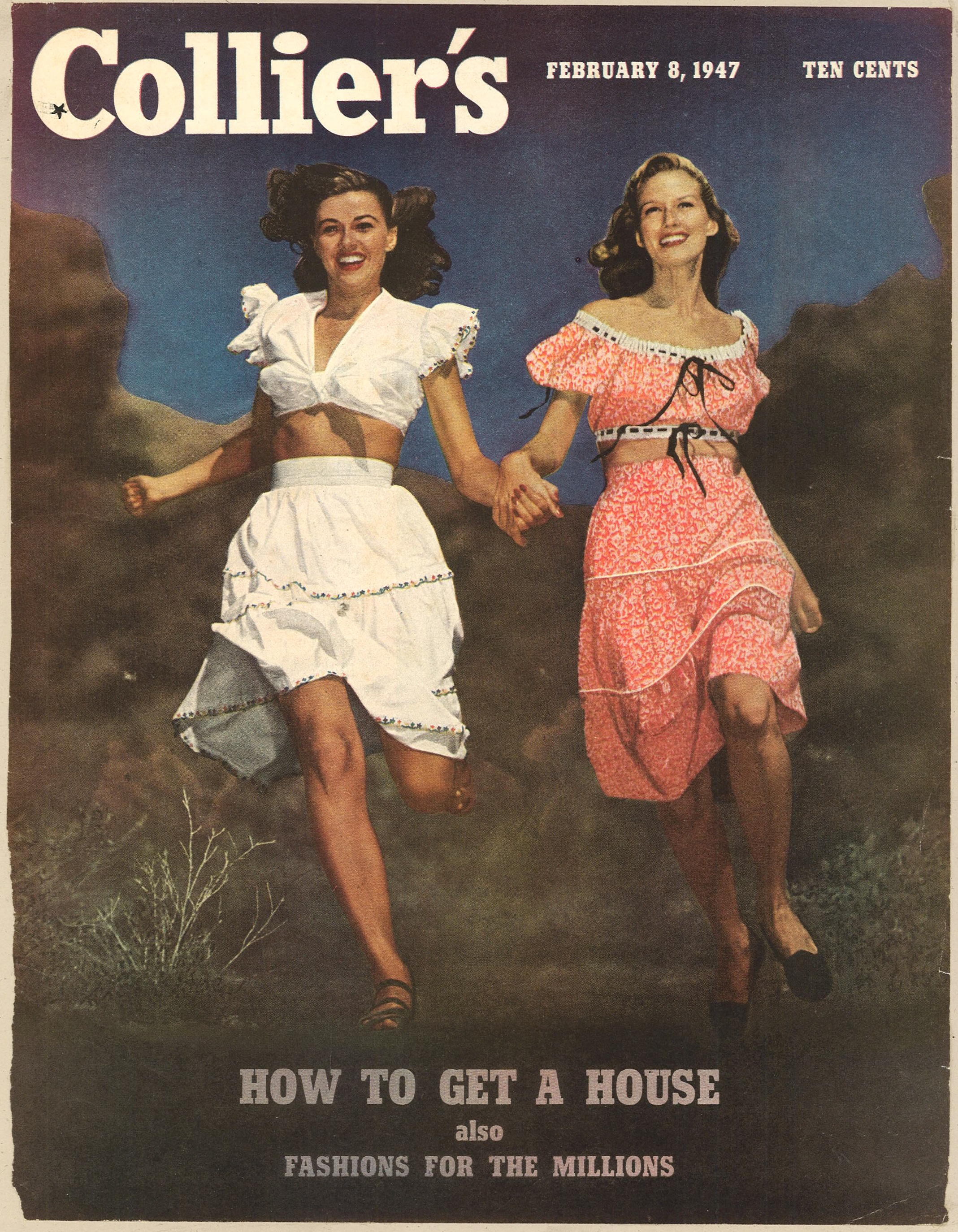
1947: the year of the midriff.
Another great Nature cover, February 1949. Illustration by Frederic Sweney.

And lastly, a textured, mysterious American Artist cover from January 1949. The photo is by Telberg-von-Teleheim and is titled “Mask of a Dream.”

Magazine Covers — 1920-1929 (Part 2: Garten Schönheit)
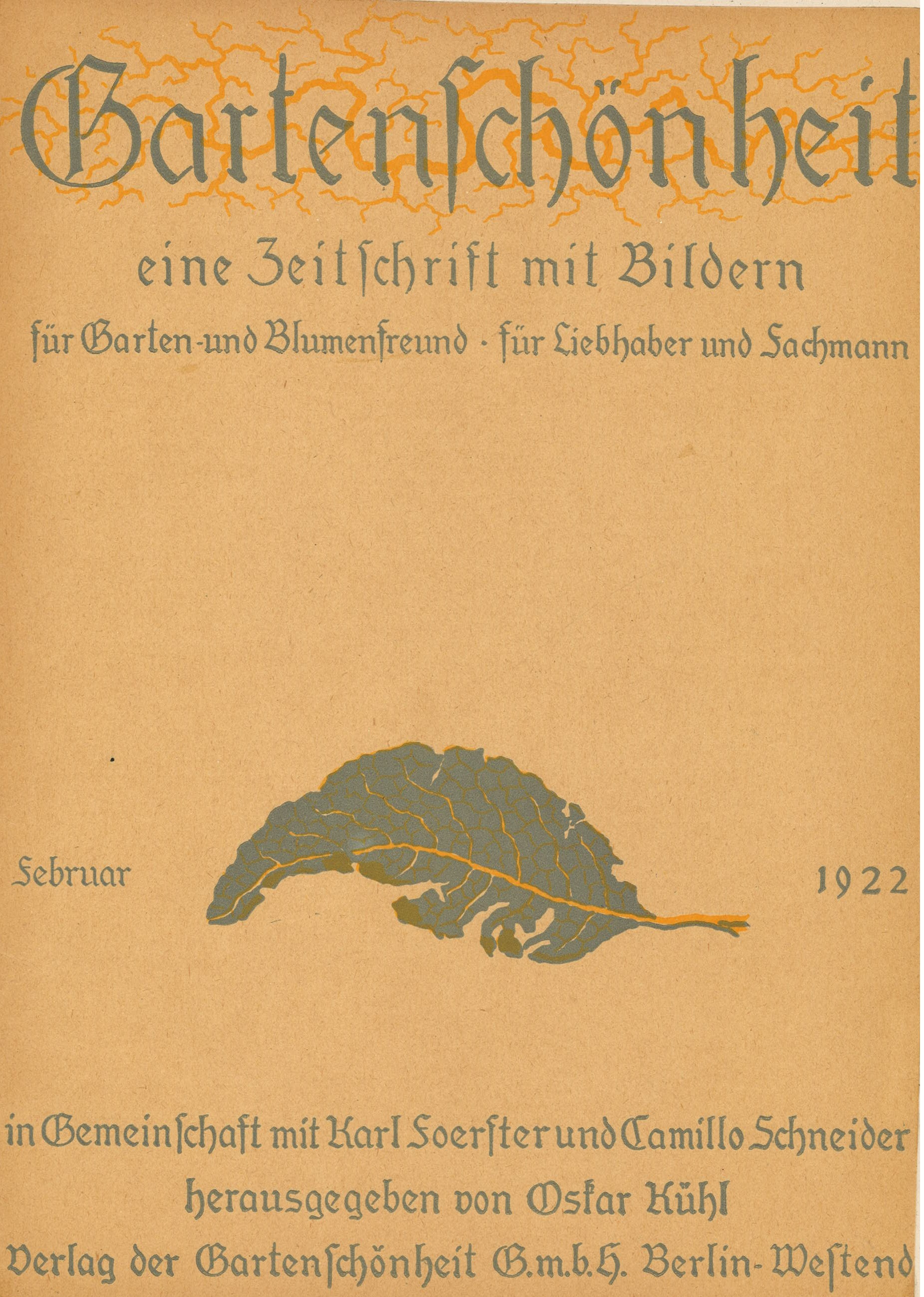
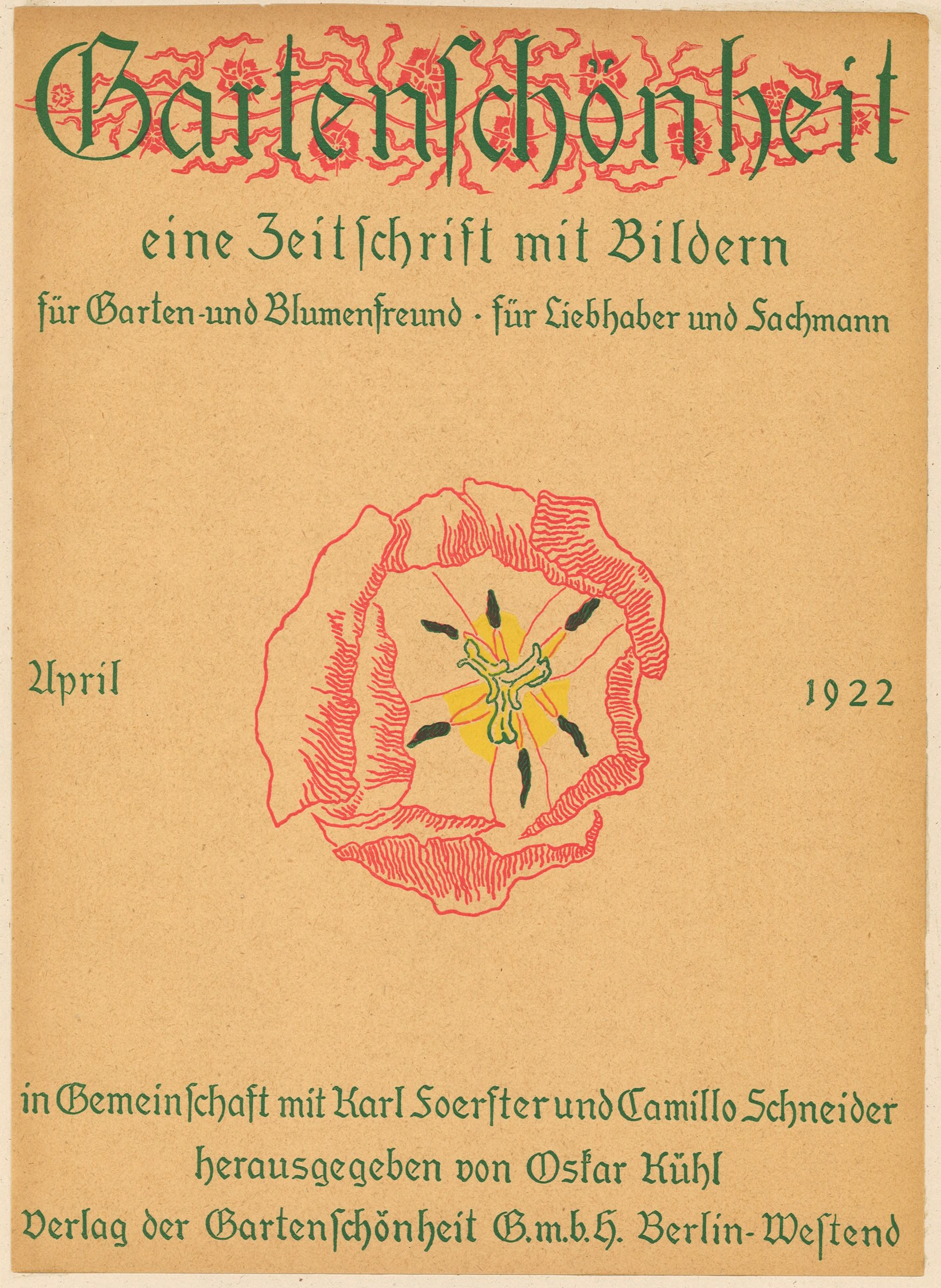
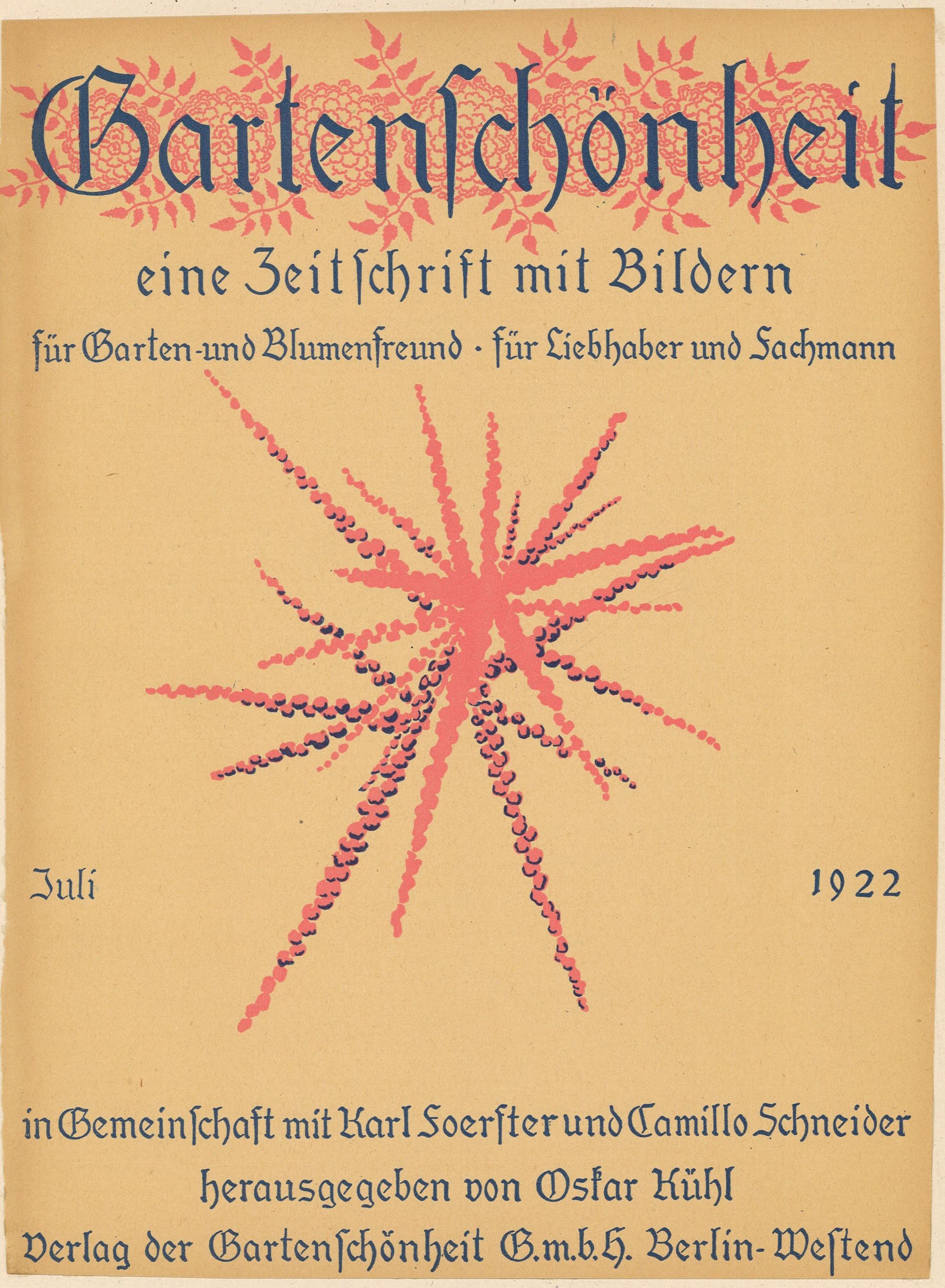
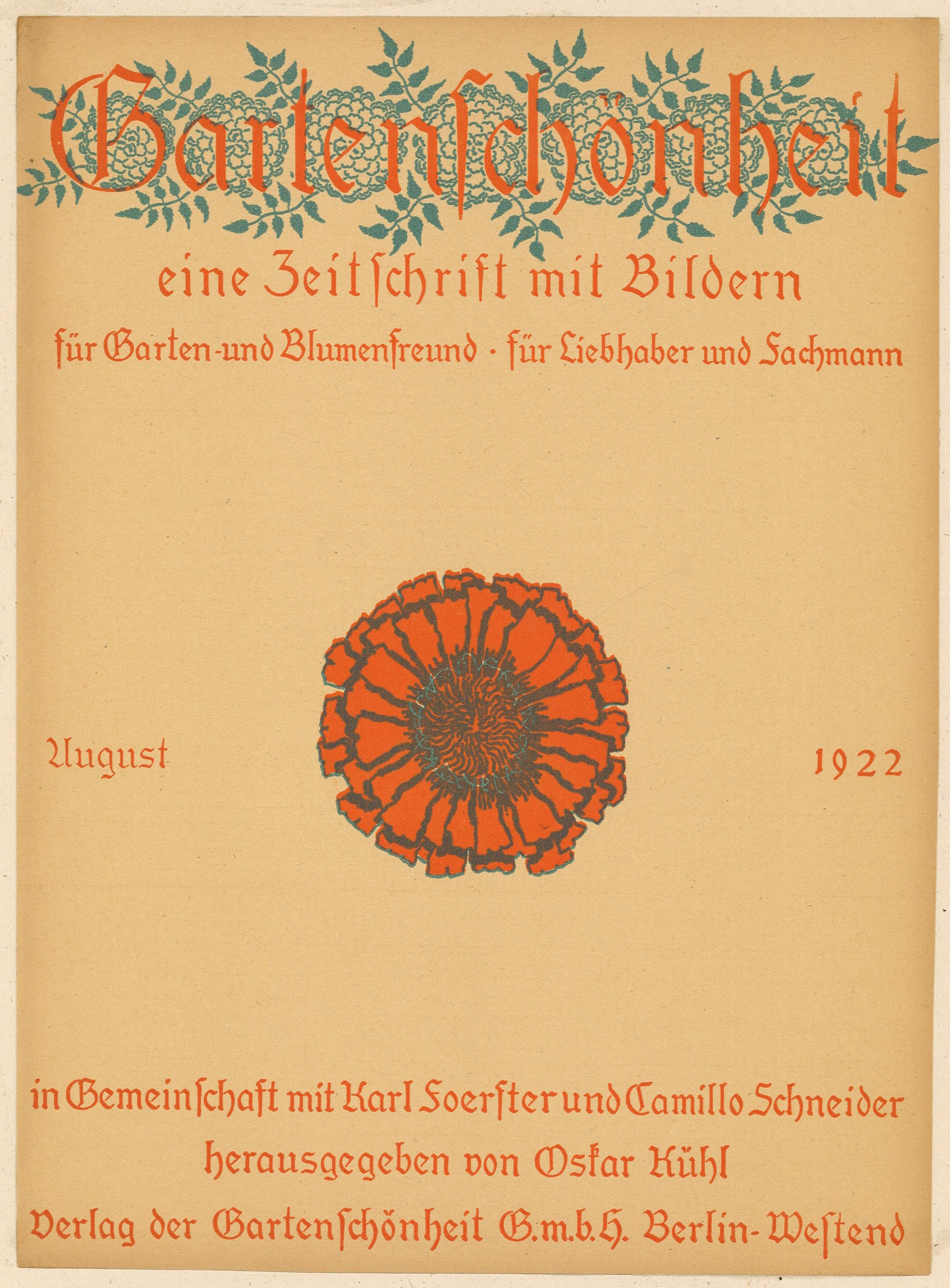
This is a quick delve back into the 1920’s before I trundle into the 1940’s. It’s a perfect spring day in New York City, and so I feel compelled to share some of the Picture Collection’s loveliest pieces. We have all 12 months of Garten Schönheit from 1922. Each cover of this monthly magazine features a fantastic floral themed, late Art Nouveau illustration. Also, notice how from month to month, and season to season, the illustration behind the title changes, beginning with a brown root system in January, and progressing through color and leaf, flower and fruit. Enjoy.









 SVA Library Picture & Periodicals Collections