
Author Archives: Periodicals/Reference Librarian
Cowboys & Western Life
These fine as cream gravy ‘curly wolves’ are cuttin’ a swell in apple pie order, and I’m no flannel mouth. Pony up! Quit beatin’ the devil around the stump and get a wiggle on to the collection to see for yourself.
A sample from the 134 items in Cowboys & Western Life follows.


September 1939.
Photo: Ivan Dimitri.
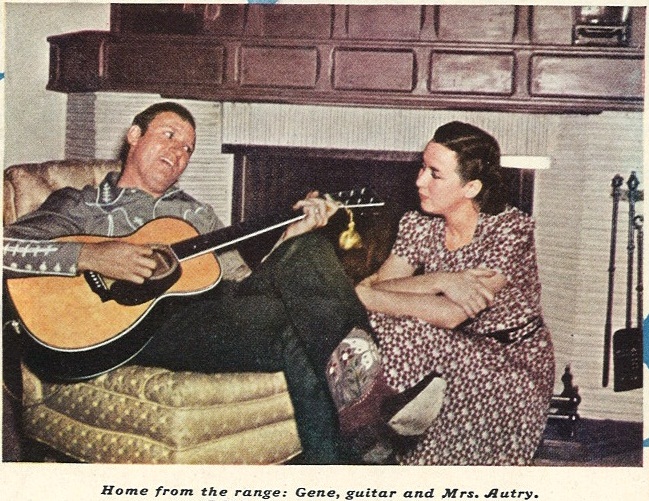
September 1939.

1929.

1929.
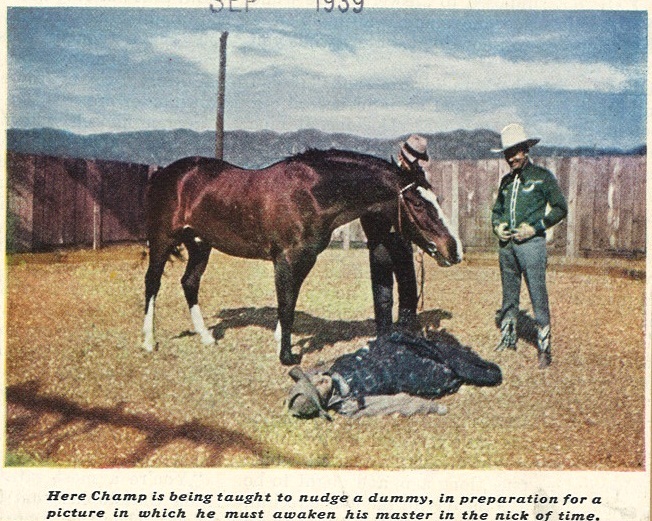
September 1939.

September 1939.
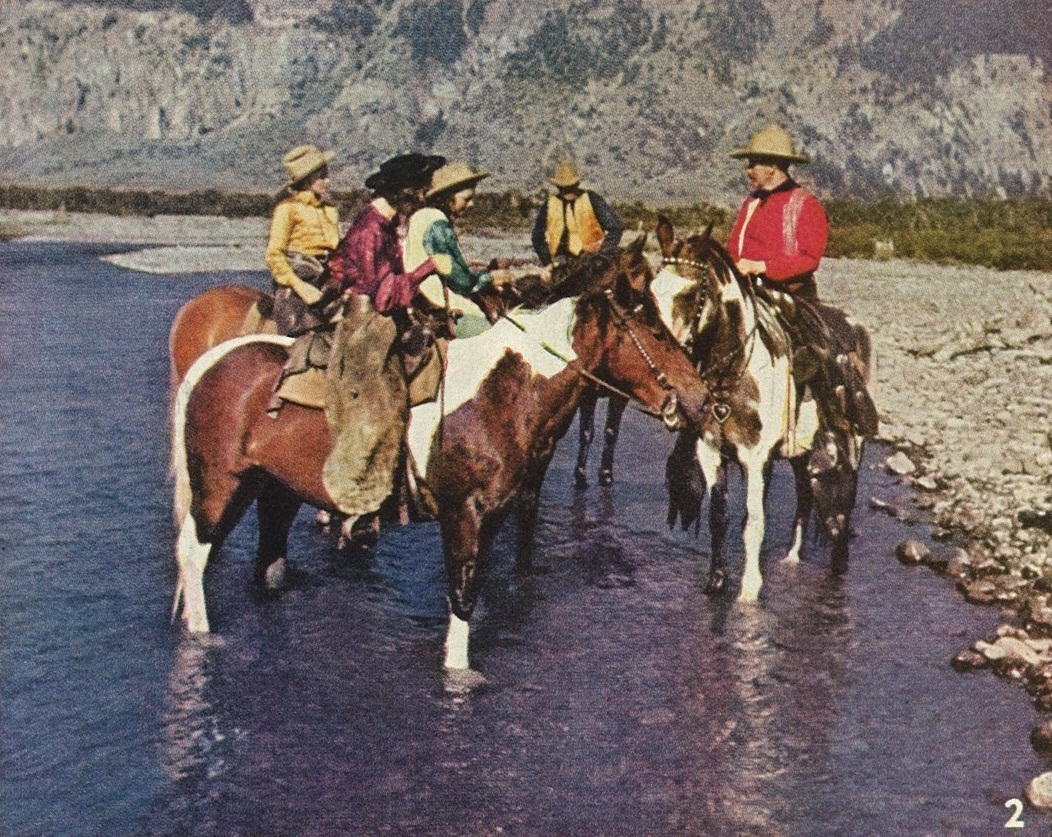
June 1939.

Deadwood Dick (Nat Love)

May 1956
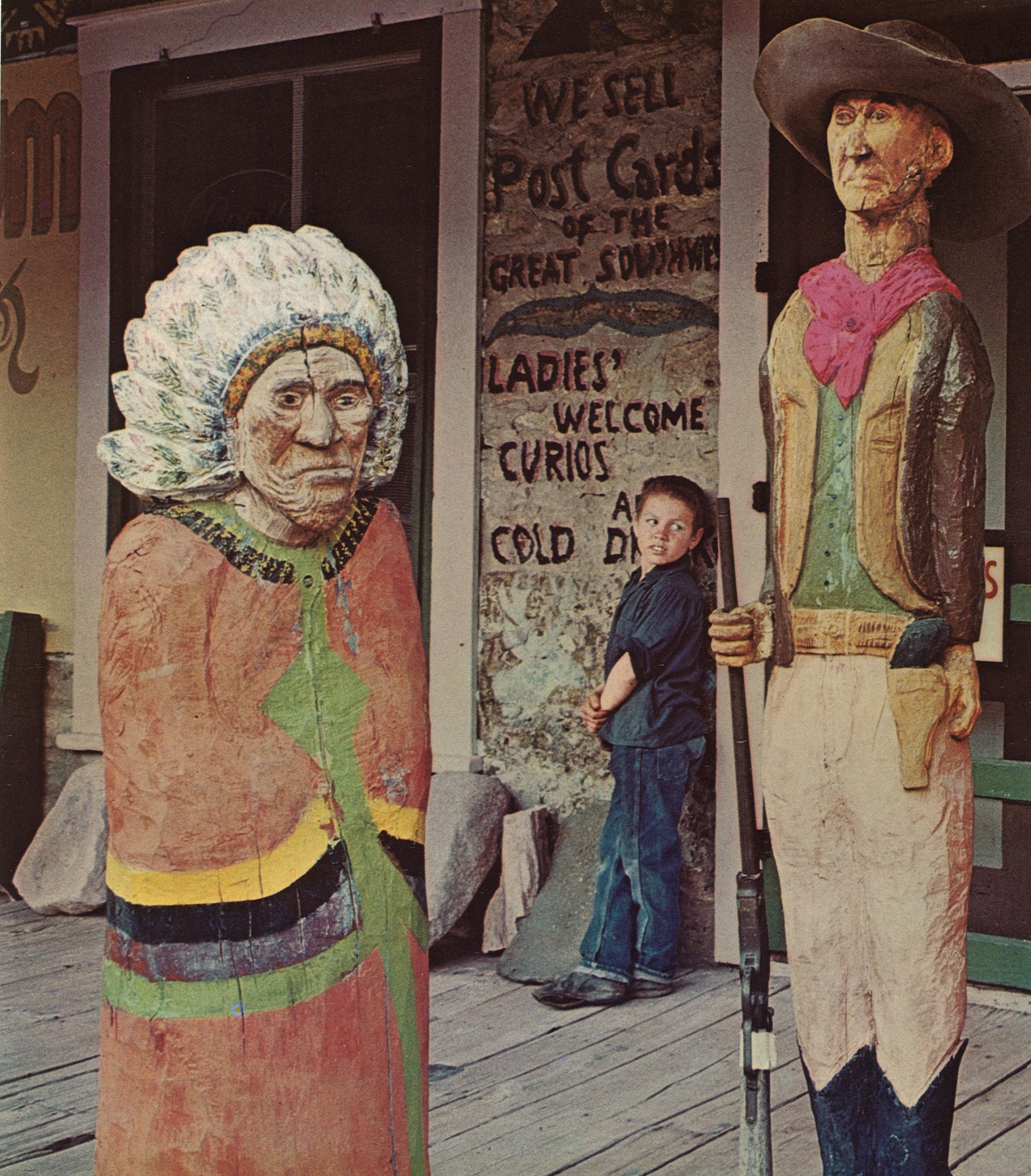
America Illustrated, 1967.


African Arts
 From the UCLA African Arts homepage:
“African Arts presents original research and critical discourse on traditional, contemporary, and popular African arts and expressive cultures. Since 1967, the journal has reflected the dynamism and diversity of several fields of humanistic study, publishing richly illustrated articles in full color, incorporating the most current theory, practice, and intercultural dialogue.”
Utilizing raw materials like straw and palm fronds, the artists represented here display an uninhibited mastery of caricature. They distort the literal human image with a sense of humor and playfulness into an iconic and sometimes frightening archetype.
Our current holdings of African Arts begin in 1976. Here are some selections from the earlier issues:

African Arts, Volume XI, Issue Number 02. January 1978.
“The Dan Masker zakpai ga from Gpapolulo. Its main function is to insure that women have put out their fires every noon during the dry season before the potentially dangerous afternoon winds begin to blow.”
Photo by Eberhard and Barbara Fischer.

 African Arts, Volume XI, Issue Number 02. January 1978.
Traditional Ndebele Beadwork.
Top Left: “A woman wearing her mapoto stands before the brightly colored murals of her house.”
Top Right: “An elderly woman wearing a Linaga decorated with a broad strip of small white beads. It has designs in the traditional red-blue-green-orange color combination.”
Bottom Right: “A maiden poses with her mother’s magnificently beaded blanket. The predominance of blue, green and black beads indicates its recent vintage.”
Photos by Suzanne Priebatsch & Natalie Knight.

African Arts, Volume X, Issue Number 02. January 1977.
“Birthday for African Arts and the united States Bicentennial.” Tito Zungu, South Africa. Ballpoint pen and koki pen on paper. 20 cm x 25 cm.

African Arts, Volume X, Issue Number 02. January 1977.
Right: “Flower composition between door and window painted to represent formalized leaves. Xhosa, near Assegai Bush, Cape Province.”
Left: “Litema motif. Sotho, near Kroonstad, orange free state.”

African Arts, Volume XI, Issue Number 03. April 1978.
“The idean lyawo, described by some as reprseenting a bride or wife, who exudes quiet dignity and refinement in her dance and costume. Her body is enveloped in folds of costly fabric, and her elaborate hairstyle is bedecked with silver and gold. Iyawo’s facial features are rendered in appliqued red cloth bisected by shiny zippers.”
IIaro, Nigeria.
Photo: Henry John Drewal.

African Arts, Volume XI, Issue Number 03. April 1978.
Egungun (masked figures)
Ikenne, Nigeria.
Photos: Klindt Houlberg.
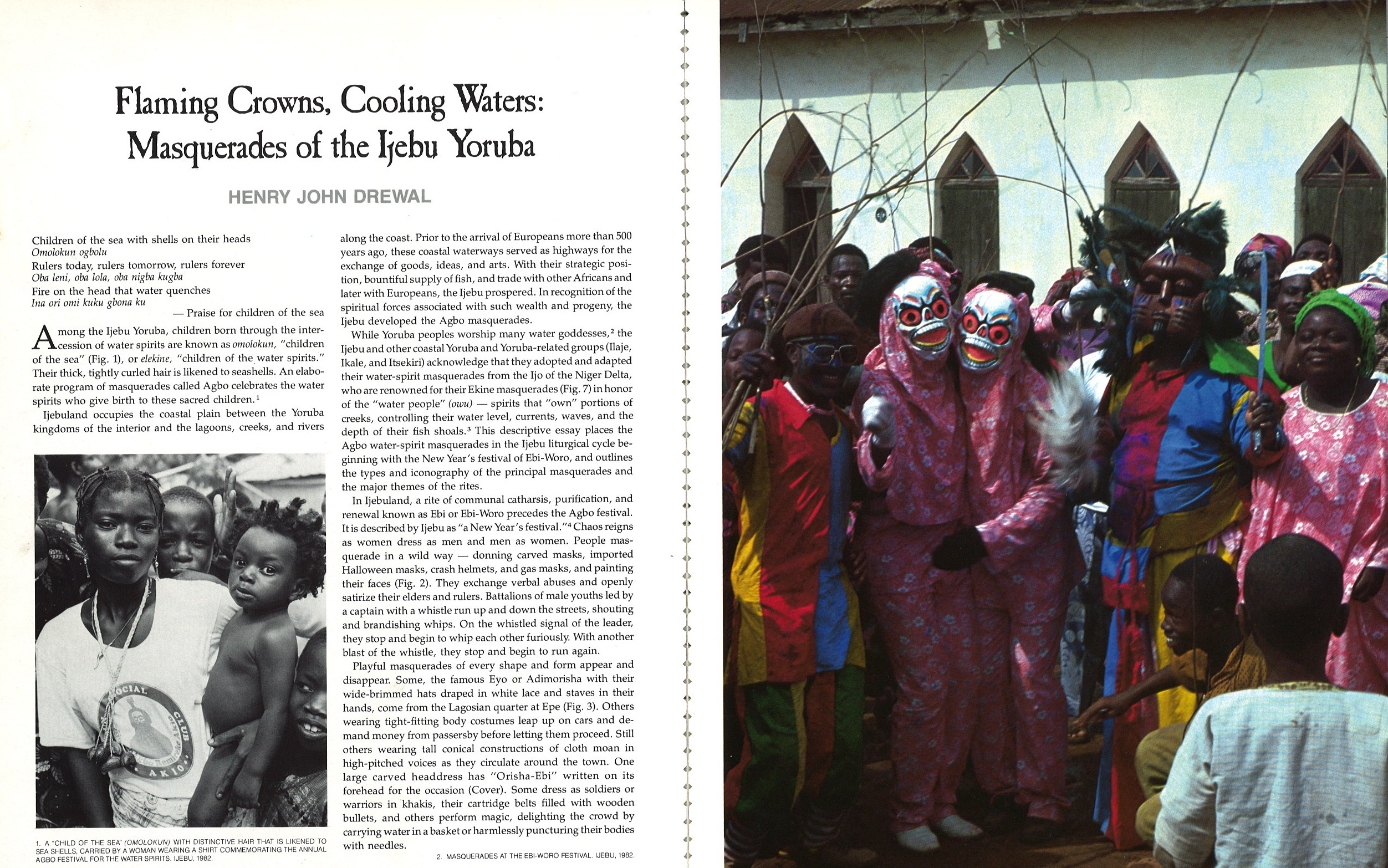
African Arts, Volume XX, Issue Number 01. October 1986.
Right: Masquerades at the Ebi-Woro Festival. Ijebu, 1982.
Photos: Henry John Drewal.
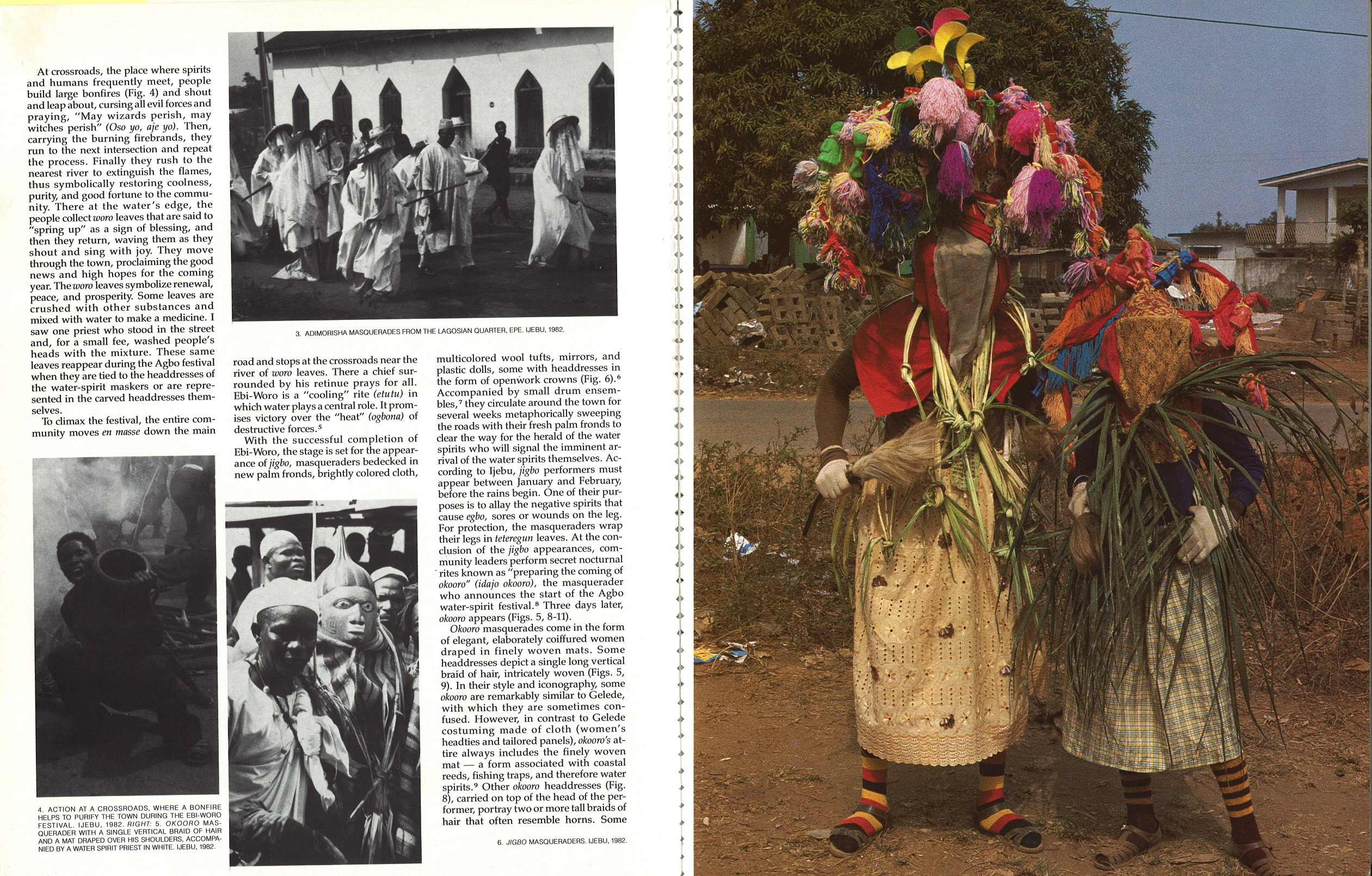
African Arts, Volume XX, Issue Number 01. October 1986.
Right: Jigbo Masqueraders. Ijebu, 1982.
Photos: Henry John Drewal.
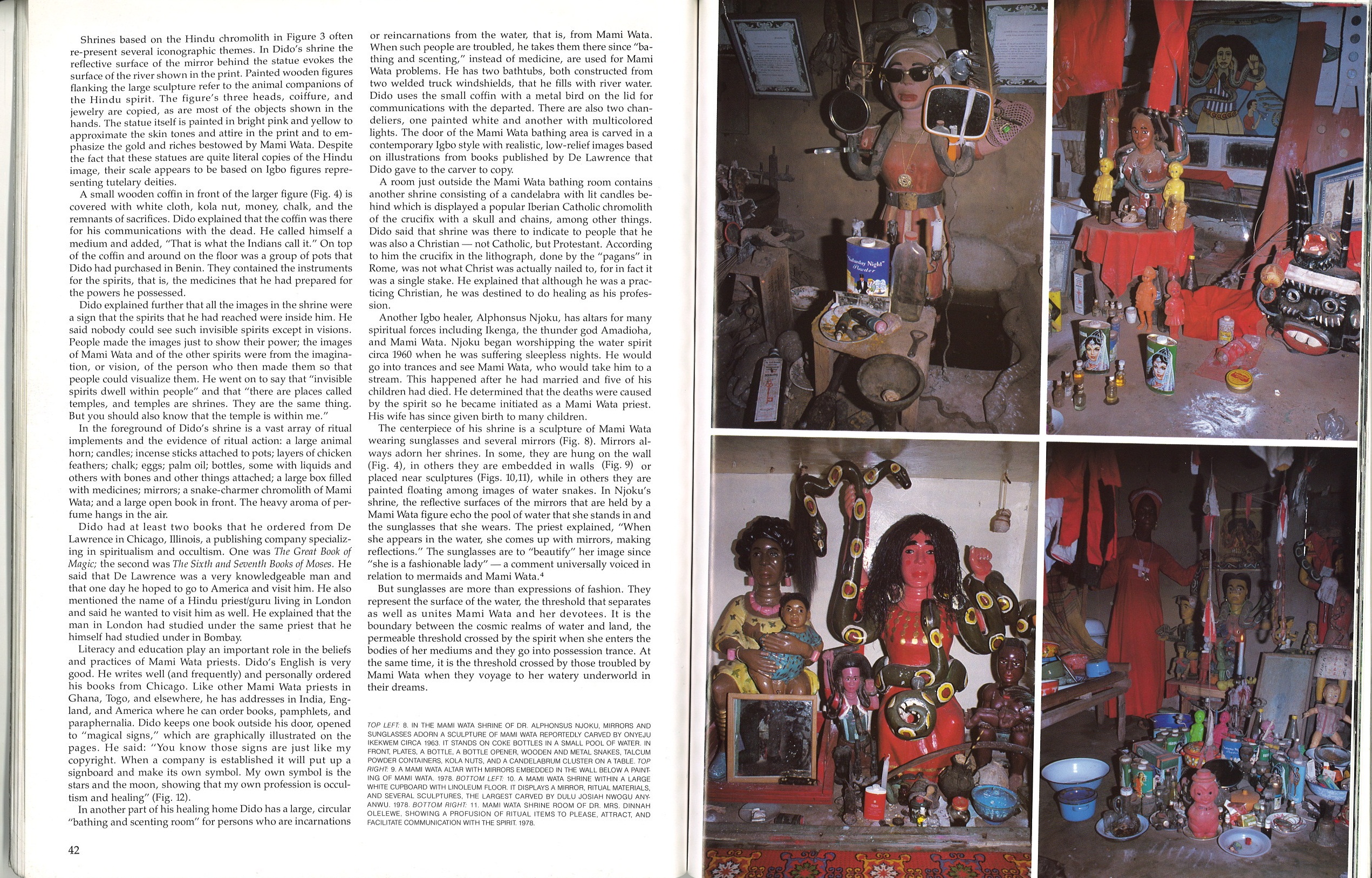
African Arts, Volume XXI, Issue Number 02. February 1988.
In the Mami Wata Shrine of Dr. Alphonsus Njoku.
Photos: Margaret and Henry Drewal.
In Today’s Mail — April 11, 2013

Focused on architecture and design, we have Volume starting with n. 28 (2011) n. 3 (2005), missing only issues 7, 14, and 22. In today’s mail is no. 35. This is one of those titles that I wish we would have started from the beginning (2005). It’s academically heady, but also attractive and fun. Actually, I hope to go after all of the back issues at some point. Happily, I recently acquired all available back issues.
Each iteration has a theme. This one is (from the table of contents page):
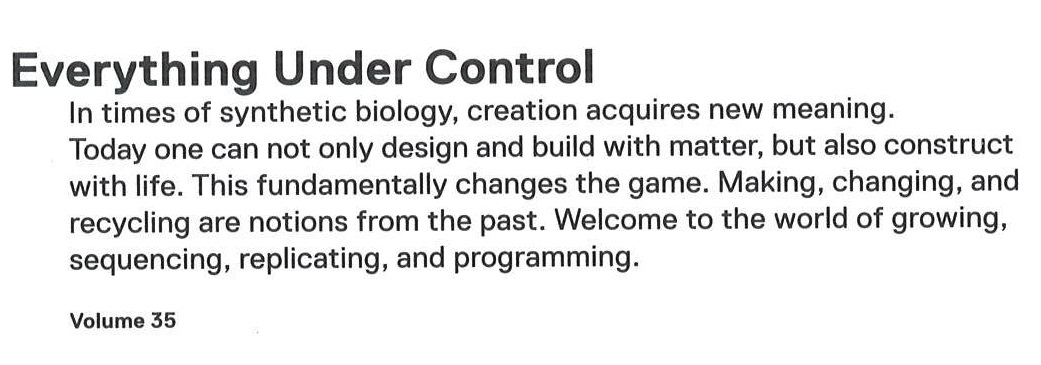
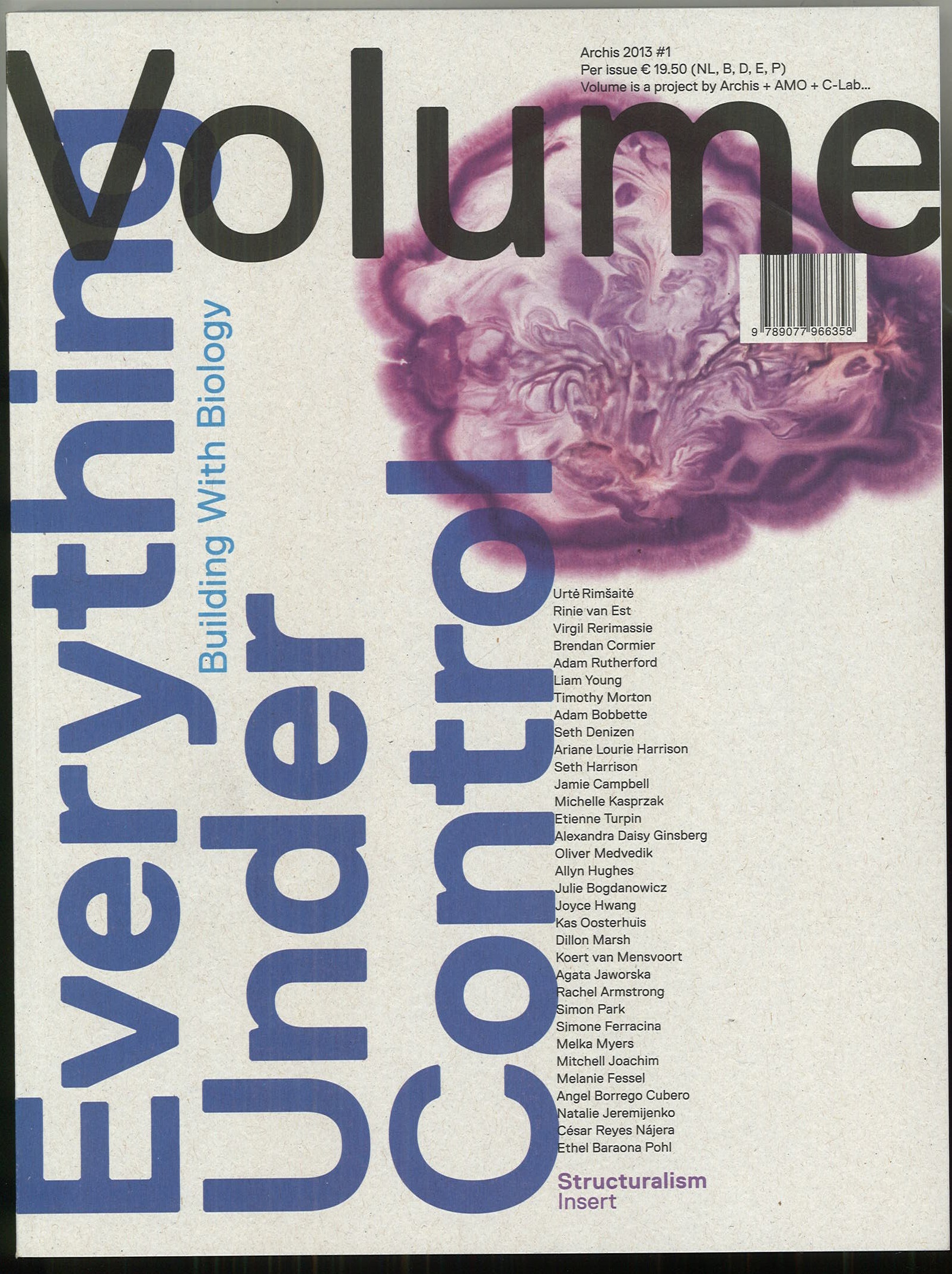
Volume 35 (Spring 2013) Front Cover
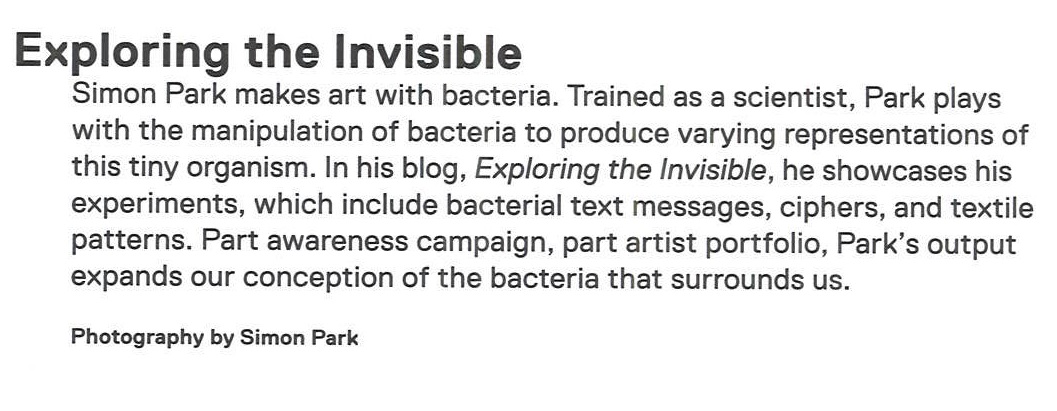
Simon Park’s Blog: Exploring the Invisible
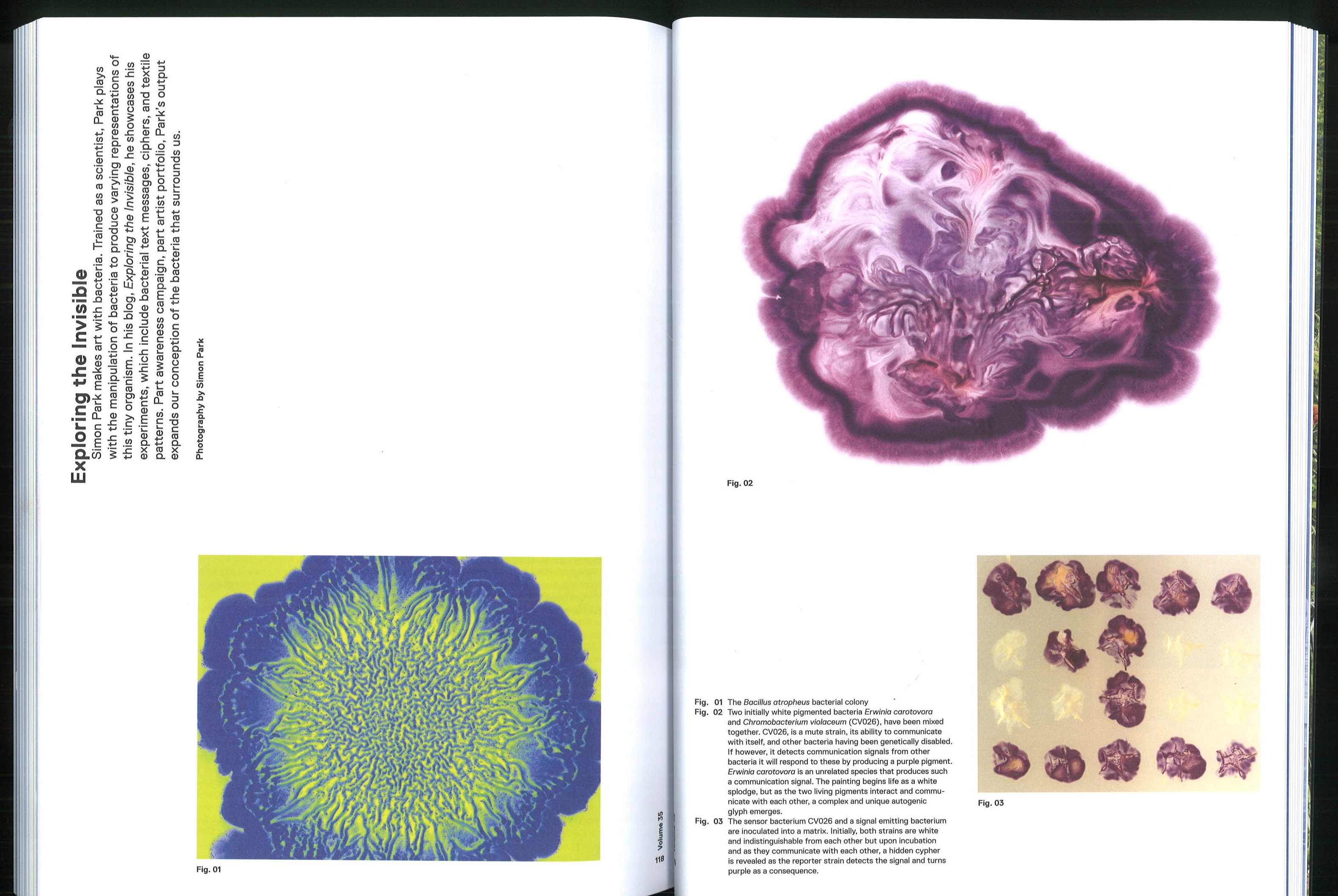

Text made solely from living bacteria!!!
Anatomy – Nervous System
The Anatomy folders contain approximately seven hundred images and have the following arrangement: Anatomy, Anatomy – Animals, Anatomy – Eyes, Anatomy -Hands, and Anatomy – Nervous System. Like the other Anatomy categories, Anatomy – Nervous System consists of photographs of both the interior and exterior, microscopic views, medical illustrations, and creative (non-technical) illustrations.

© 1947, 1981, 1986 Anatomical Chart Company. Chicago, Illinois. Anatomical Illustration by Peter Bachin.

Dissected Neurons. Life Oct. 22, 1971. “Subtle beauties, baffling complexities.”

[At the Synapse, a sudden chemical invasion] “This painting, which is based on the actual specimen…depicts how a signal gets from one neuron to another. Here an axon (the big horizontal shape) forms two synapses, the first with a dendrite offshoot (vertical trunk on the left) and the other with the dendrite itself (right).” Life. October 22, 1971.
![[Succor and support from the gluey glia] Glia Cells. "Greek word for glue, the sticky glia's chief function seems to be to service neurons." Life. Oct. 22, 1971.](https://svapicsandmags.com/wp-content/uploads/2013/04/glia-life-oct-22-1971.jpg)
[Succor and support from the gluey glia] Glia Cells. “Aptly named for the Greek word for glue, the sticky glia’s chief function seems to be to service neurons.” Life. Oct. 22, 1971.

Man Holding Brain

“The interior view of the base of the skull (seen though a wide-angel lens) shows the openings in the bone for the spinal cord and the two jugular veins (bottom), and the two optic nerves (center). Life. Oct. 1, 1971.

© 1983, 1986 Anatomical Chart Co., Chicago, IL.. Illustrated by Ernest W. Beck, medical illustrator, in consultation with Harry Monsen, Ph.D., Professor of Anatomy, College of Medicine, University of Illinois.
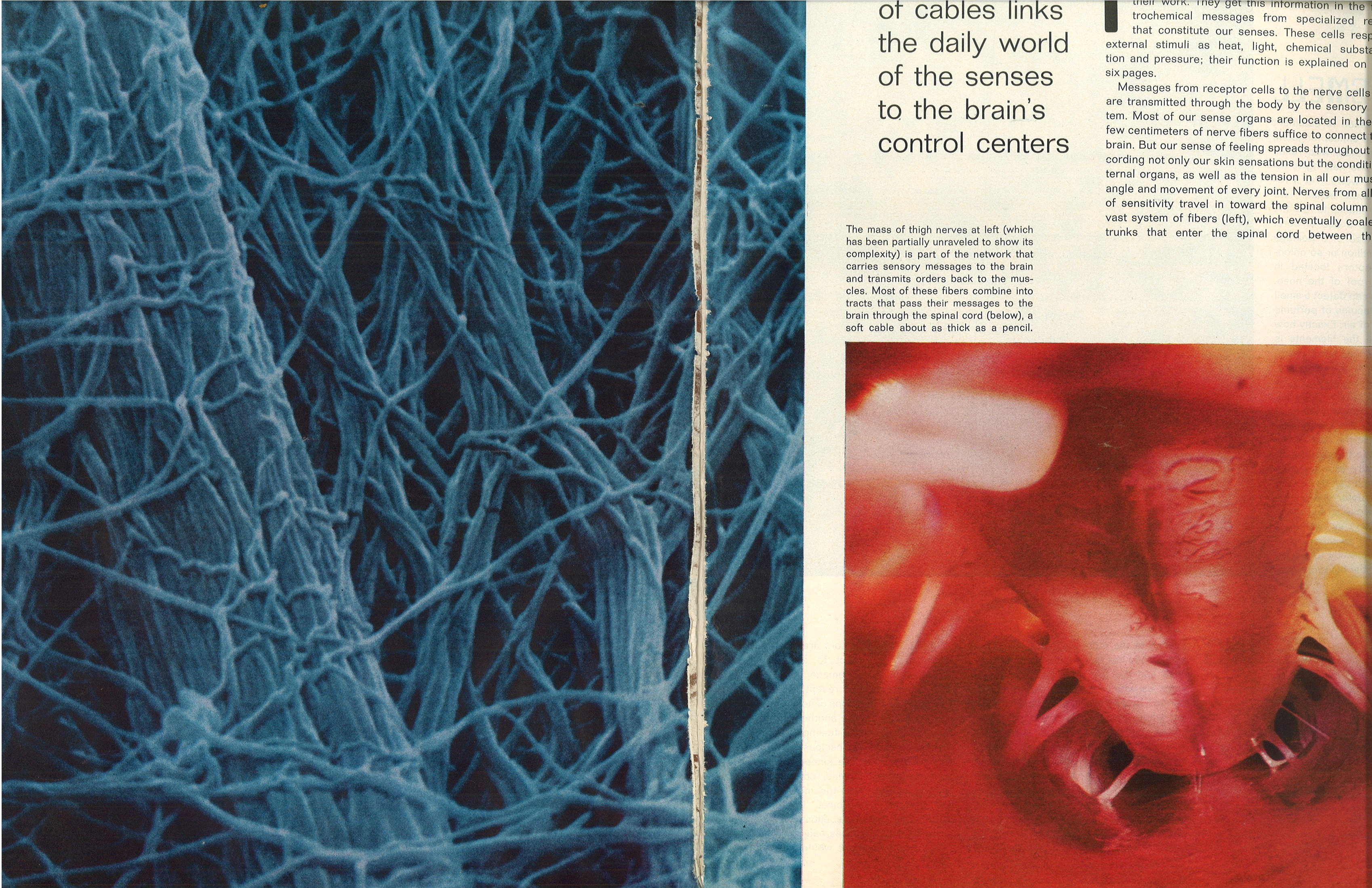
Thigh Nerves (left) Spinal Cord (right). Life Oct. 1, 1971.
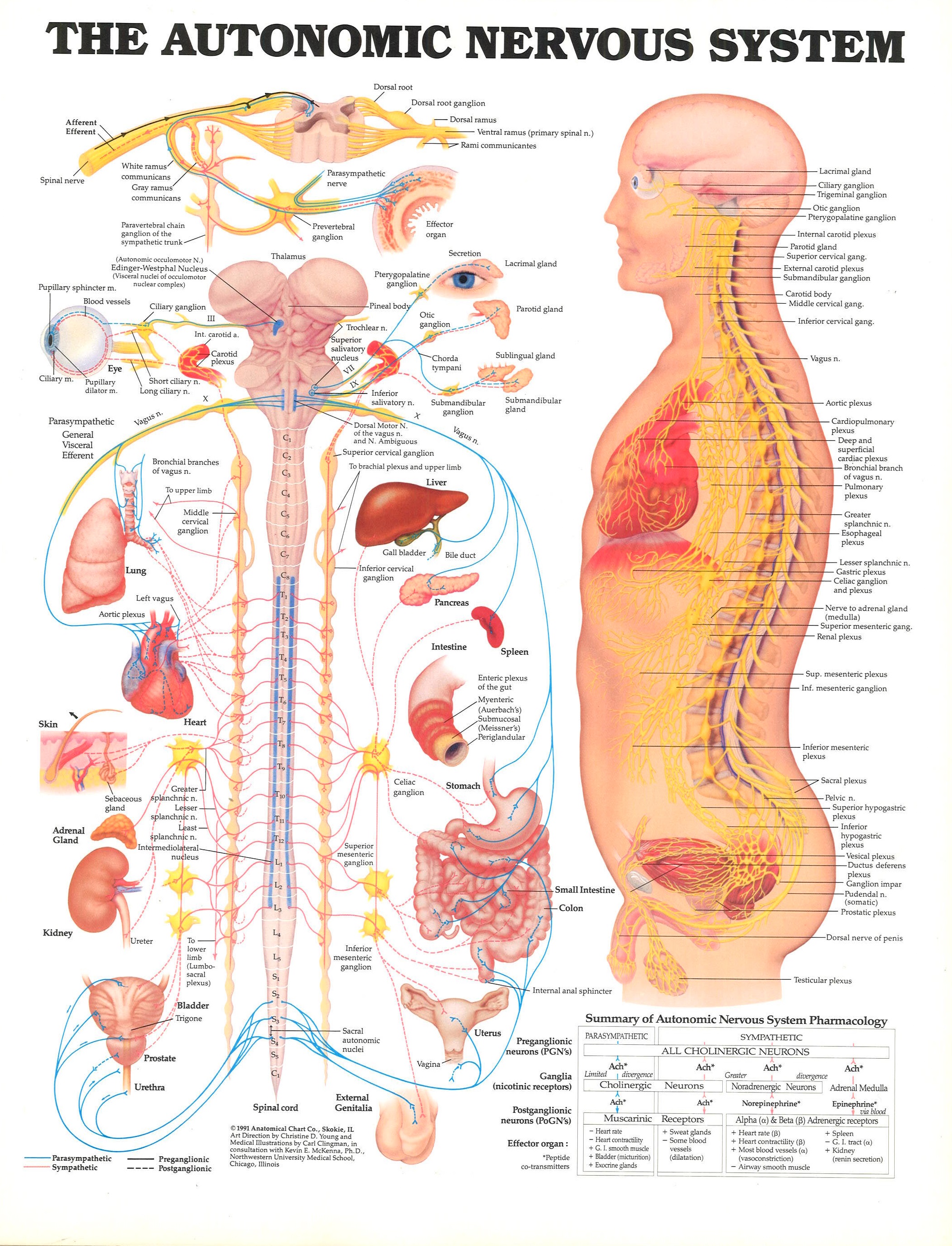
© 1991 Anatomical Chart Co., Skokie, IL. Art Direction by Christine D. Young and Medical Illustrations by Carl Clingman, in consultation with Kevin E. McKenna, Ph.D., Northwestern University Medical School, Chicago, Illinois.


 SVA Library Picture & Periodicals Collections