Category Archives: Periodicals
Features new subscriptions, recent acquisitions, dead runs of interest, and generally highlights the Visual Arts Library Periodicals Collection.
Film Dope

The Visual Arts Library recently acquired most of the dope:
Film Dope no.7(1975:Apr.)-no.50(1994:Apr.) We are missing the first 6 issues, and I believe no.50 is the last issue (I know it ceased some time in 1994). This is a British publication, the obsessively fussed over, though sometimes neglected love-child of David Badder & Bob Baker (Markku Salmi is credited as a co-editor on issue 7, but not after).
What is the Dope? Each issue of Film Dope provides information on 30 to 40 directors, actors, cinematographers, and writers. An exhaustive list of credits (mostly film and television, but also commercials) is given for each person that they profile. Now, if that is all that Film Dope provided, I would have not felt that it needed to take up precious space on our periodical shelves (even though they are beautifully bound, have great front and back covers, and a goodly number of production stills).
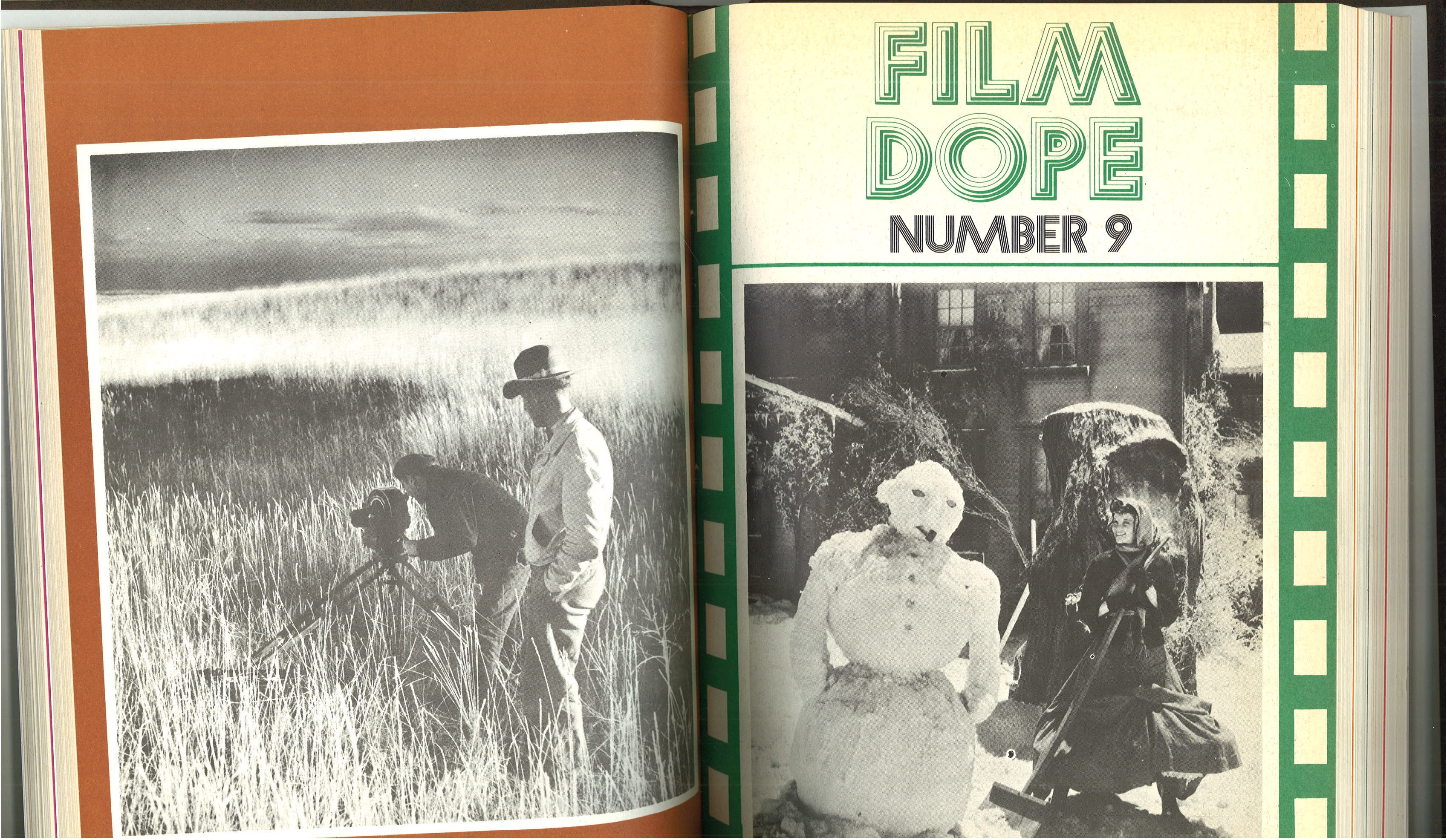
Left: Back cover of issue 8 credited in the following Manner: “A mystery-still. It’s officially described as ‘Pare Lorentz filming THE RIVER’ but from the look of the location, it could as easily be THE PLOW THAT BROKE THE PLAINS. We sent a copy to Floyd Crosby who commented ‘I don’t know what picture this is from. The man on the right could be Lorentz but doesn’t look like him to me. The man with the beret and the Akeley camera is certainly not me.’ Anyone else got an idea? Right: Katherine Hepburn in George Cukor’s LITTLE WOMEN

Right: Jeanne Moreau and Stanley Baker in EVE (1962) Left: Boris Karloff in THE MASK OF FU MANCHU (1932)
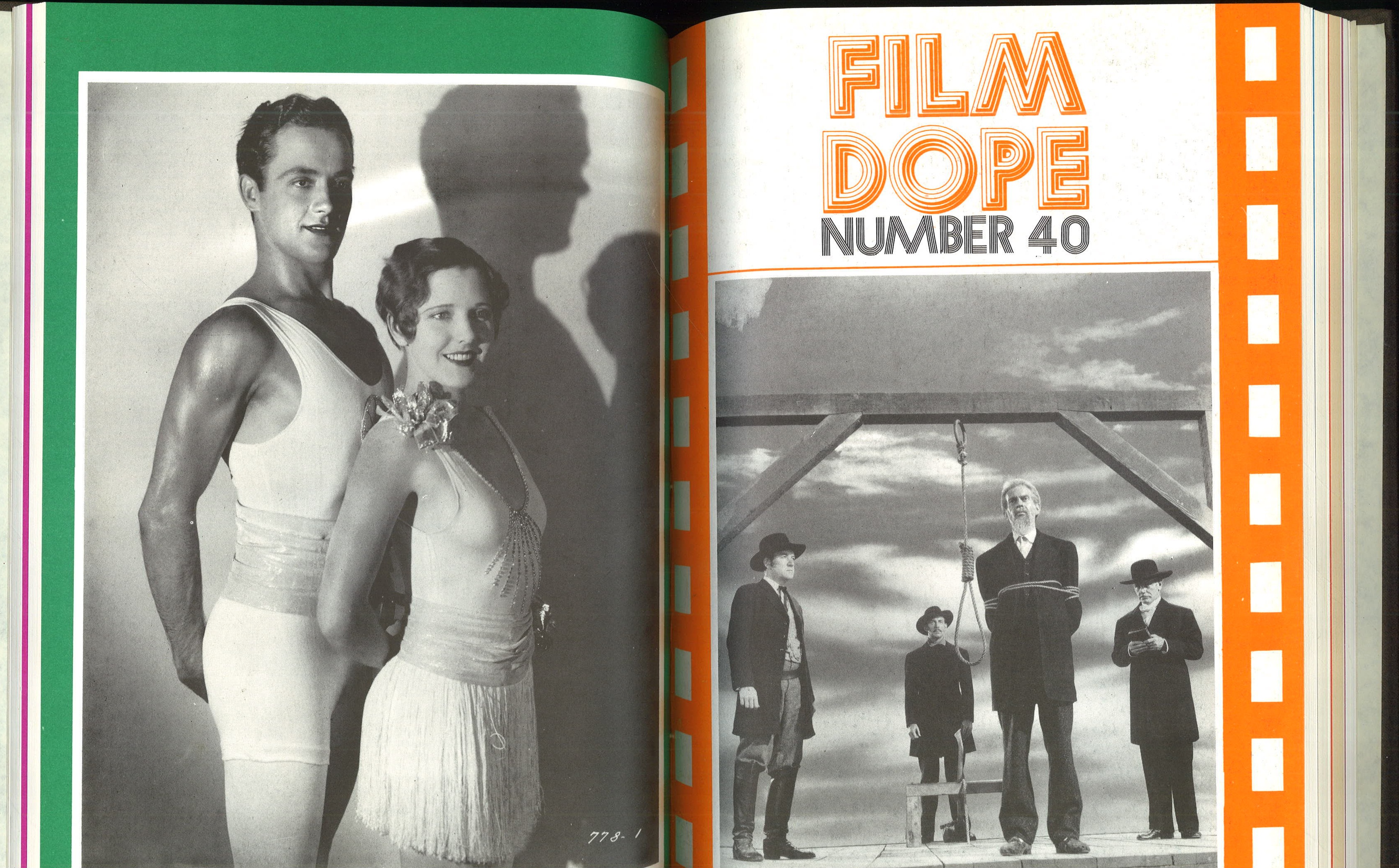
Right: Charles Rogers and Jean Arthur in HALF-WAY TO HEAVEN (1929), d. George Abbott. Left: Addison Richards (left), Raymond Massey in SANTA FE TRAIL (1940). Production still by Mac Julian.
If credits were all that Film Dope offered, IMDB and Wikipedia would have rendered this fine publication obsolete. What keeps this publication relevant, endearing, and worth having around are its format, its subjectivity, and its rich collection of primary sources of information.
Issue 7 (April 1975) includes the following entries: Paddy Chayefsky, Nikolai Cherkasov, Maurica Chevalier, Marvin Chomsky, Montgomery Clift, Sean Connery and 33 others. Issue 50 (April 1994) includes the following entries: Al Pacino, Jack Palance, Dorothy Parker, Robert Parrish, Charles Parrott, Christine Pascal. The twenty years between those two issues chronicled people with last names that started with D to O. Sadly, they would never make it to R-Z, but what we are left with is a periodical that over the span of twenty years morphed into an encyclopedia. During that time they went from thanking the British Film Institute staff for “their patience and assistance” to thanking them “for [their] continuing financial assistance.” Obviously they were creating something of apparent value.
David Badder & Bob Baker were two very dedicated, knowledgeable, and intelligent chaps, and it is their input and discretion that gave a value-added aspect beyond free online sources before they even existed. Many of the issues include an editorial (which normally offers some apology for how long its been between issues). But their real editorial influence is both in the amount of time they chose to give to each subject and the very personal opinions that they have of almost everyone chronicled. Normally, out of the 30 or so people featured, a handful have a more extensive narrative biography, along with an interview, reprinted correspondence and/or reflections from peers. These are the primary sources of information I was touting earlier. Some of the interviews, such as with the director Louis Daquin, go on for ten dense pages. Other entries are little more than the credits, but more often than not include some sort of anecdotal information and very personal, though meaningful opinions, such as Bob Baker’s of Julie Christie:

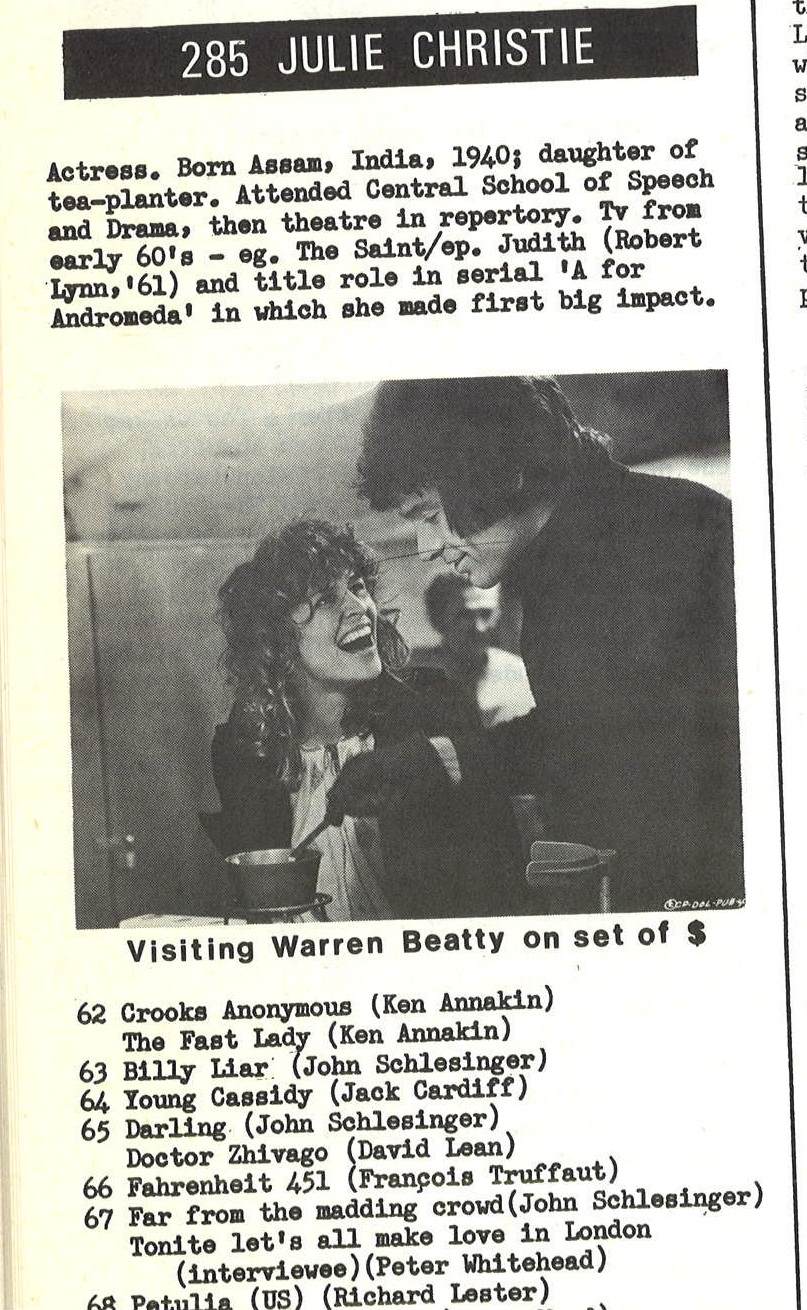
After lauding and defending Julie Christie, the ever honest film critic/hound is forced to admit, “I can’t ever imagine her moving me very deeply. I am at a loss to account for this and hope to be proved wrong very soon.” It’s informative but deeply subjective and gives a contemporaneous context of critical reception and in this case emotional barometer.
The people that made it to these issues, though impressive in scope, are obviously not exhaustive of everyone that worked in the motion pictures in England and the USA up to that point. But the fact that it is limited and now static, lends the publication a curatorial quality. The scope is, however, quite large (say, maybe 1200 people in our 43 issues) and full of variety (from Bob Clampett to Boris Karloff). Film Dope is a marvel and a joy, not to mention a rich, important resource for film research.

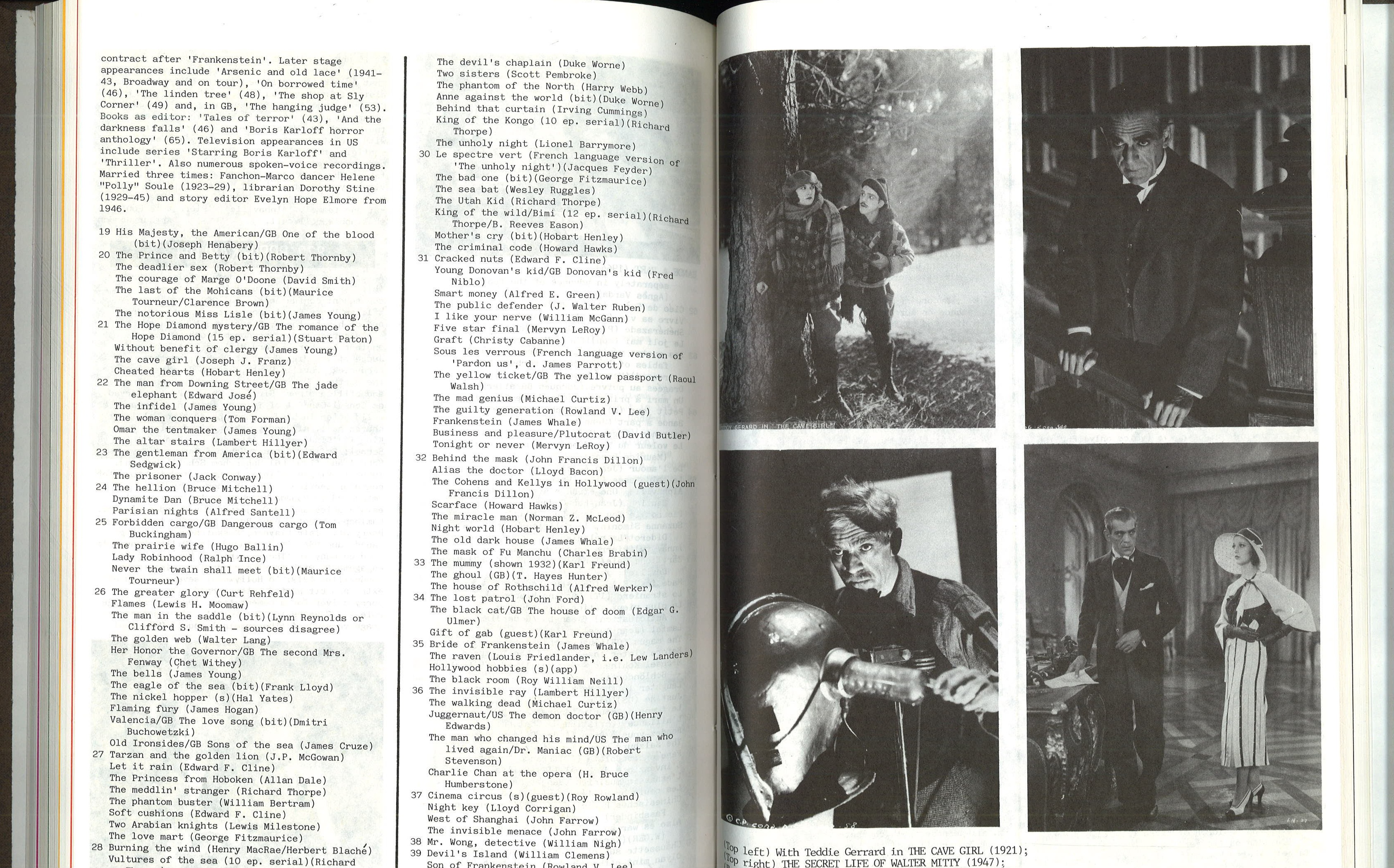
The list of credits reads like a companion piece to John Yau’s poem “I Was a Poet in the House of Frankenstein: Boris Karloff Remember Being Chinese on Several Occasions”
Advertising–Tourism
The tag-line of this blog is “A tiny window into 637 Periodical Titles & 200,000+ images divided into 910 Picture Subjects.” 95 of those subjects have the parent subject Advertising. There are 16 subcategories of Advertising (Beer, Cigarettes, Cosmetics & Grooming, Drugs & Medicine, Fashion, Finance, etc.). Those subcategories are then divided chronologically, for the most part into decades. This arrangement allows users to see how illustration (or the lack of it), graphic design, copy, and advertising strategies have evolved over time.
Advertising–Tourism, which has nearly 1000 items, is divided thus: 1890-1919, 1920-1929, 1930-1939, 1940-1949, 1950-1959, 1960-1969, 1970-1979, 1980-1989, 1990-1999, 2000-2009, and soon 2010-2019. A generous sampling follows.
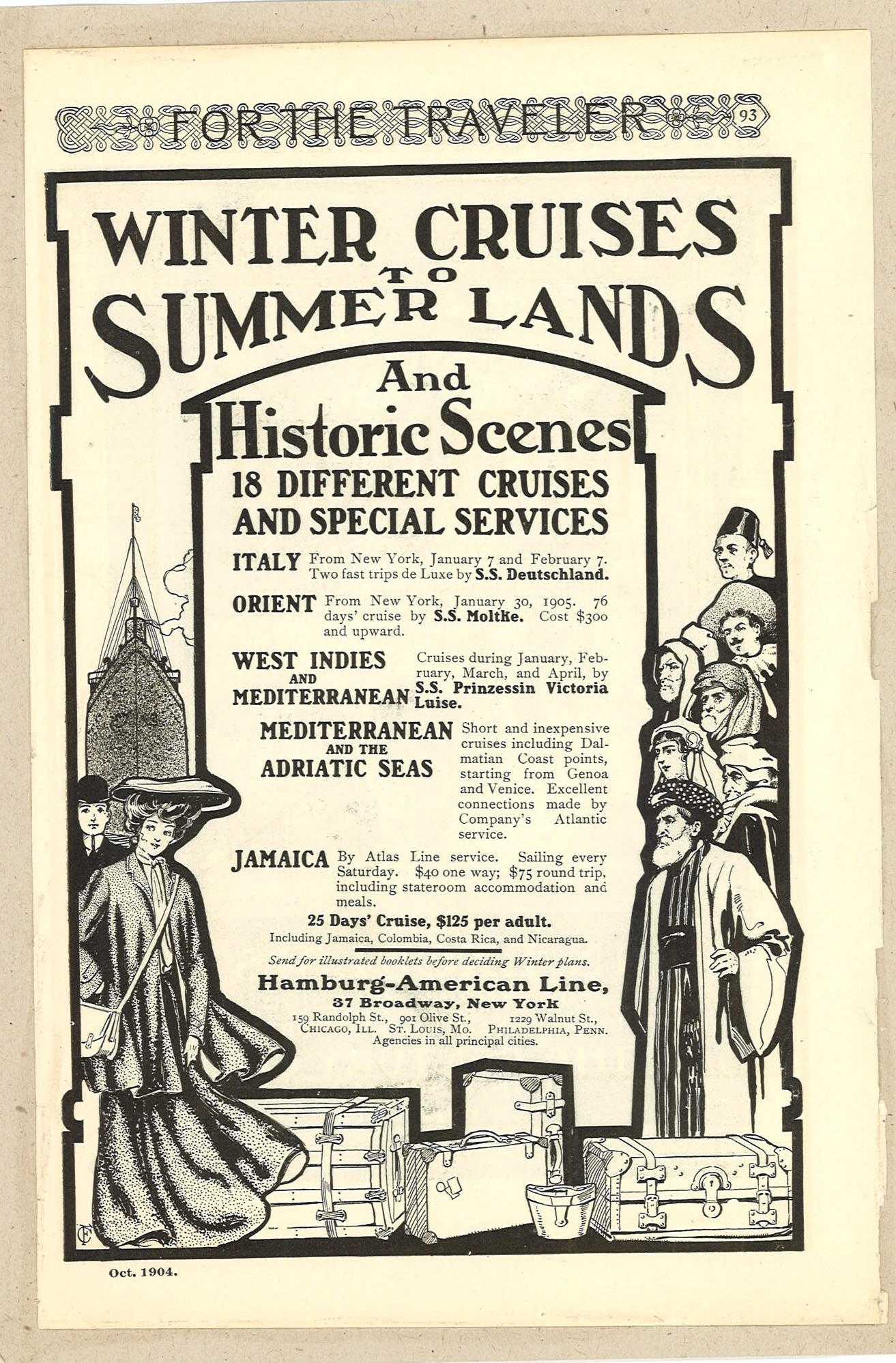
October 1904
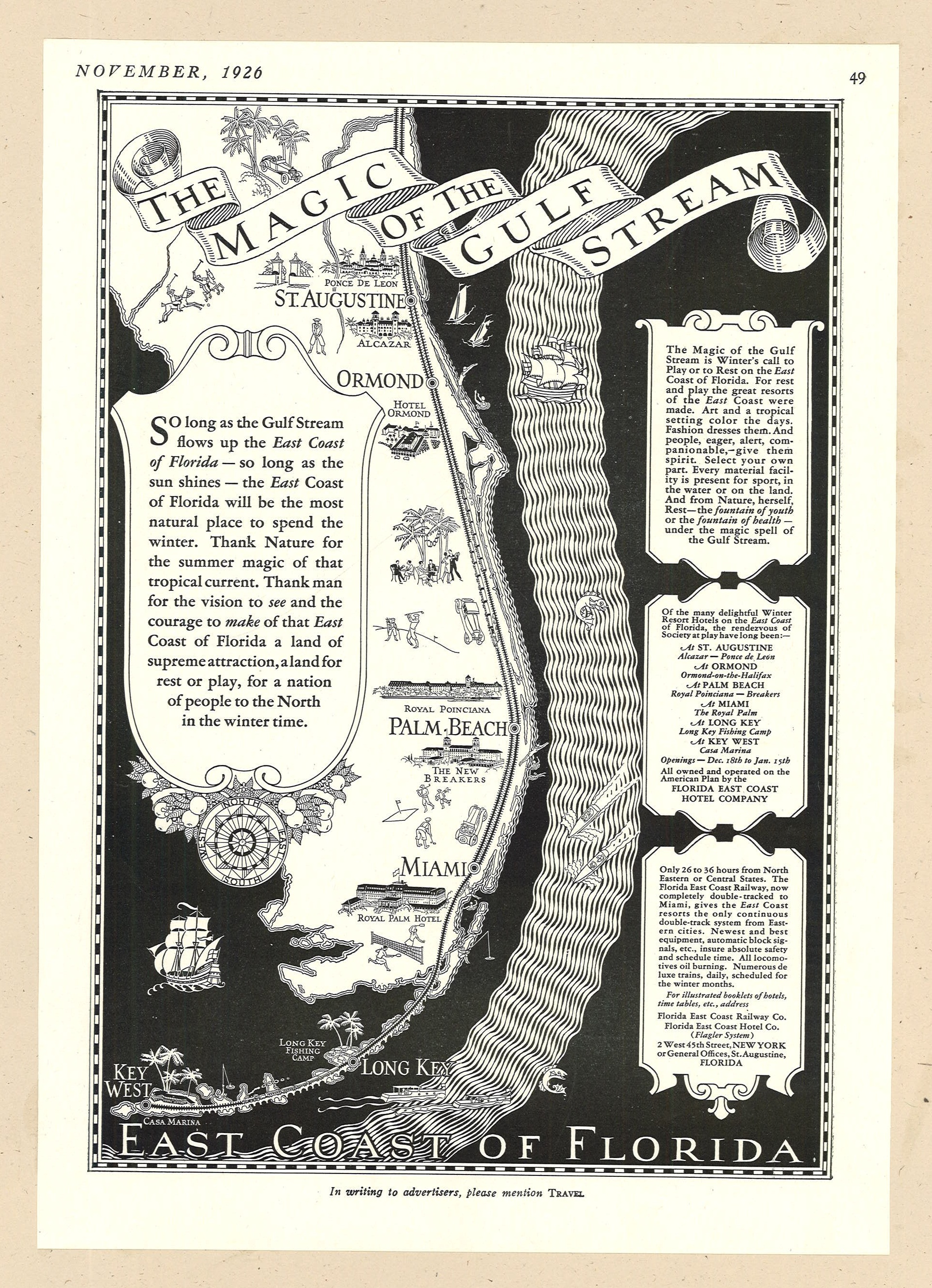
From Travel Magazine, November 1926
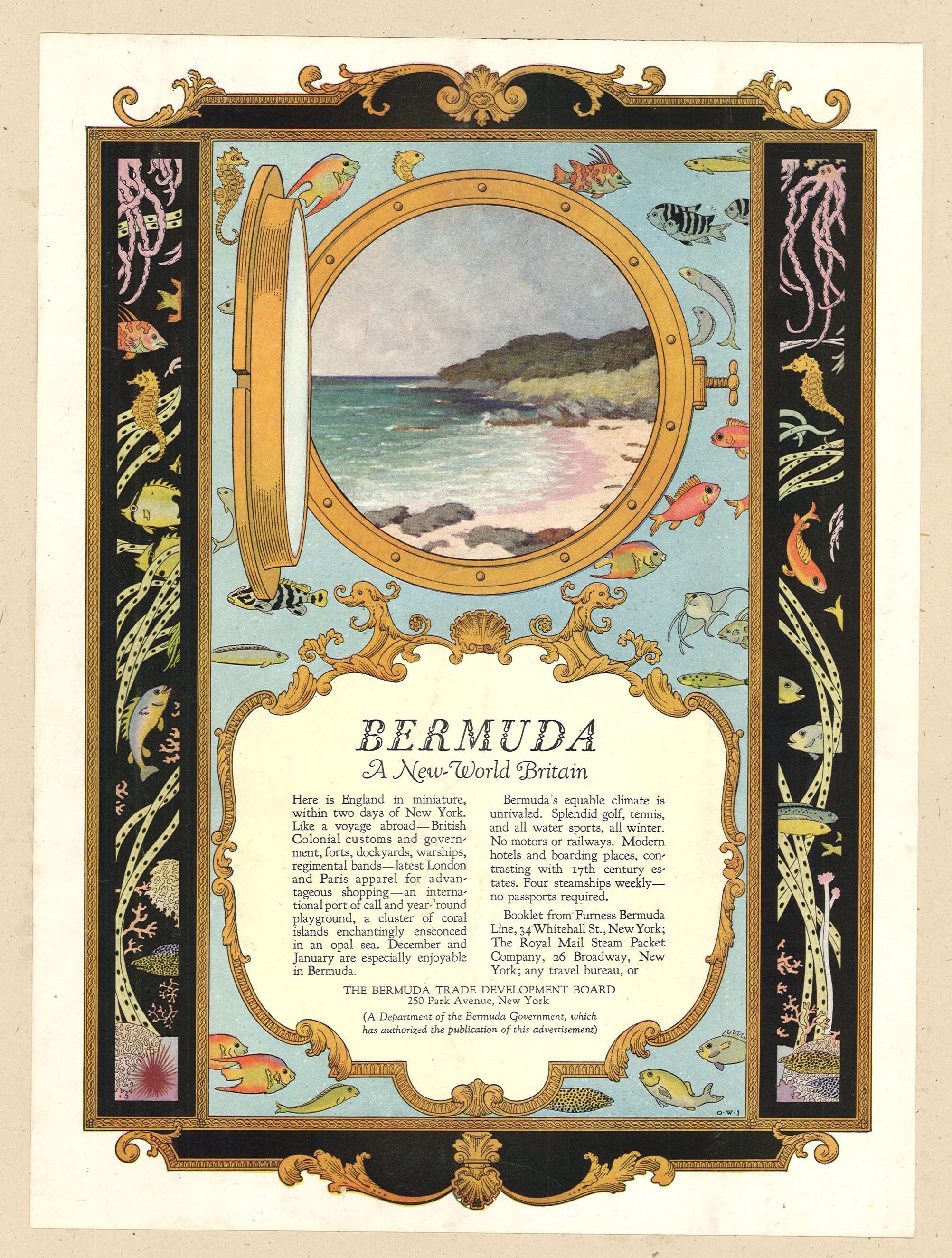
From Travel Magazine, December 1926
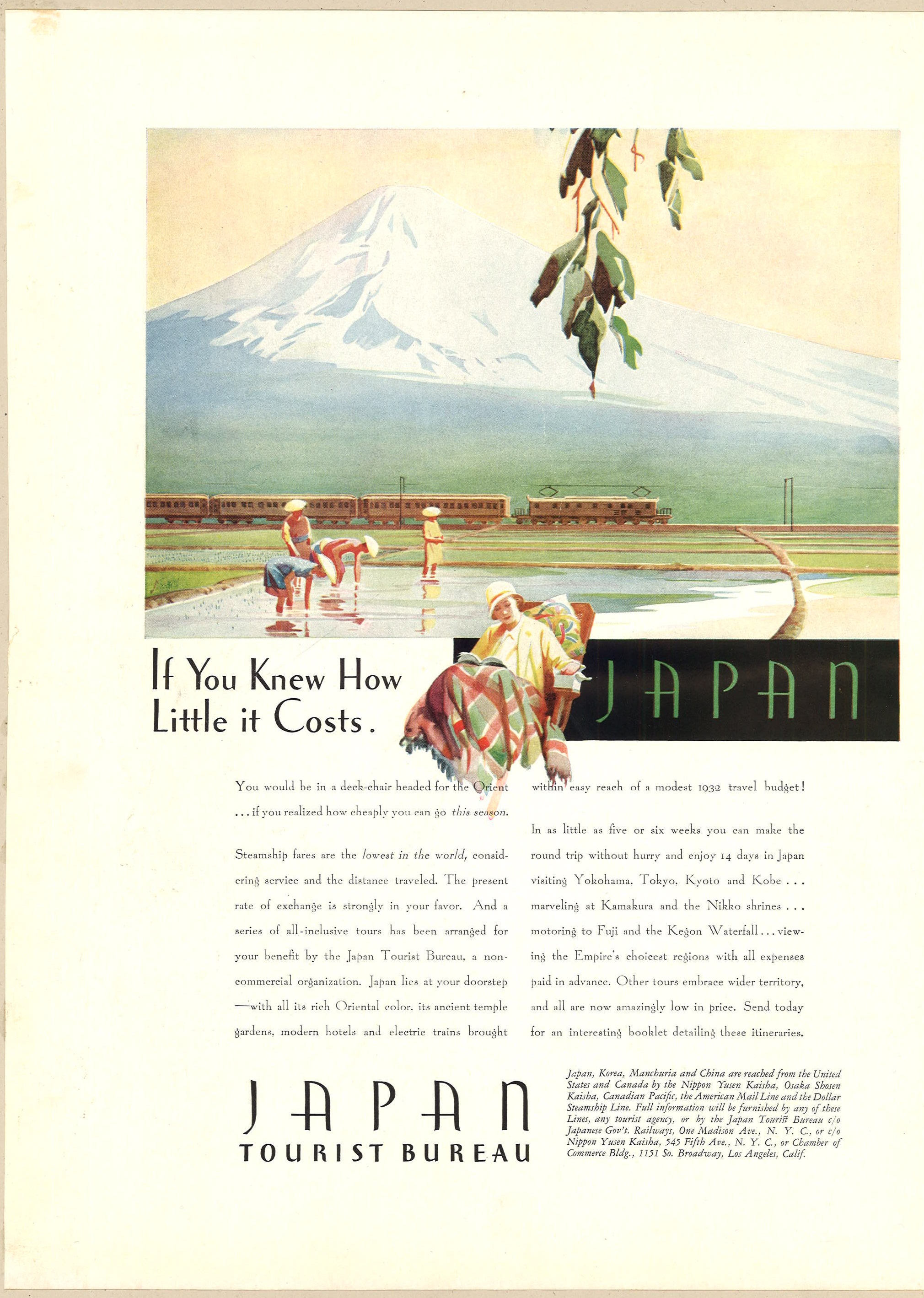
1932
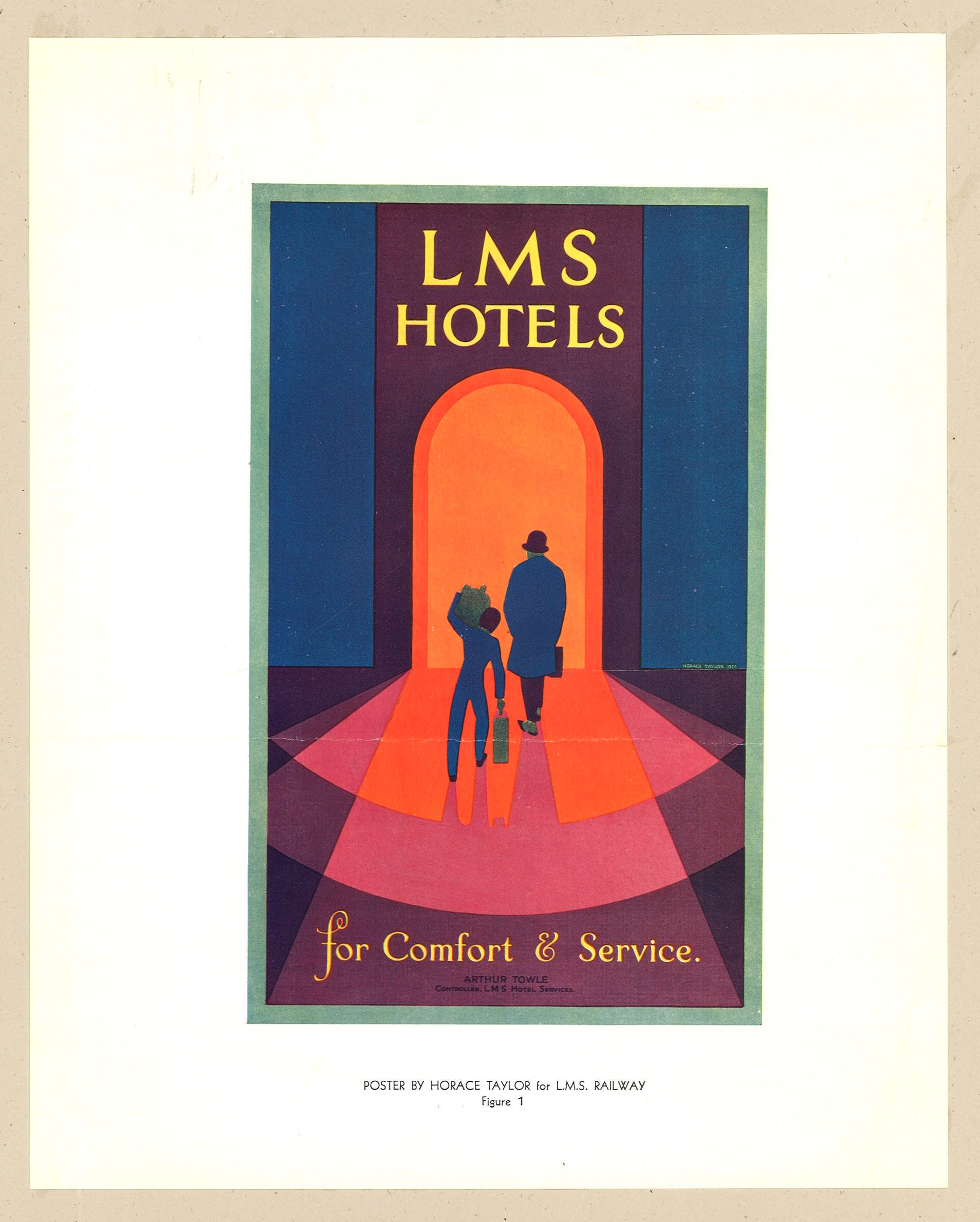
By Horace Taylor, From The Artist, June 1933
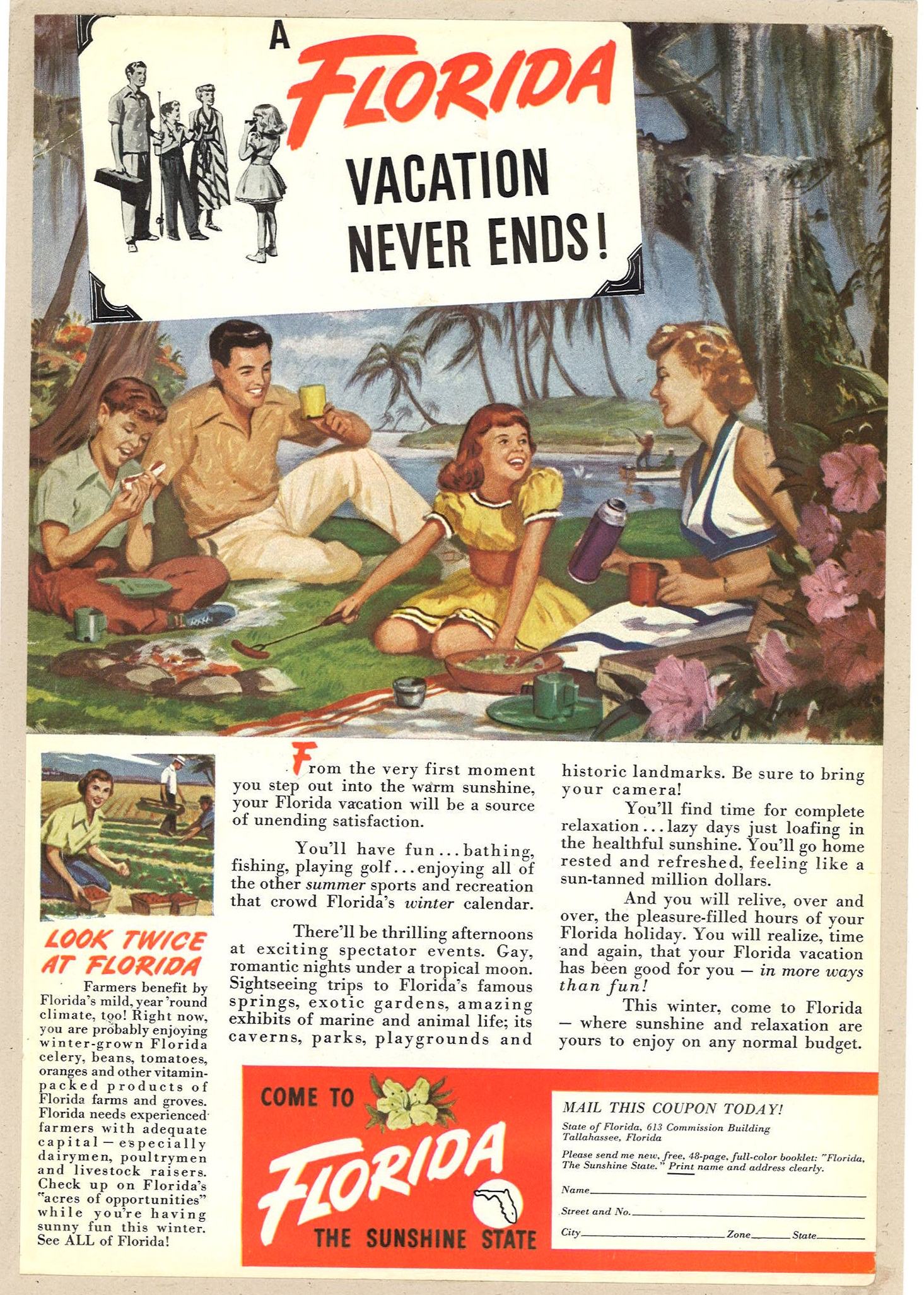
1949. 62 Years later, the Florida Vacation persists.

1950. This is a whole pamphlet published by the Pan American Union.

National Geographic, June 1968

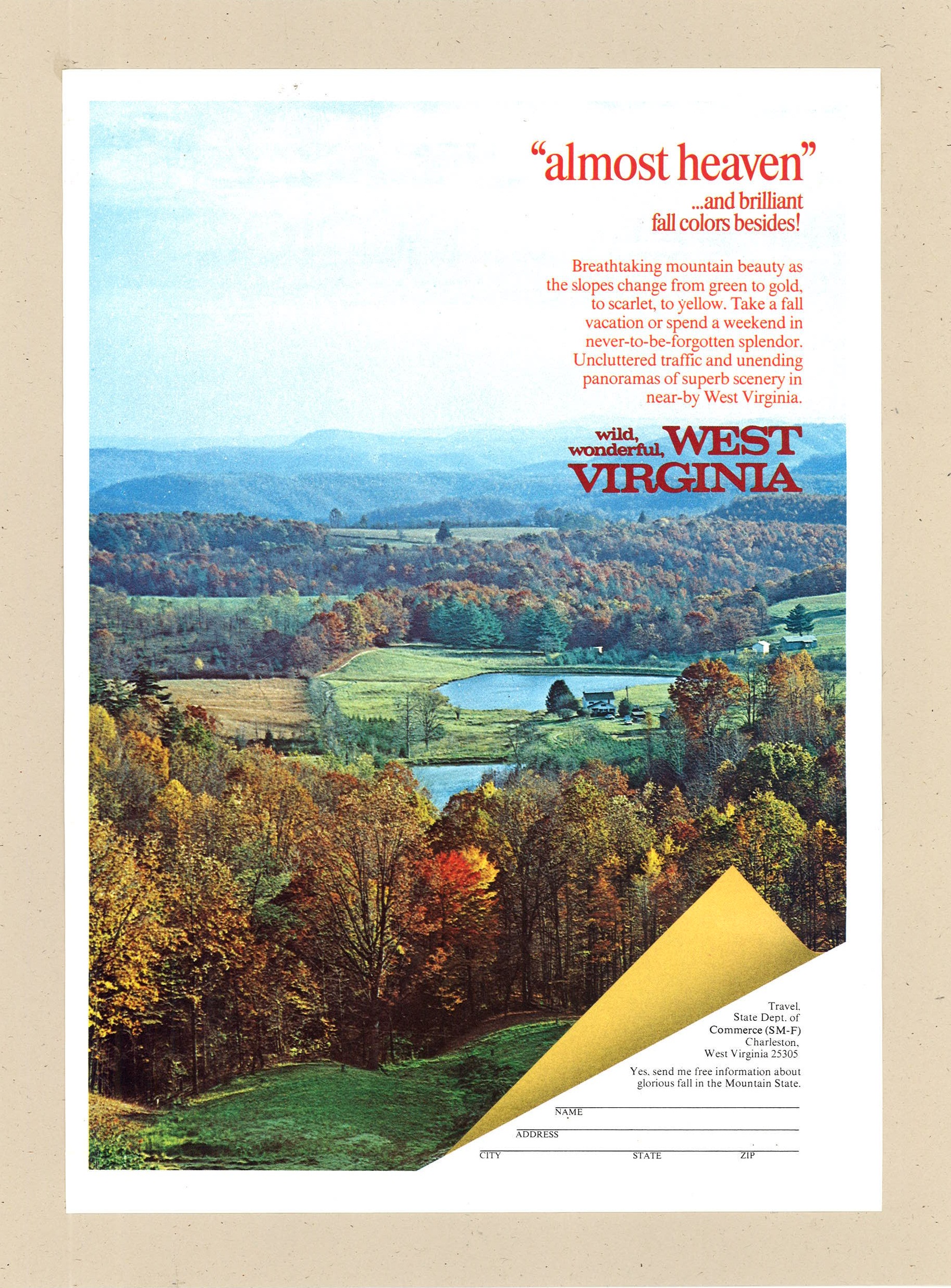
Smithsonian, October 1972

1980's
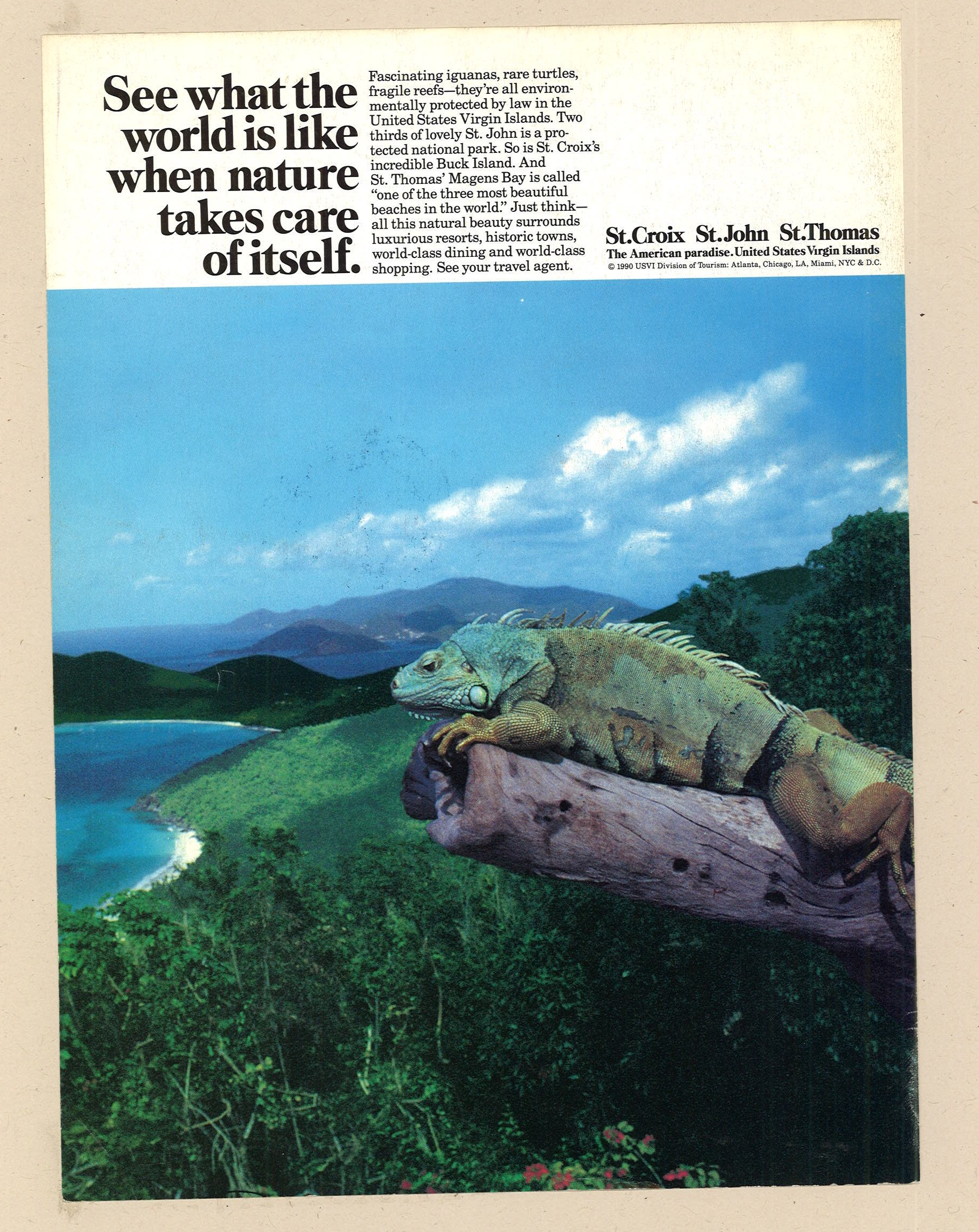
1990

Culture & Travel, July/August 2008
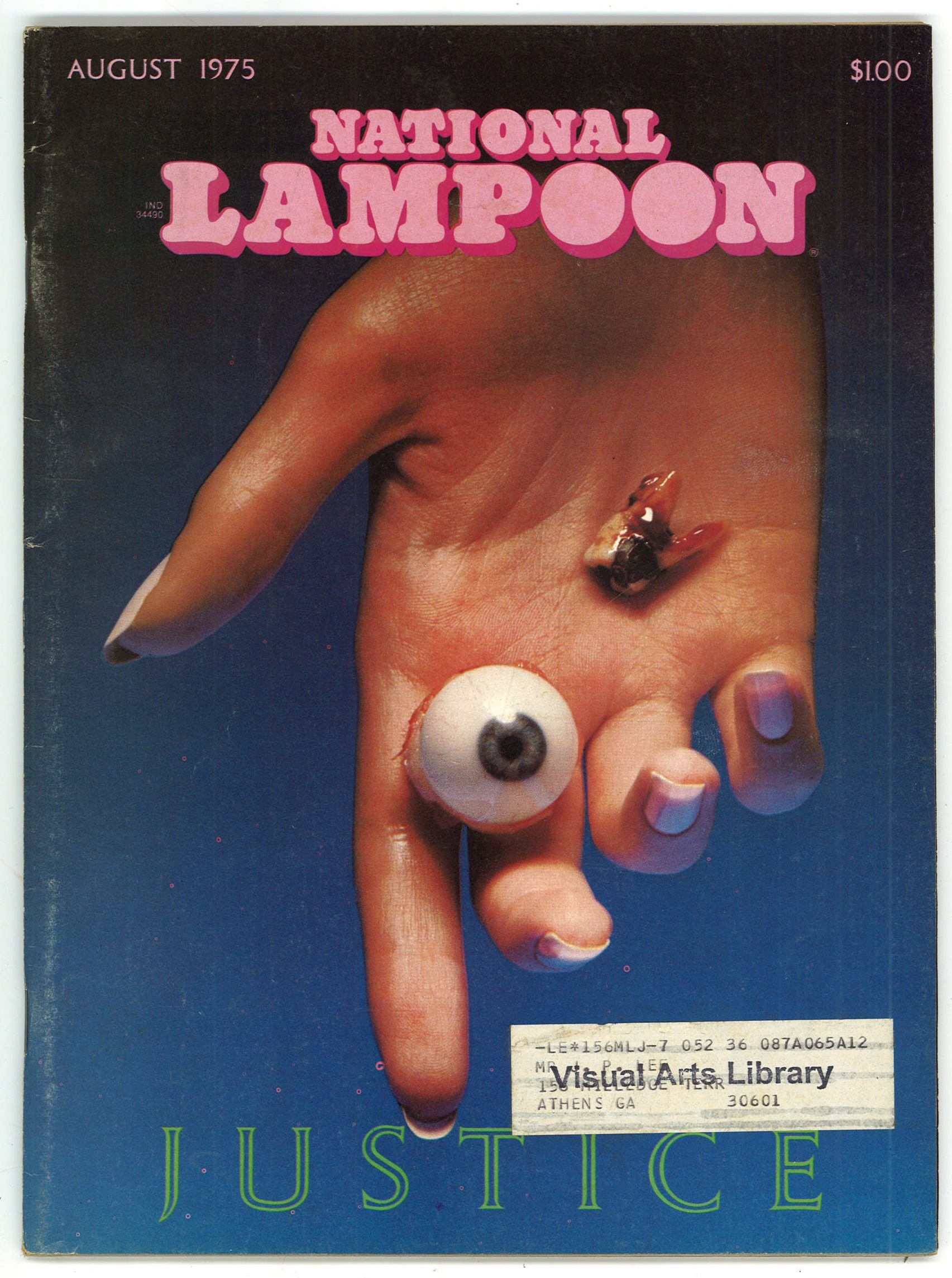
National Lampoon Magazine: Relevant Irreverence
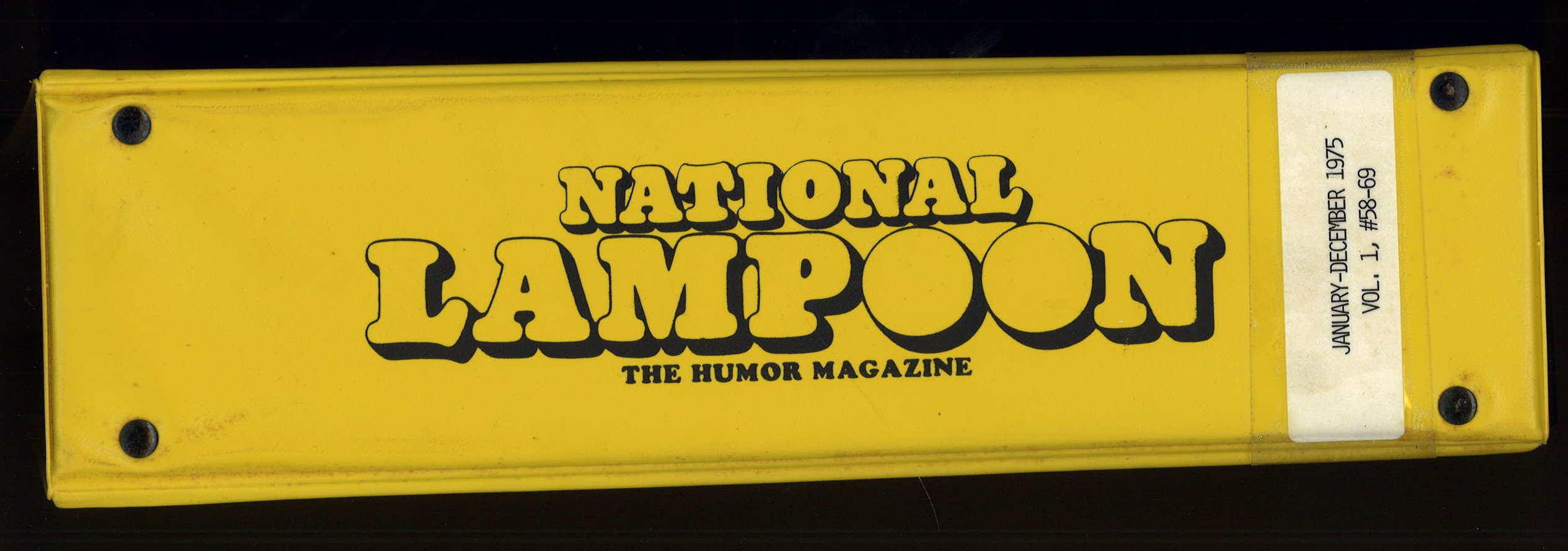
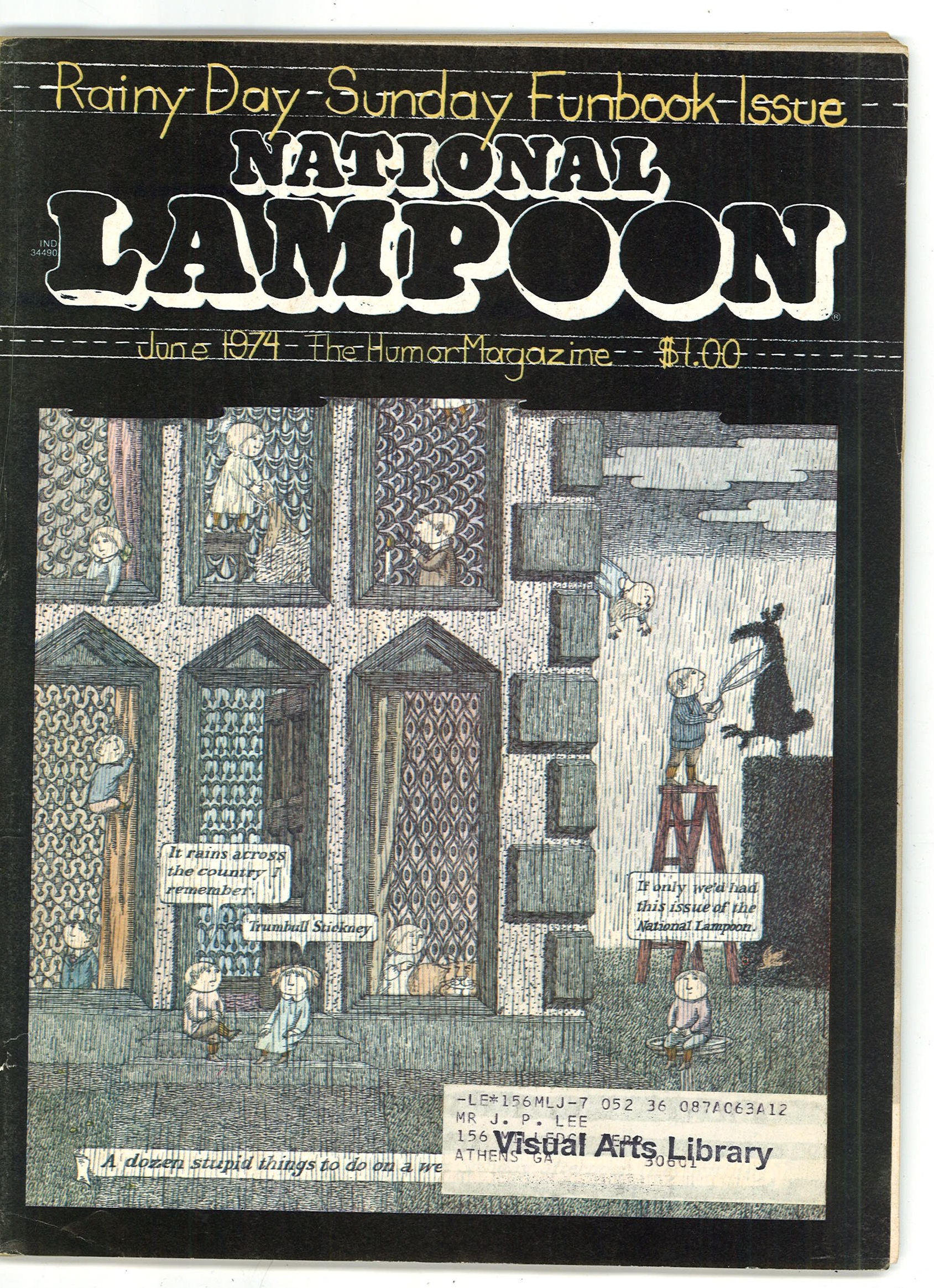
The Visual Arts Library recently acquired an (almost[1]) full run of National Lampoon Magazine. Much can be said about this magazine that originally was spun off the Harvard Lampoon. From my nerdy consumer point of view, what really draws me to this publication is their incredible enthusiasm and attention to detail. Every page of every issue (at least in their heyday: see the irreverent–there’s that word again–1970’s) is crammed with creativity, artful considerations, and in most instances, meaningful audacity. The table of contents and editorial page from the June 1974 issue:
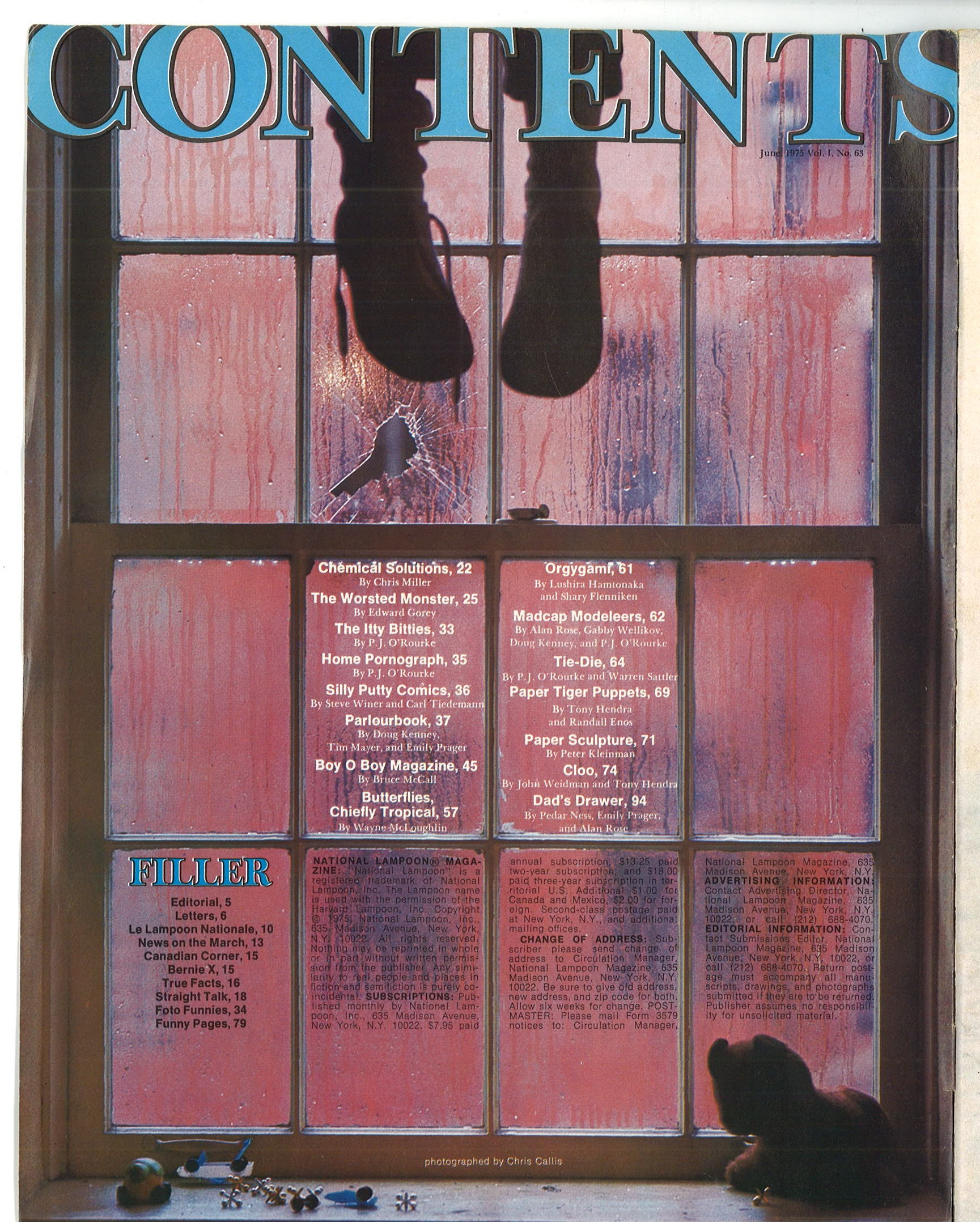
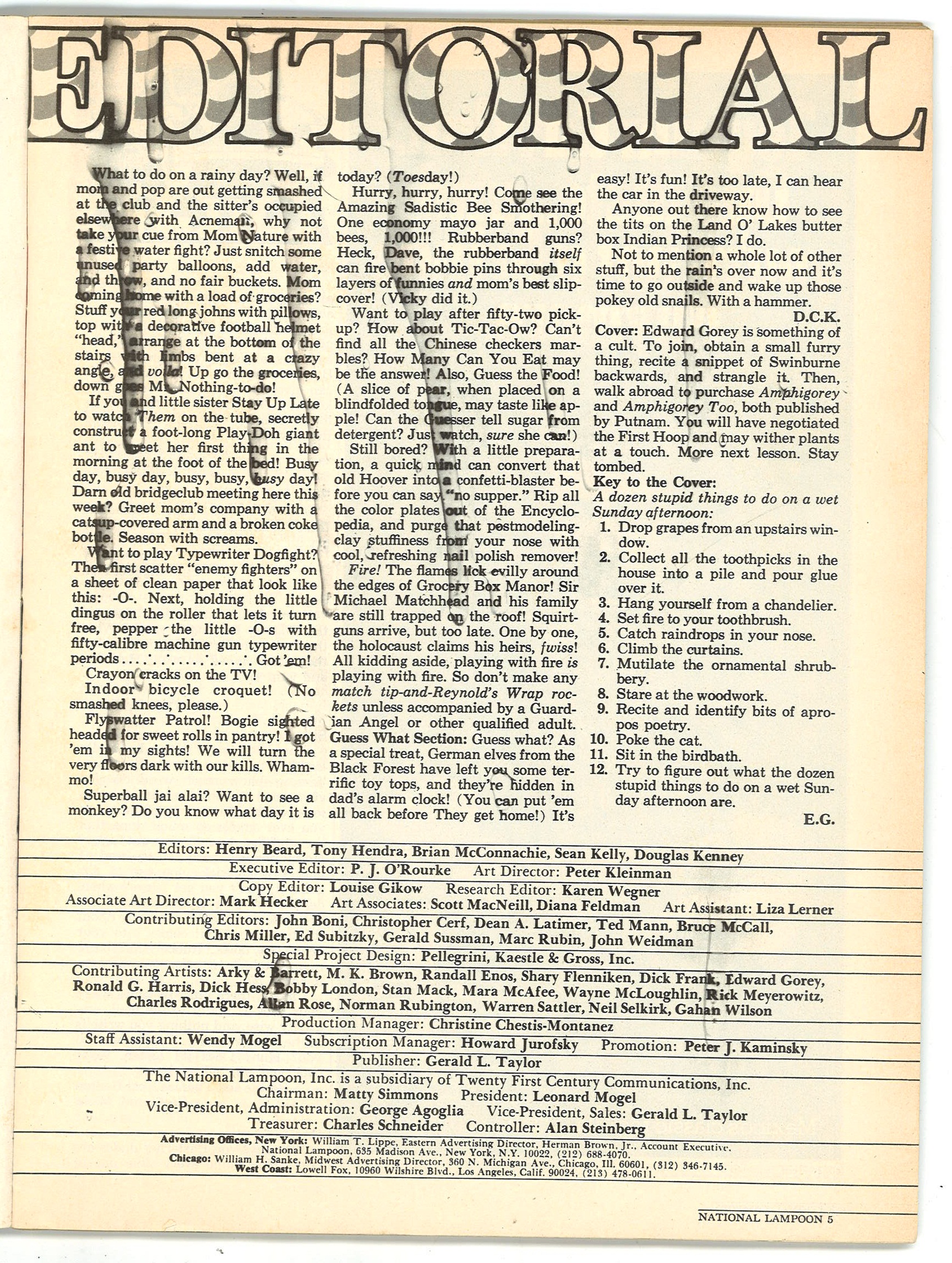
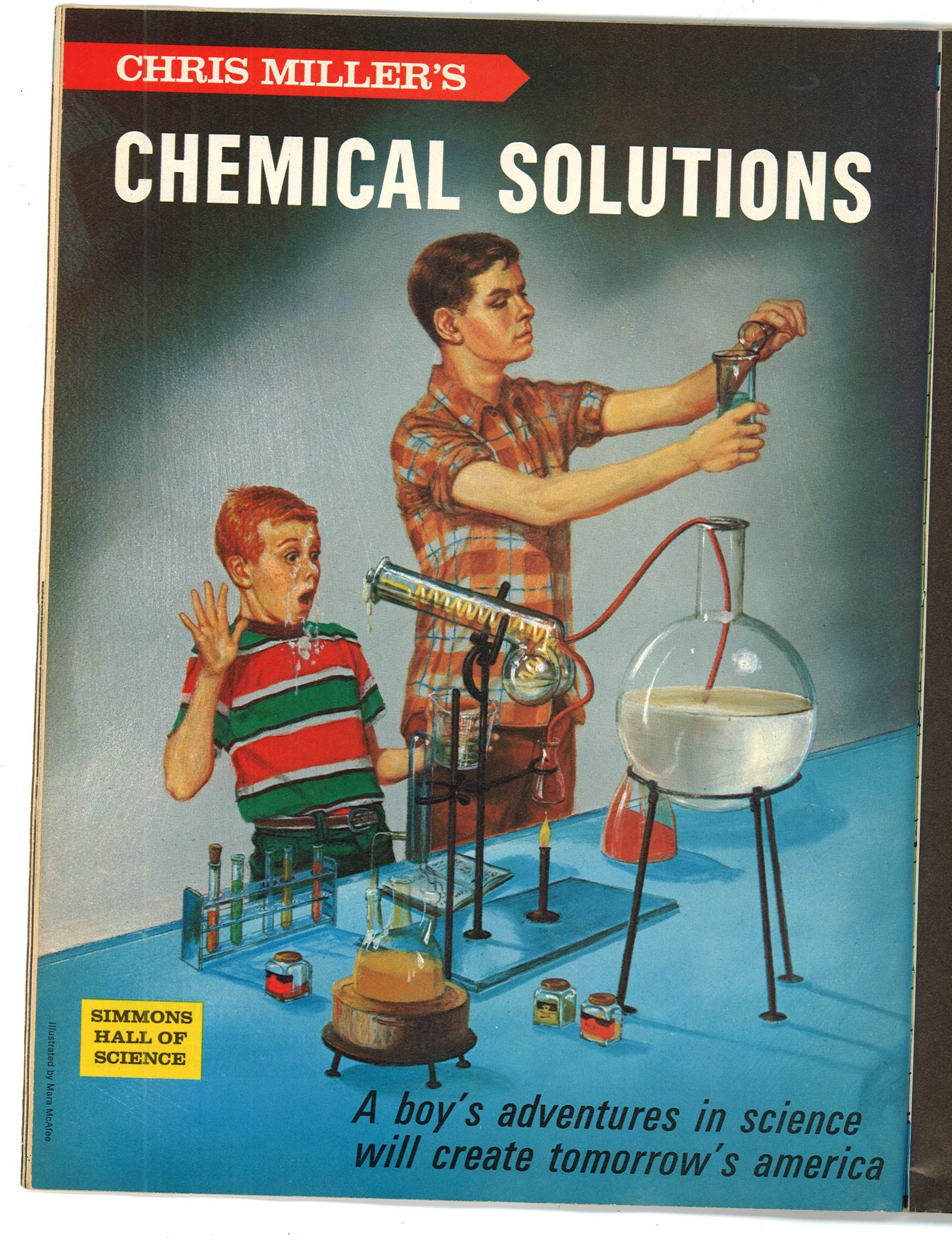
Most of the issues are themed. This one is their “Rainy Day Sunday Funbook Issue” which apparently didn’t reached the pictured rained-in kid soon enough. One of their favorite satirical devices seems to be confusing horror with comedy; both the blood and guts and social varieties. Many of the magazines have embedded publications in them that parody other actual publications, such as this one that is supposed to have been put out by the state of Mississippi Bar Association featuring articles on “Closing Those Loopholes in Mississippi Lynch Law” and “No-Fault Rape–New Concepts to Protect Our Menfolk:”
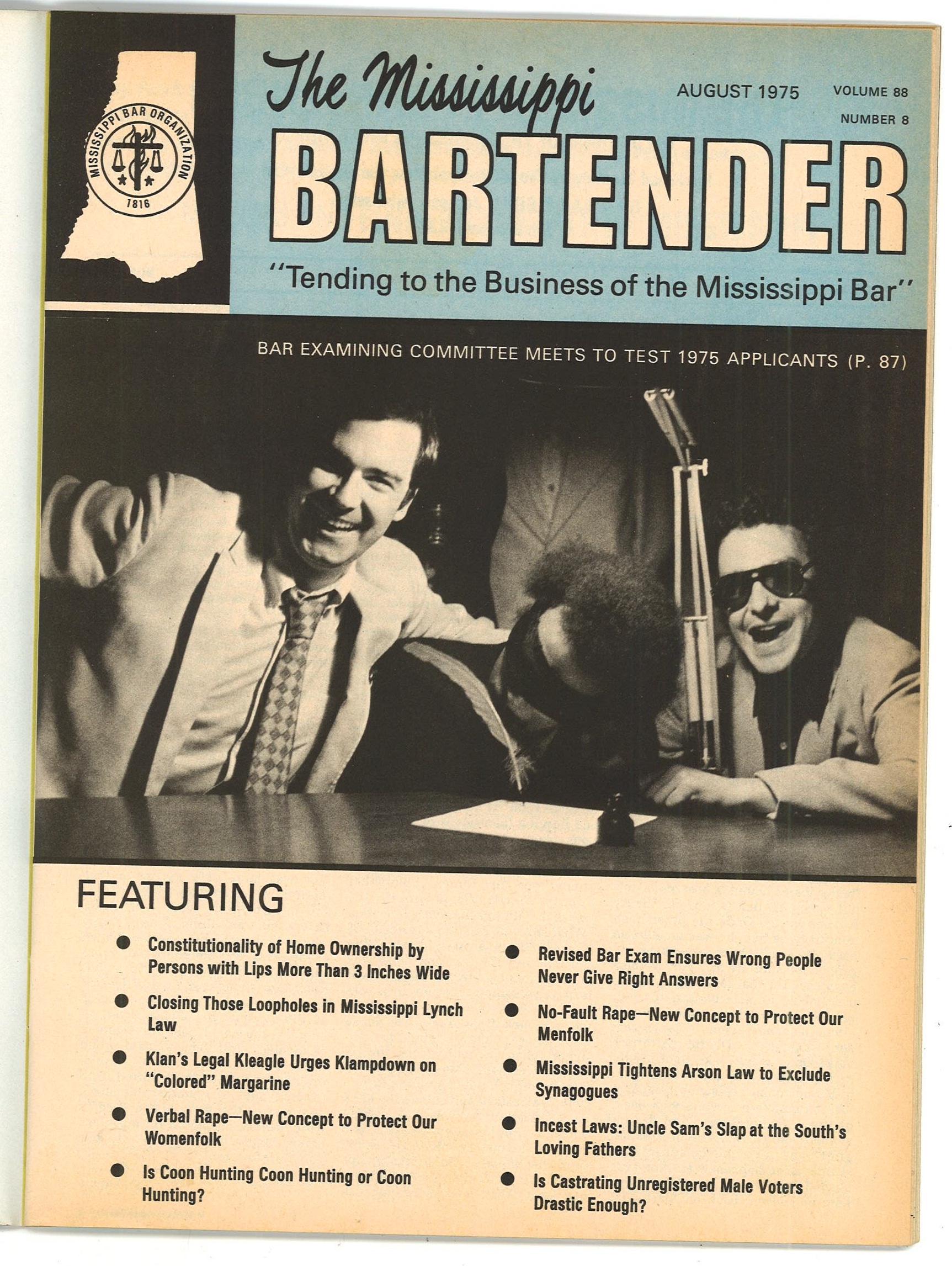
Civil Rights and Vietnam era politics proliferate the pages, along with heaping sides of boob and toilet humor.
The list of contributing writers, illustrators, and cartoonist involved with this influential comedy magazine are chronicled in the recent publication Drunk stoned brilliant dead : the writers and artists who made the National lampoon insanely great by Rick Meyerowitz (who was closely associated with the magazine from the beginning) which will soon be available in the Visual Arts Library.
Here is a short brag list of artists and writers: John Hughes, Michael O’Donoghue, Neal Adams, Frank Frazetta, Russ Heath, Bobby London, Shary Flenniken, and Edward Gorey.
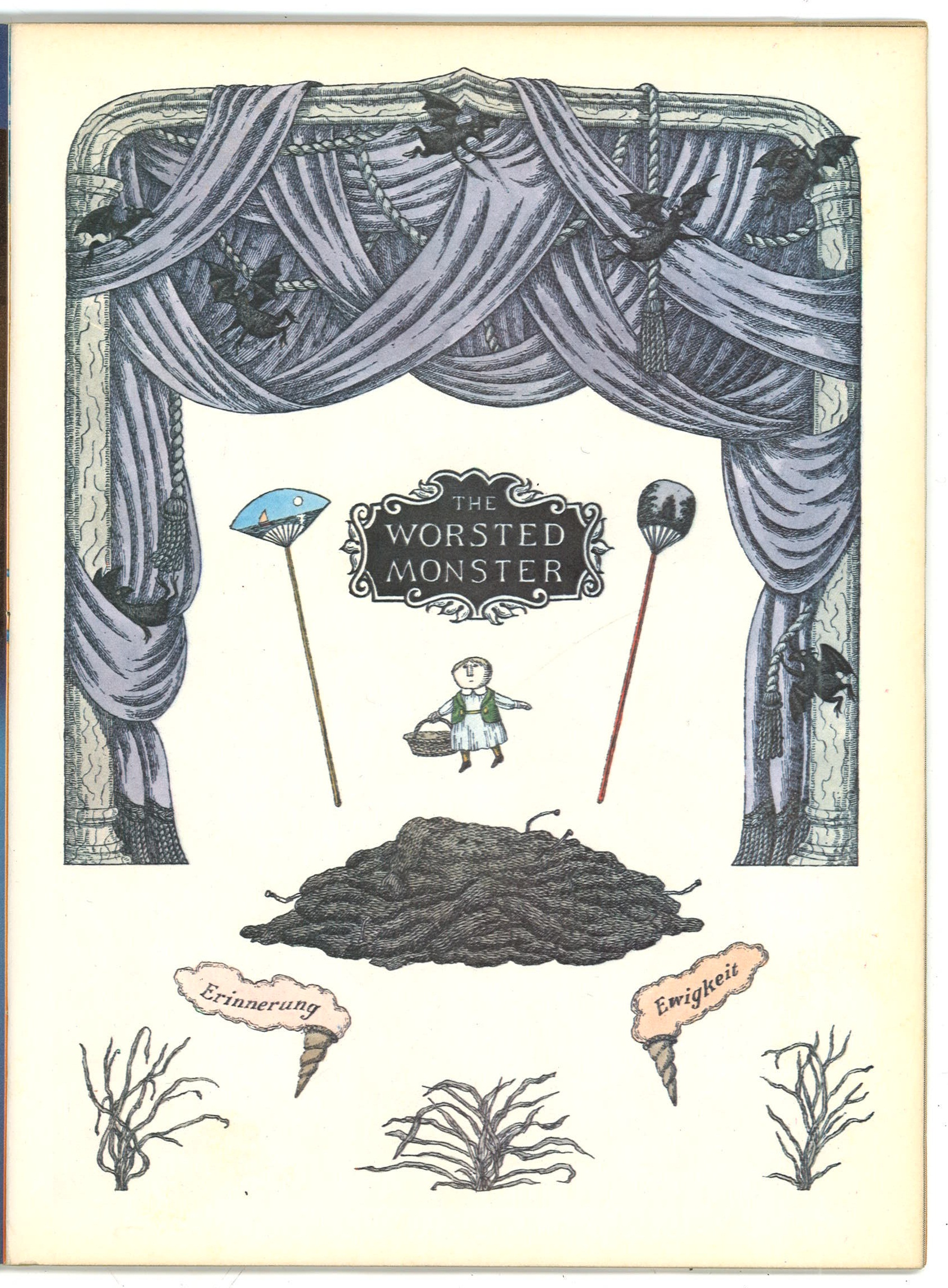
Late last year the New York Public had an event in conjunction with the publication of the book: LIVE from the NYPL: AN EVENING WITH THE NATIONAL LAMPOON TO MAKE THE LIONS ROAR WITH LAUGHTER (there is an audio recording of the event if you follow the link).
And lastly, Bill Scheft ,when reviewing Meyerowitz’s book for the NY Times , credited National Lampoon Magazine for spawning ““Saturday Night Live”; “The Simpsons” and their spawn; all of late night; The Onion; and two generations who have no idea they’ve been so thoroughly influenced. ” Not bad.
[1]We are missing two issues from 1984. Also, our run ends in 1992, but only one issue was released in 1993, five in 1994, and three in 1995. For the last three years of its existence, the magazine was published only once annually until it died for good in November 1998.
Apartamento: an everyday life interiors magazine

Even the spines are sumptuous
According to their website: “Apartamento’s first issue was released in April 2008 as a magazine interested in homes, living spaces and design solutions as opposed to houses, photo ops and design dictatorships. The magazine is a logical result of the post-materialist mind shift. People are bored with the ostentatious and über-marketing. There is a real quest for identity in the midst of mass production and globalization, and that quest leads to what is personal, what is natural, what is real.”
The photos and interviews reveal intelligent people in real spaces; spaces that look lived in because they are lived in. Instead of showcasing a single design ideal, they show how a space is influenced by a person’s taste, education, location, occupation, means, cultural attitudes and so on. They show homes that reflect life. Some of the articles are self- profiles, in which someone writes and documents their own home, like this one by Yukari Miyagi:


"...My daughters and I brought back lots of leaves, twigs, nuts, flowers falling down to earth, and put them on a white piece of paper. The kids soon began making their 'art works' with their findings freely..."
Or in “”More Feral Than You” (text by Monica Canilao, photos by Paul Schiek):
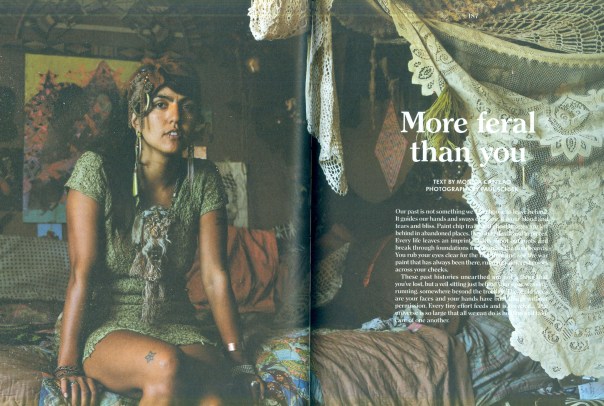
- “Our past is not something we can choose to leave behind… Paint chip trails and ghost images are left behind in abandoned places, lived in to death and to pieces. Every life leaves an imprint…”


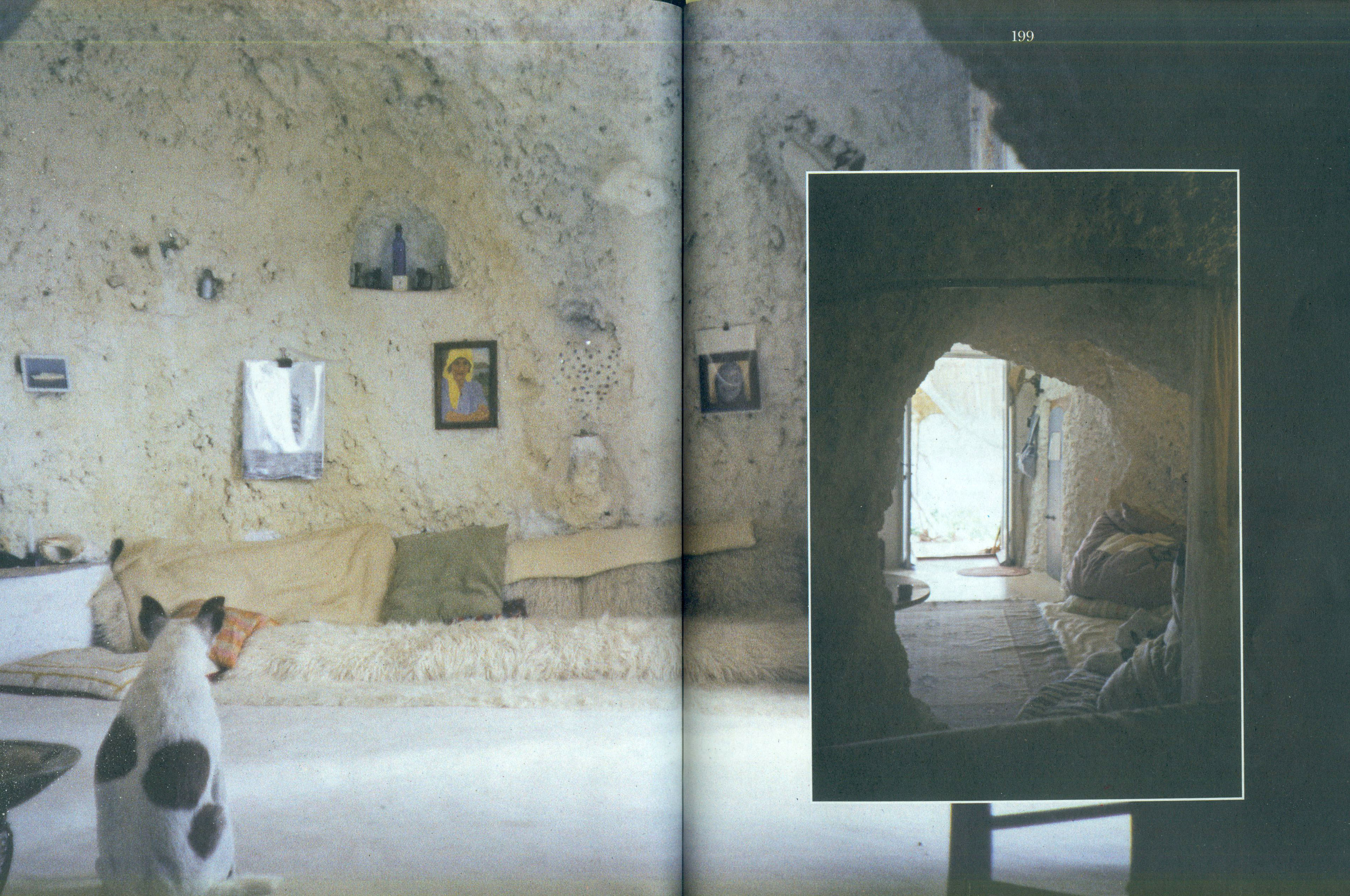
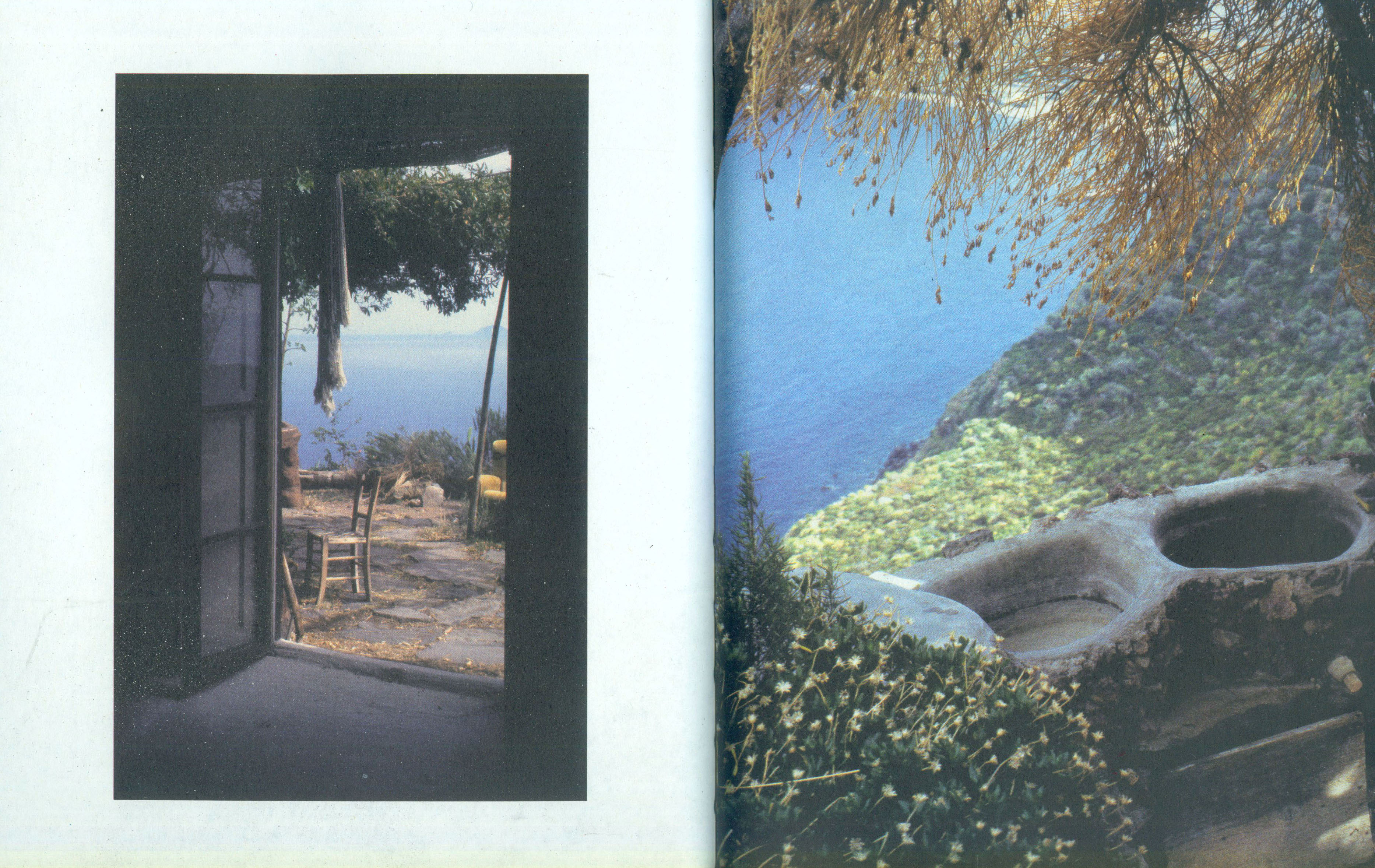
"...Wild and beautiful, inhabited by a strong nature, which defends it by external aggressions... Here, air, water, and even fire manifest themselves as the true fury of the elements...Up to a few years ago the water was just rainwater, there was neither electric light nor even a pier where ships could dock."
Beyond the self-profiles, the magazine features interviews, unique travel supplements, cartooning, illustration, and just a bunch of cool stuff. The design of the magazine itself is wonderful, with flush photos that are laid out smartly and with a nostalgia inducing production quality that is in beautiful contrast with the contemporary subjects. It comes out twice a year. The library has it starting with issue #4. The current issue is #6.
The National Grid: Not the Utility

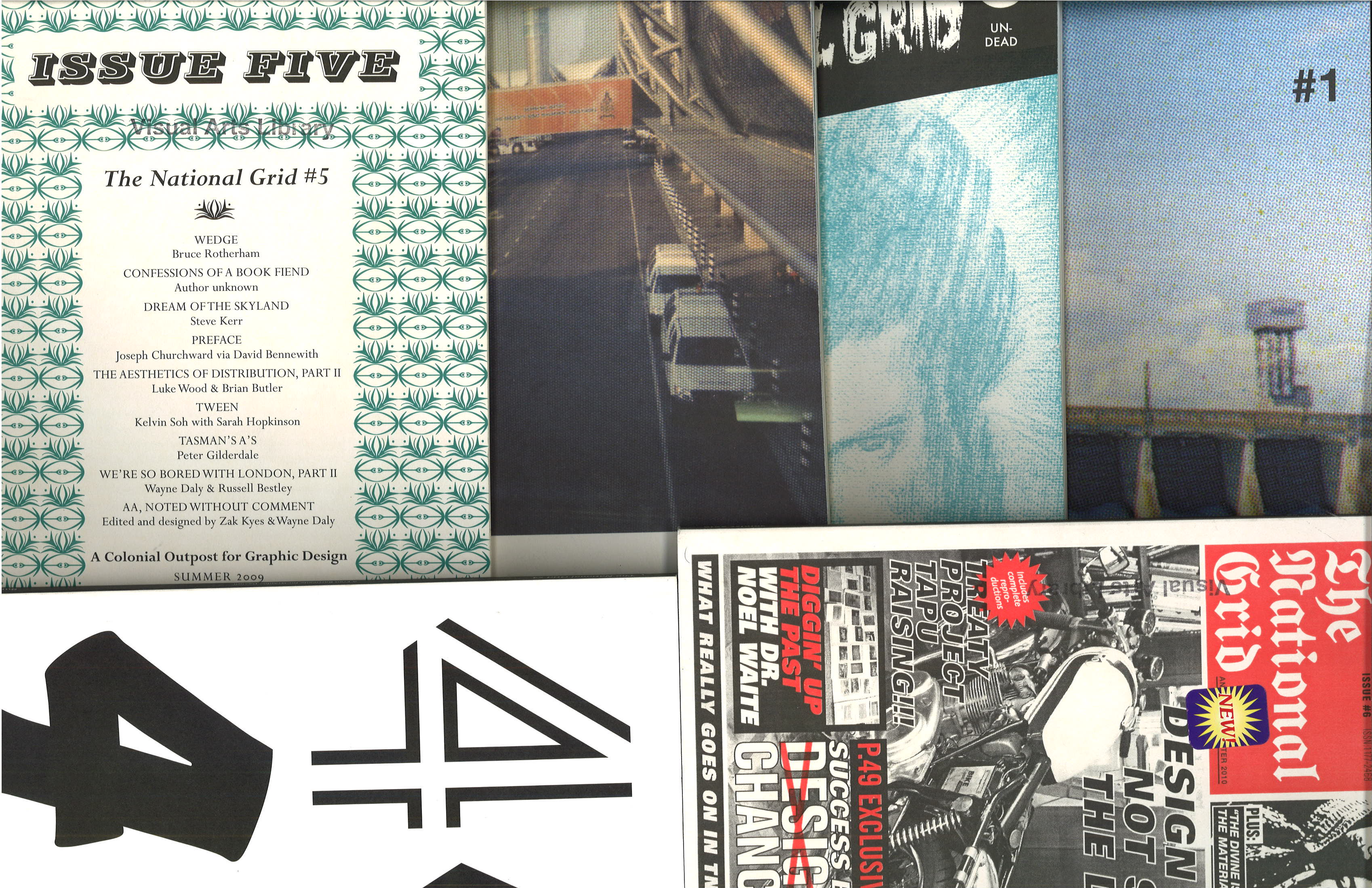
National Grid is a peripheral publication for graphic design; a provincial publication for graphic design; a paranoid publication for graphic design; a frail barricade for graphic design; a colonial outpost for graphic design; a maintenance manual for graphic design, respectively.
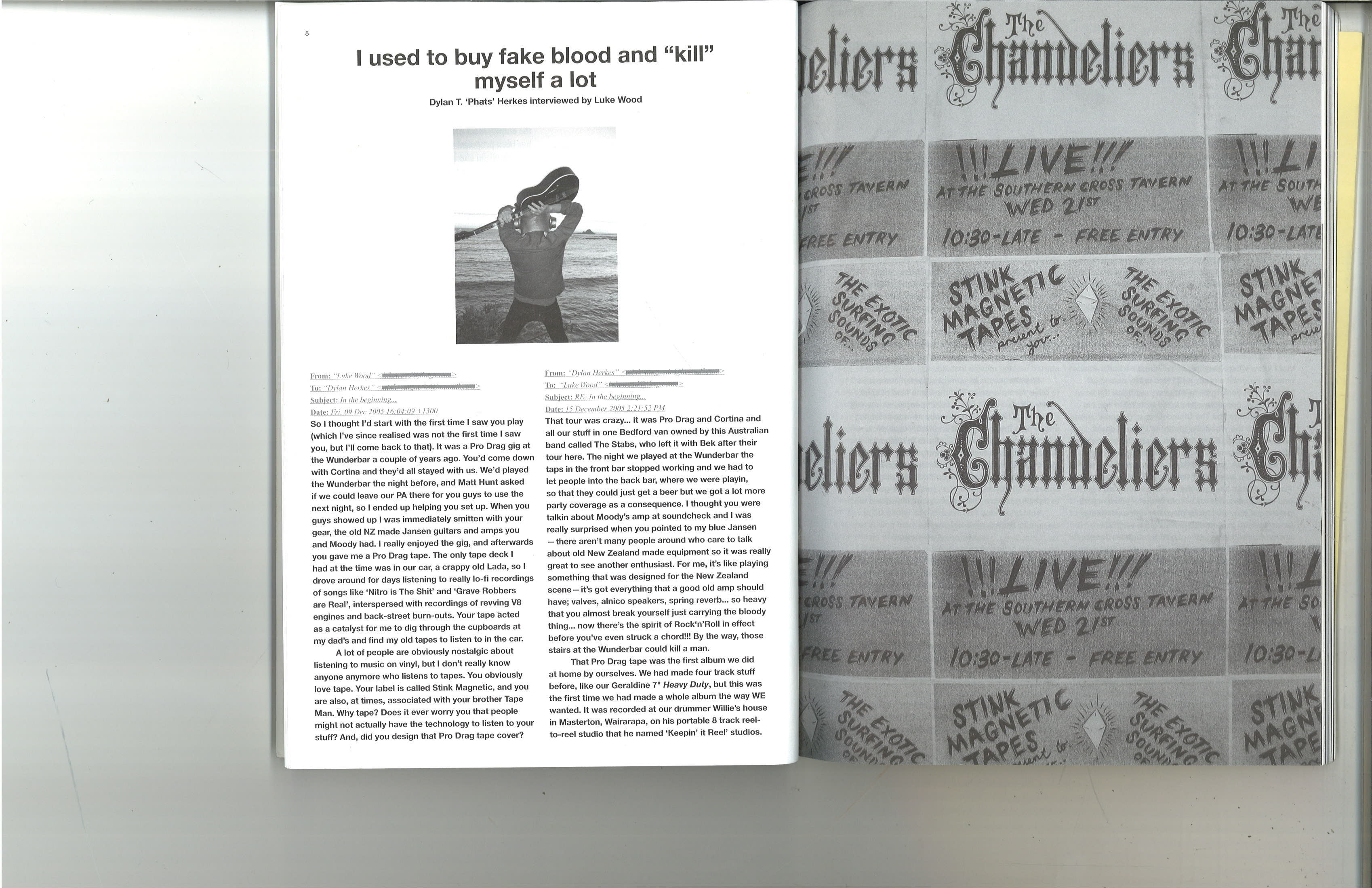
It’s also a graphic design magazine that focuses a good deal on the tangible history of music, the beautiful paraphernalia of promotion and distribution, such as in an interview with musician and tape only producer Dylan T. “Phats” Herkes in issue #1:
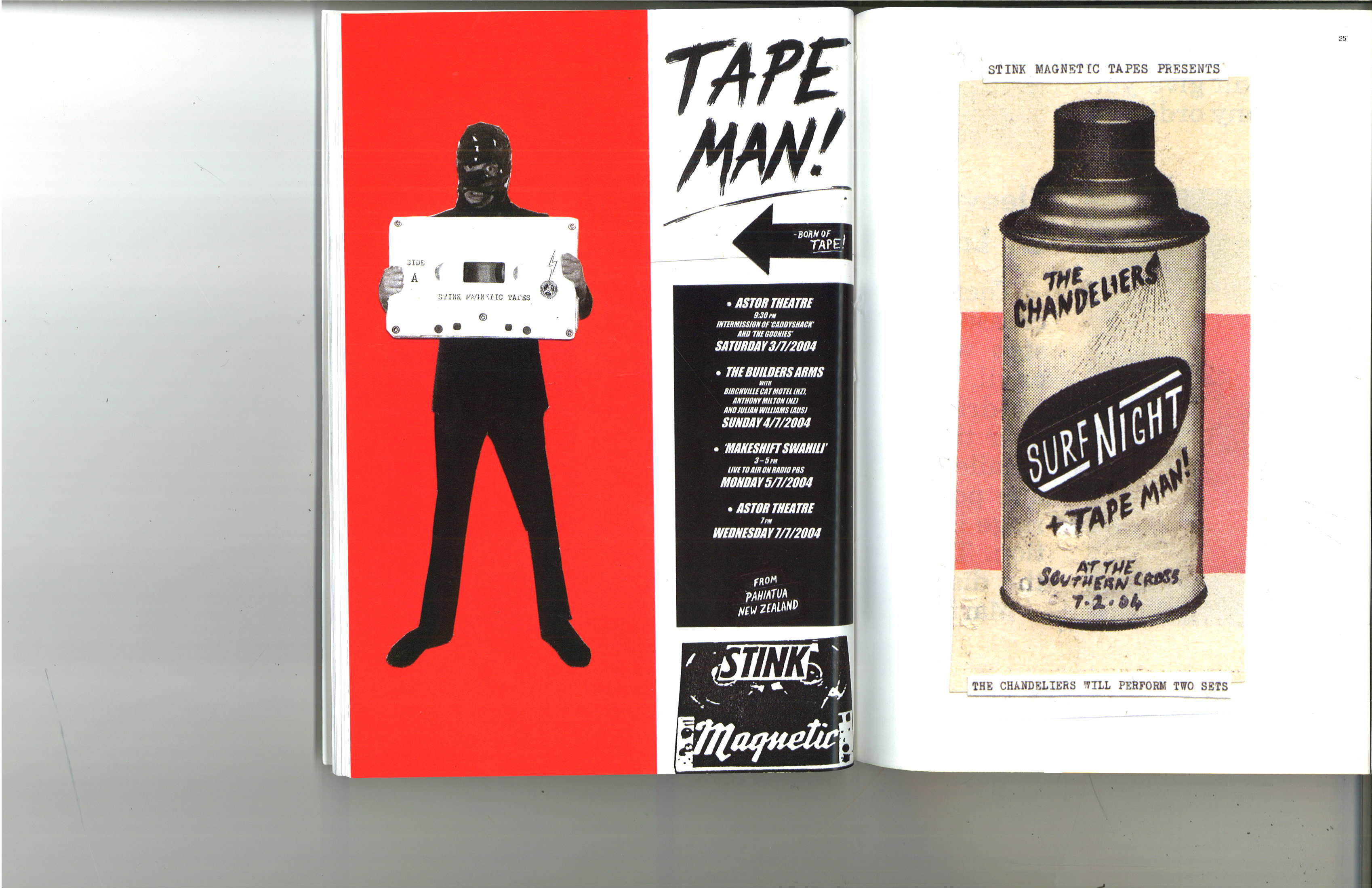
And this collaboration between Thurston Moore and Tom Surgal, with design by Thurston utilizing a graphic score by Cornelius Cardew (from issue #2):

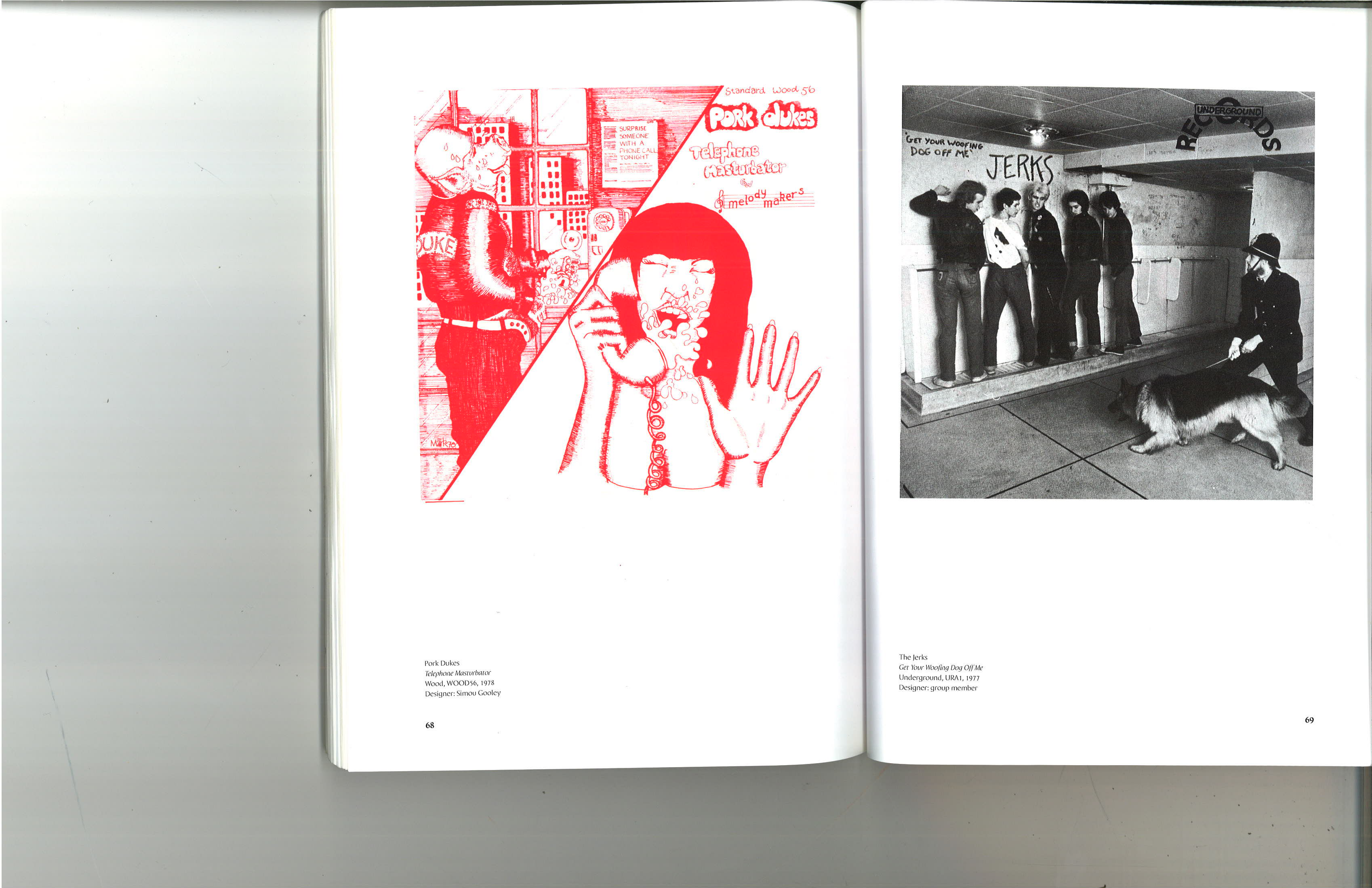
And just because I can’t help it, album covers for Pork Dukes and The Jerks from issue #5:
Beyond the reprinting of wonderful graphic artifacts, there is a good deal of critical protein between the pages. I suggest you read them all; current issue on display, back issues in the crank-o-matic back stacks. For more information on the National Grid, and other “peripheral” graphic design publications, such as Zed and Dot Dot Dot (both of which we have) consult the article “Designing Graphic Design History” in the Journal of Design History, vol. 22, no. 4, pp. 325-340, Dec 2009, also in the back stacks of our periodical stacks.




 SVA Library Picture & Periodicals Collections