Monthly Archives: September 2011
Library Instruction: The Anatomy of a Call Number
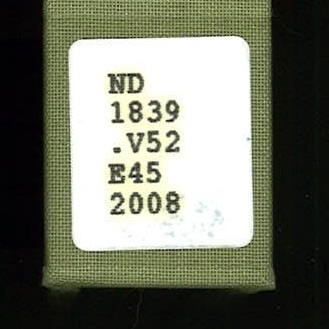
The call number is the arcane, horizontally stacked series of number and letters on the bottom of a spine of a book:

Each row in the series indicates what the books is about, from the general at the top and growing more specific as you go down. The top row is always a letter and specifies one of the twenty-one library of congress major divisions. In this instance, N refers to Fine arts, and ND refers to painting.
The second row is always a number and is used to further define the subject. In this instance 1839 refers to water color painting (which falls in a range between 1700-2495).
The last rows are called the cutter numbers and they often indicate the author or subject (this one has one for each). The book is a monograph about Robert Vickery, which explains the V. The author of this book is Philip Eliasoph, which explains the E. 2008 is the year of publication.
There is little need to remember any of this. What you should you remember is that you find books on the shelf in the same way that they are cataloged: from general to specific. So, first you would find the ND section, then 1839 (in numerical order) then V52 within the 1839’s, and so on down the spine.
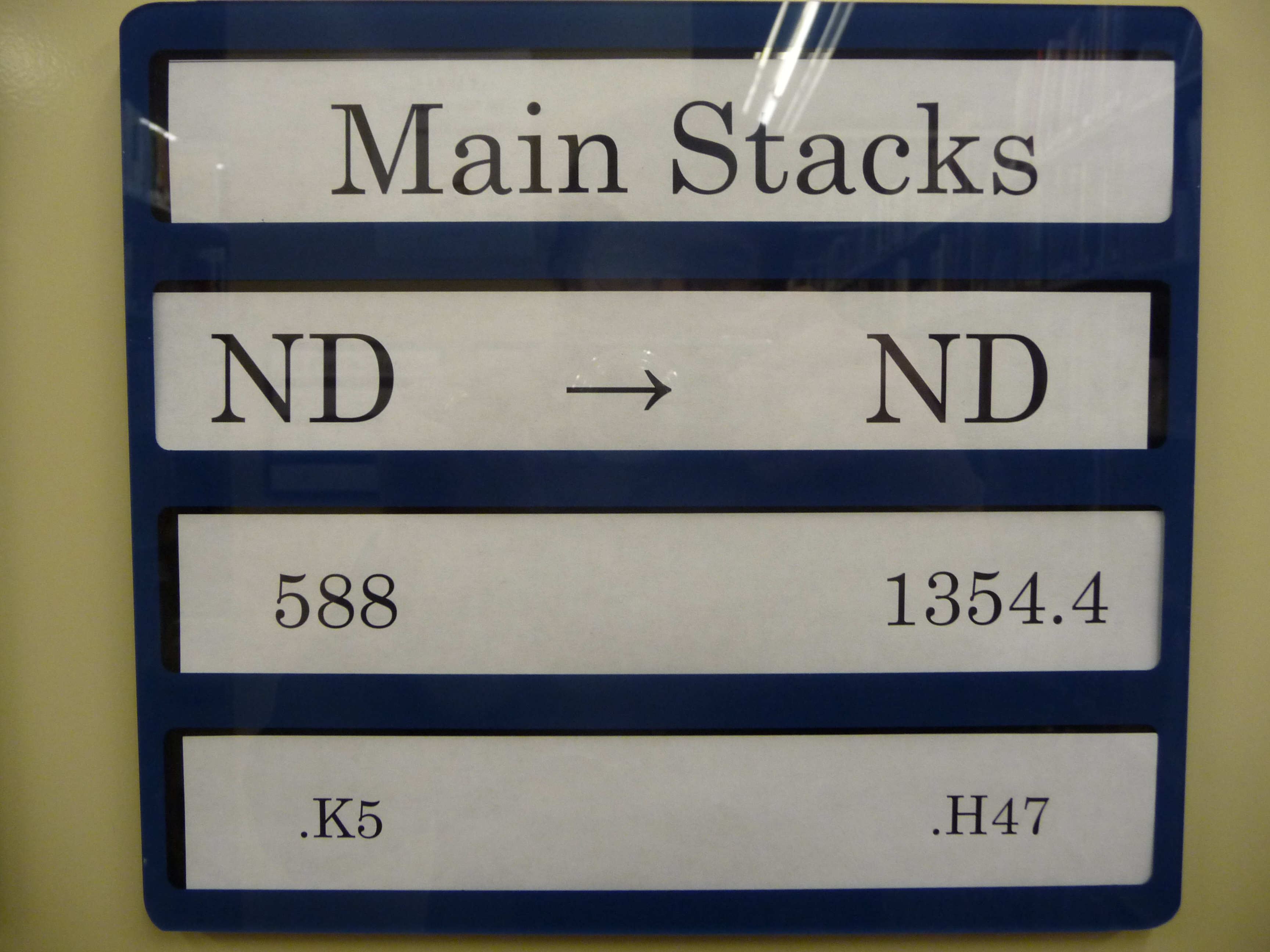
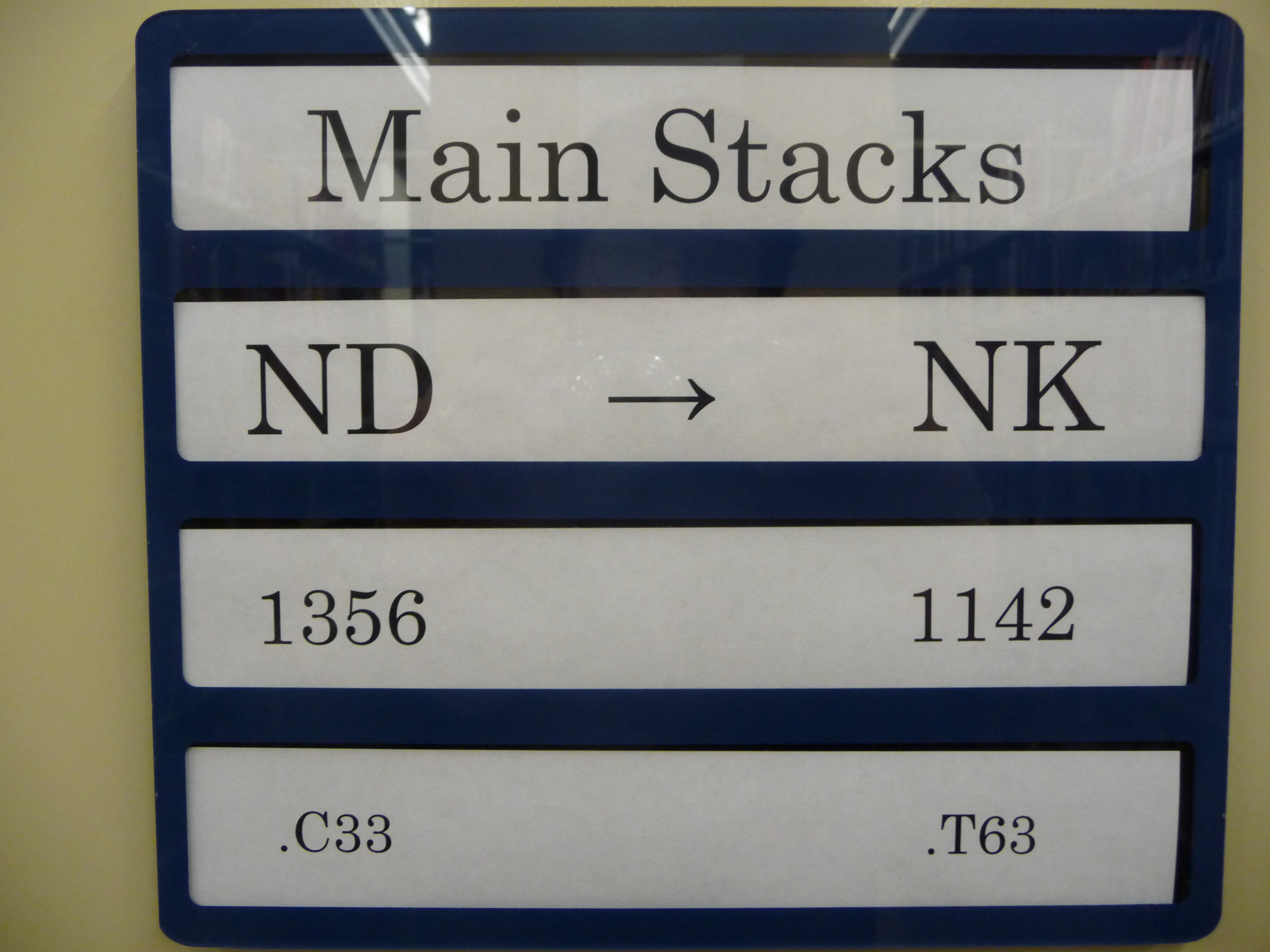
At the end of each row in the library book stacks is an end panel that shows you the range of books for each row. Do you know which one of these rows our Robert Vickery book is in?
Advertising – Corporate Identity, Industry, & Utility
After a hiatus for the summer, during which time the Picture Collection crew was very busy adding new content and new subjects, the blog returns to highlight one of the said new subjects: Advertising – Corporate Identity, Industry, & Utility. This subdivision of Advertising has the further chronological divisions of Pre-1950, 1950-1959, and Post-1950. These are advertisements that do not feature consumer products. Rather, like the descriptive subject heading tells you, they feature 1 of 3 things: 1) Corporate Identity advertisements, which mostly feature large corporations trying to cast themselves and their name in a positive, greater-good, type of light, 2) Industry advertisements, which are instances of one corporation or business trying to sell their techniques, expertise, equipment, buildings, and materials to other businesses and corporations, and 3) Utility advertisements, such as Water Works, The Electric Company, and the Pennsylvania, B&O, Reading, and Short Line Railroads. We have hundreds of these advertisements, most of which we added this summer, and most of which are from 1950 ear Fortune Magazines (hence our chronological subdivision featuring the 1950’s and everything else).
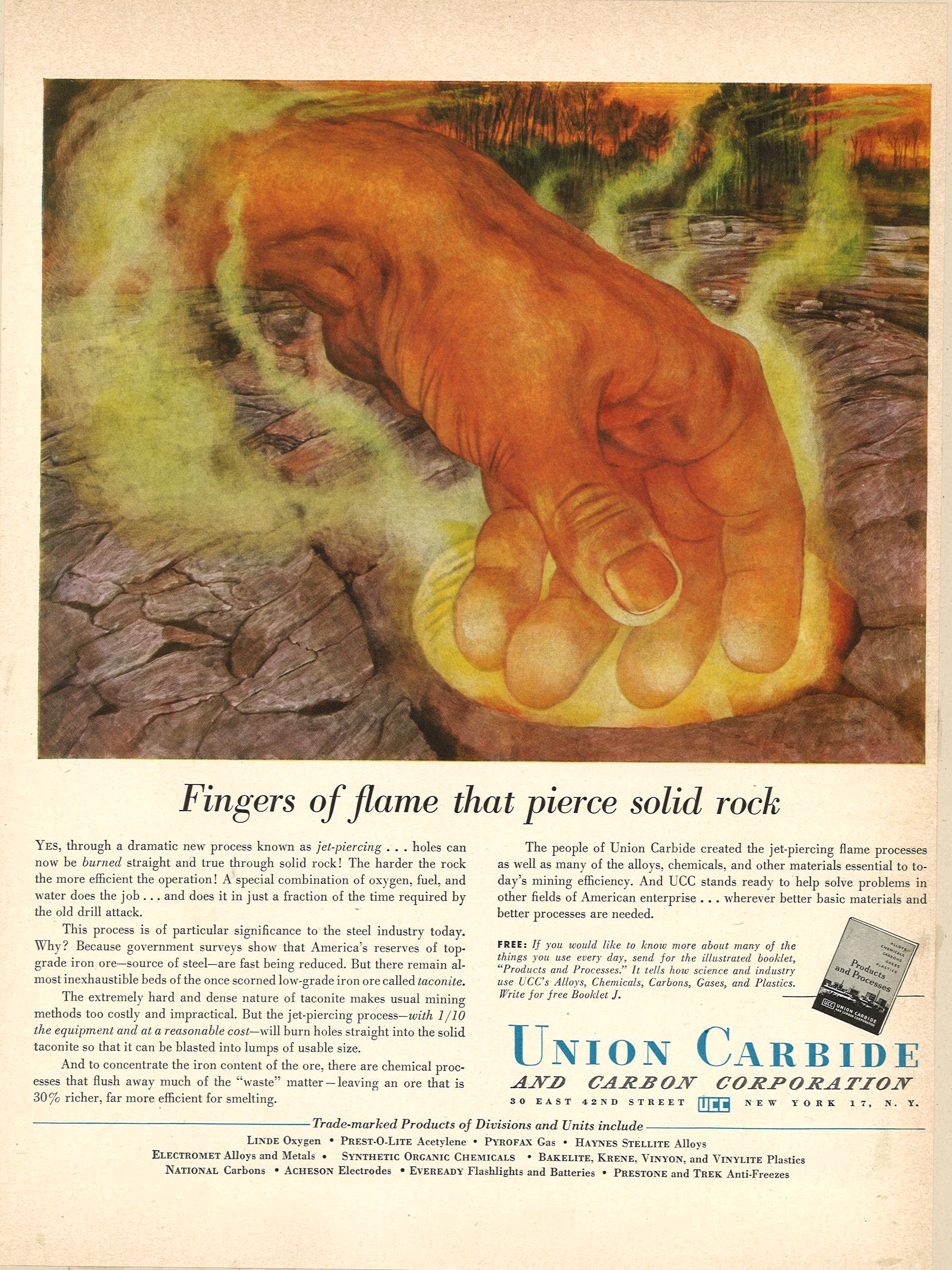
As I examined these advertisements, I noticed one, odd, and I must say, disturbing trend: Giant Hands. Giant Hands with jet airplanes escaping their grasp like an insect, giant hands lifting up buildings, giant hands revealing a factory under a giant basket. Modern man, whilst fashioning better living through chemistry and science, had also become literal Titans, moving factories and cities with their giant, vascular hands. Sometimes we get the whole body, but often it’s just the heavenly hands swooping in and arranging our reality. Following is a sampling.
“The People of Union Carbide created the jet-piercing flame processes” and their advertising agency created this monstrous, pork-sausage fingered, witch-green poisonous gas emitting hand violating the earth.
Delco Radio, “With productive manpower bigger and better than ever before…”

“Do you level mountains?” Well, you need Baldwin-Lima-Hamilton, and this guy (but for goodness sake, could you put on a shirt?). 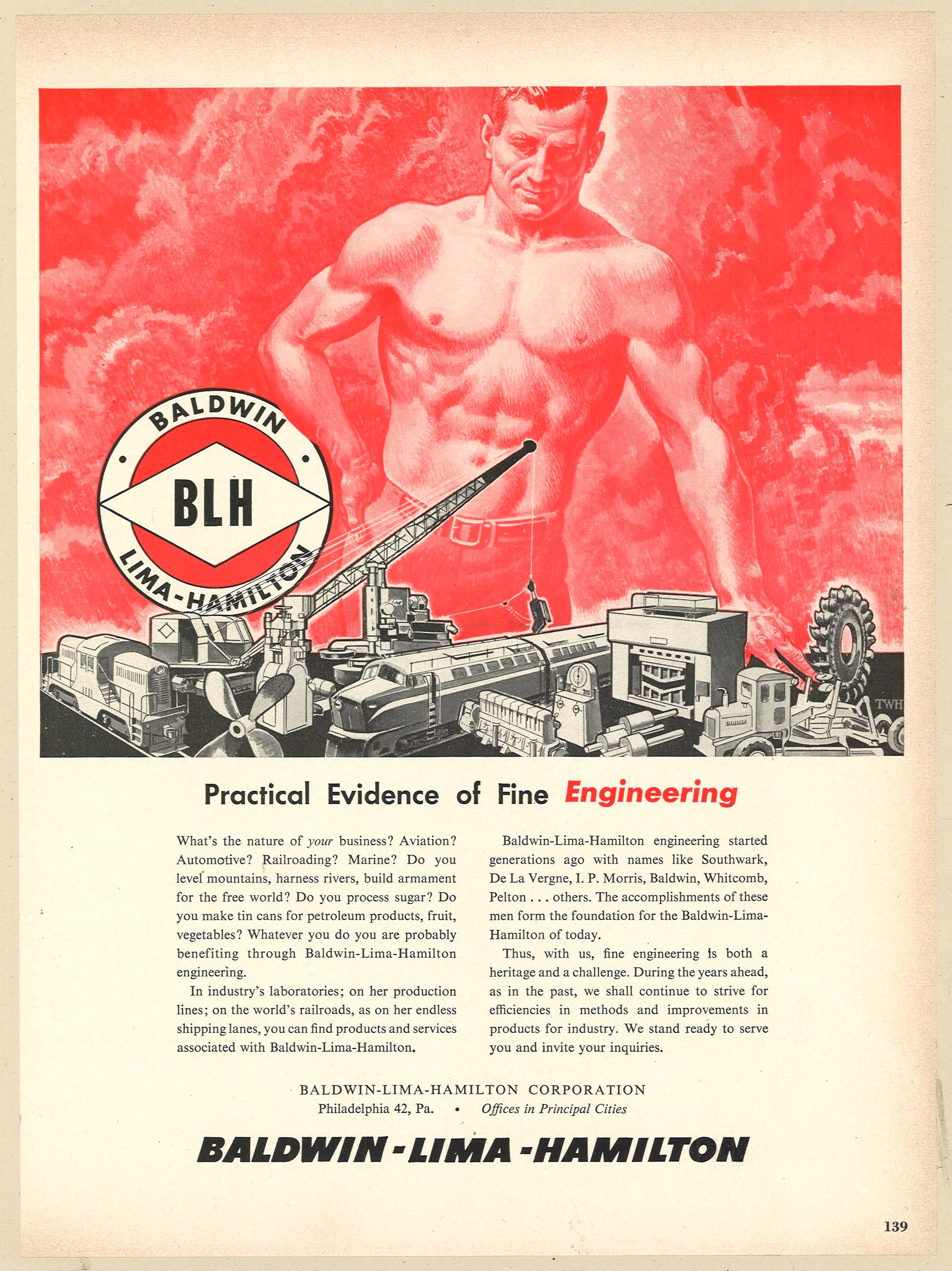
Scientific torture tests as surrealists’ wet dreams…
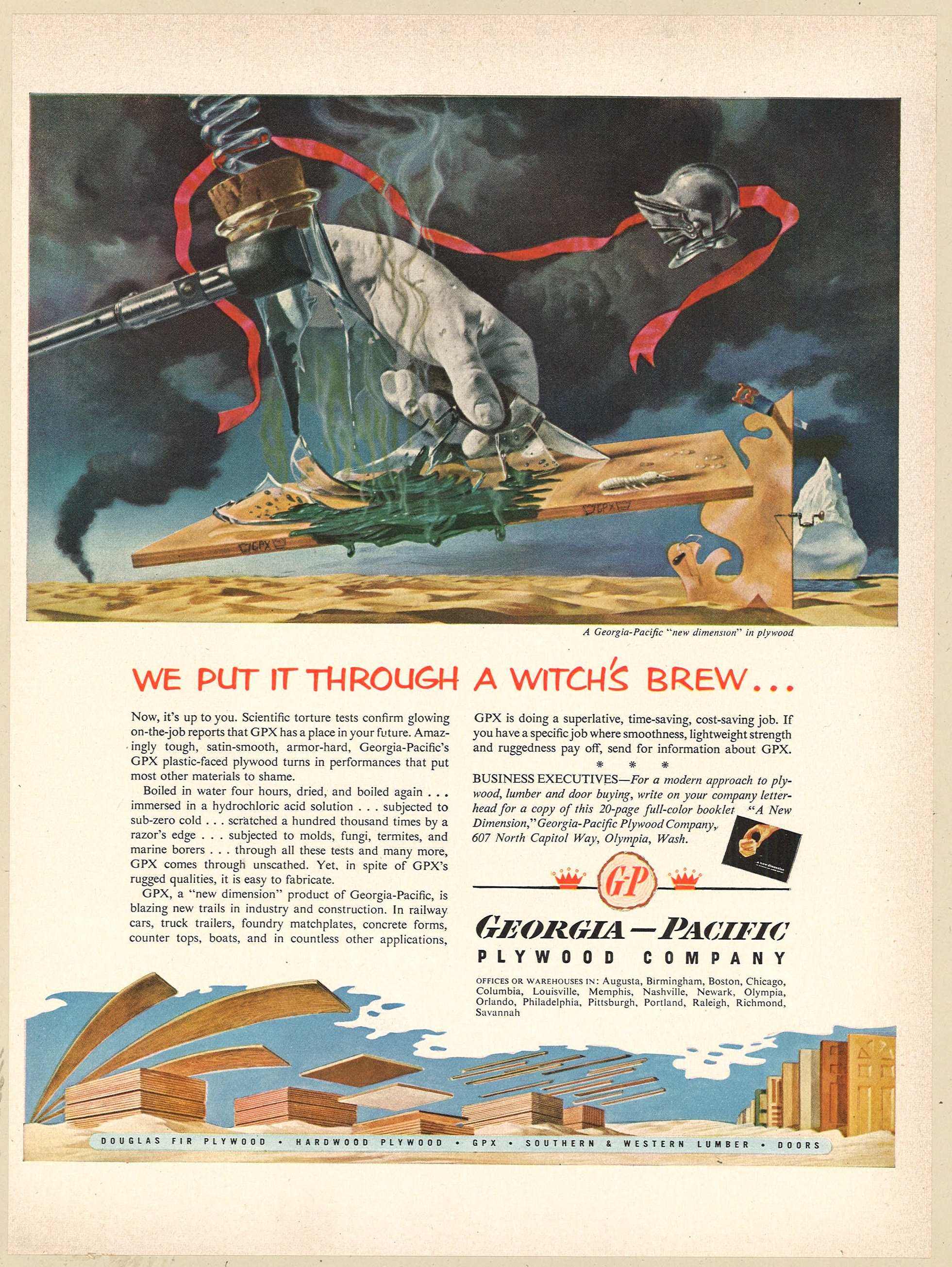

More dumb strength from BLH.


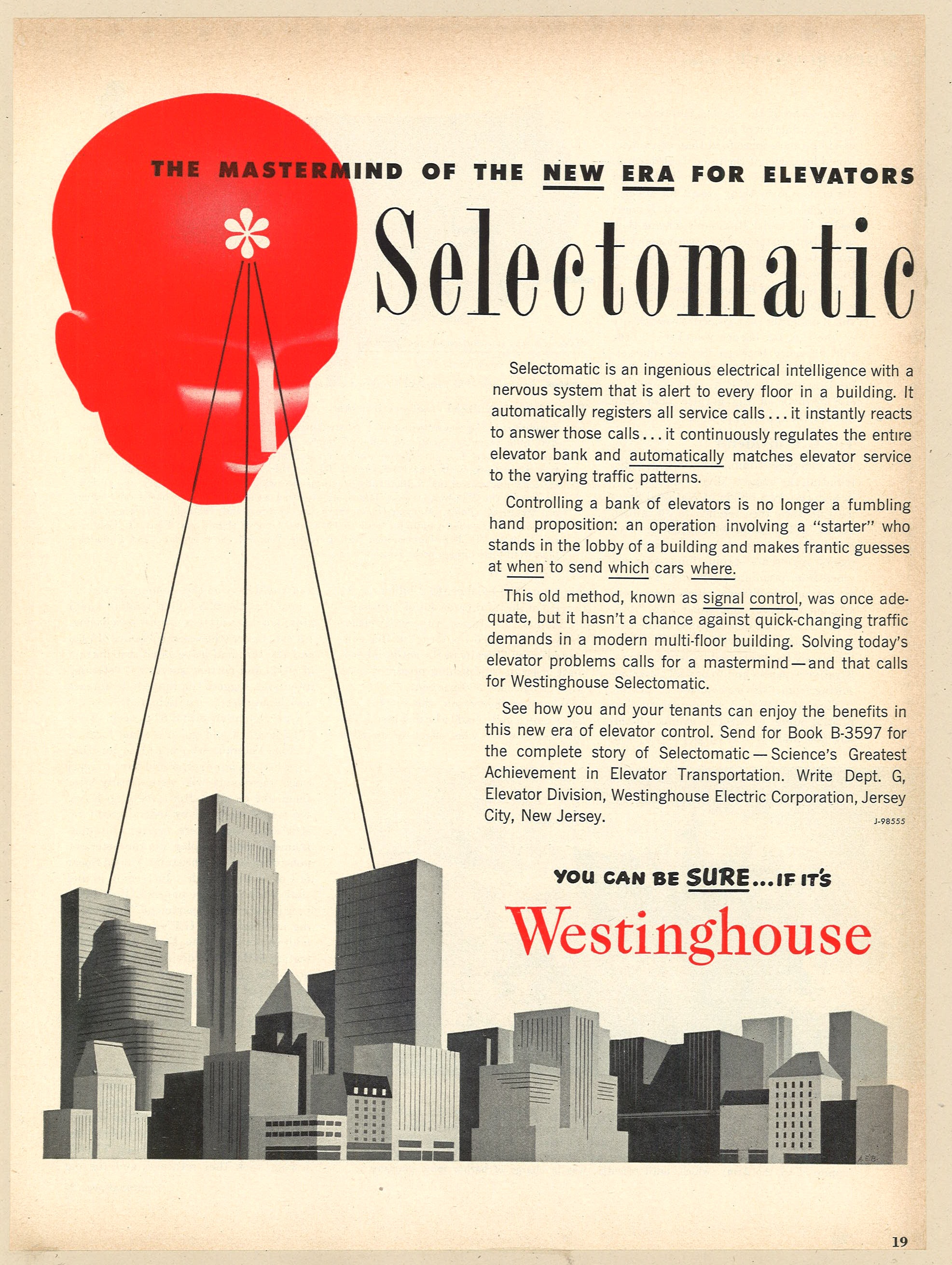
And finally, the mastermind behind it all, Dr. Manhattan’s red brother, Dr. Jersey City.

 SVA Library Picture & Periodicals Collections